Corn Snake Feeding Chart: Prey, Intervals and Weight Records
Author: Elliott Garber, DVM · Published
A corn snake feeding chart should start with the snake’s life stage and established prey size, then be reviewed against growth, body condition and actual meals. Hatchlings need a different plan from mature adults. Use Creatures feeding and weight records to keep the schedule, the offer and the outcome connected to the right snake.
Care sources checked November 12, 2026. The chart is a starting point for a healthy captive corn snake. Ask a reptile veterinarian for an individual plan when the snake is ill, losing weight, overweight or recovering from regurgitation.
| Hatchling starting point | RSPCA: one pinky mouse every 5 to 6 days |
|---|---|
| Growing snake | Move up prey sizes as the snake grows |
| Mature starting point | RSPCA: up to one adult mouse every 7 to 14 days |
| Food | Appropriately sized dead prey; use a safe frozen-thawed routine |
| Review | Individual growth, body condition and feeding history |
| Handling | Wait at least 48 hours after feeding |
Corn snake feeding chart by stage
The current RSPCA corn snake care guide starts hatchlings on a baby mouse, called a pinky, every five to six days. It describes moving up prey sizes with growth, up to an adult mouse every seven to 14 days. This is not a calendar deadline for every corn snake.
| Life stage or situation | Starting point from the RSPCA | Keeper’s review | Record to retain |
|---|---|---|---|
| Hatchling | One pinky mouse every 5 to 6 days | Confirm the snake’s established prey size and review growth | Prey details, dates, accepted or refused |
| Growing snake | Move up prey sizes as the snake grows | Review body condition and weight history rather than following an age-only size ladder | Every prey-size change and the reason |
| Mature snake | Up to one adult mouse every 7 to 14 days | Individual condition and veterinary advice determine the suitable plan | Meals and dated weights together |
| Health concern, regurgitation or weight loss | Individual veterinary advice | Seek advice before changing or restarting the feeding plan | Symptoms, last accepted meal and enclosure readings |
Thaw frozen prey fully before offering it. The Merck Veterinary Manual recommends thawing under refrigeration and serving prey at room temperature or warmer, never cold. The RSPCA advises feeding inside the enclosure with tongs. Wash your hands after handling prey before handling the snake.
For prey size, the RSPCA’s rule of thumb is prey slightly wider than the widest part of the snake’s body. The Merck Veterinary Manual’s general rule for snakes is more cautious: not much larger in diameter than the snake’s head. If unsure, size to the head.
The RSPCA guide recommends dead prey and waiting 48 hours after feeding before handling. Keep prey species and supplier size labels in the record. If you weigh a prey item, record that measured weight separately from the supplier’s description. A “fuzzy” or “small mouse” label should not silently become a precise gram value.
This page deliberately gives no universal prey-weight percentage or age-to-mouse-size ladder. The Merck Veterinary Manual describes reptile diets as dependent on species, age, activity and environmental conditions. A snake’s previous accepted meals and present condition matter to the next decision.
Turn the chart into a repeatable feeding record
Use one identifier for the snake across the enclosure label, profile and meal log. A temporary enclosure number can remain a location field. It should not replace the animal’s identity when the snake moves.
For each offer, record the date, prey species and size, preparation notes and actual result. The feeding form offers Eaten, Partly eaten or Refused. Use notes for regurgitation and symptoms. If you cannot establish the outcome, keep an observation note instead of calling it a completed feeding. Feeding records start private. Do not assume a meal happened because a task was due.
A useful collection routine has a separate exception check. After making the rounds, review the snakes whose outcomes differ from the plan. Leave those entries attached to each animal, with any follow-up instruction. This keeps one refused meal from disappearing inside a collection-wide “feeding completed” note.
Review weight trends alongside meals
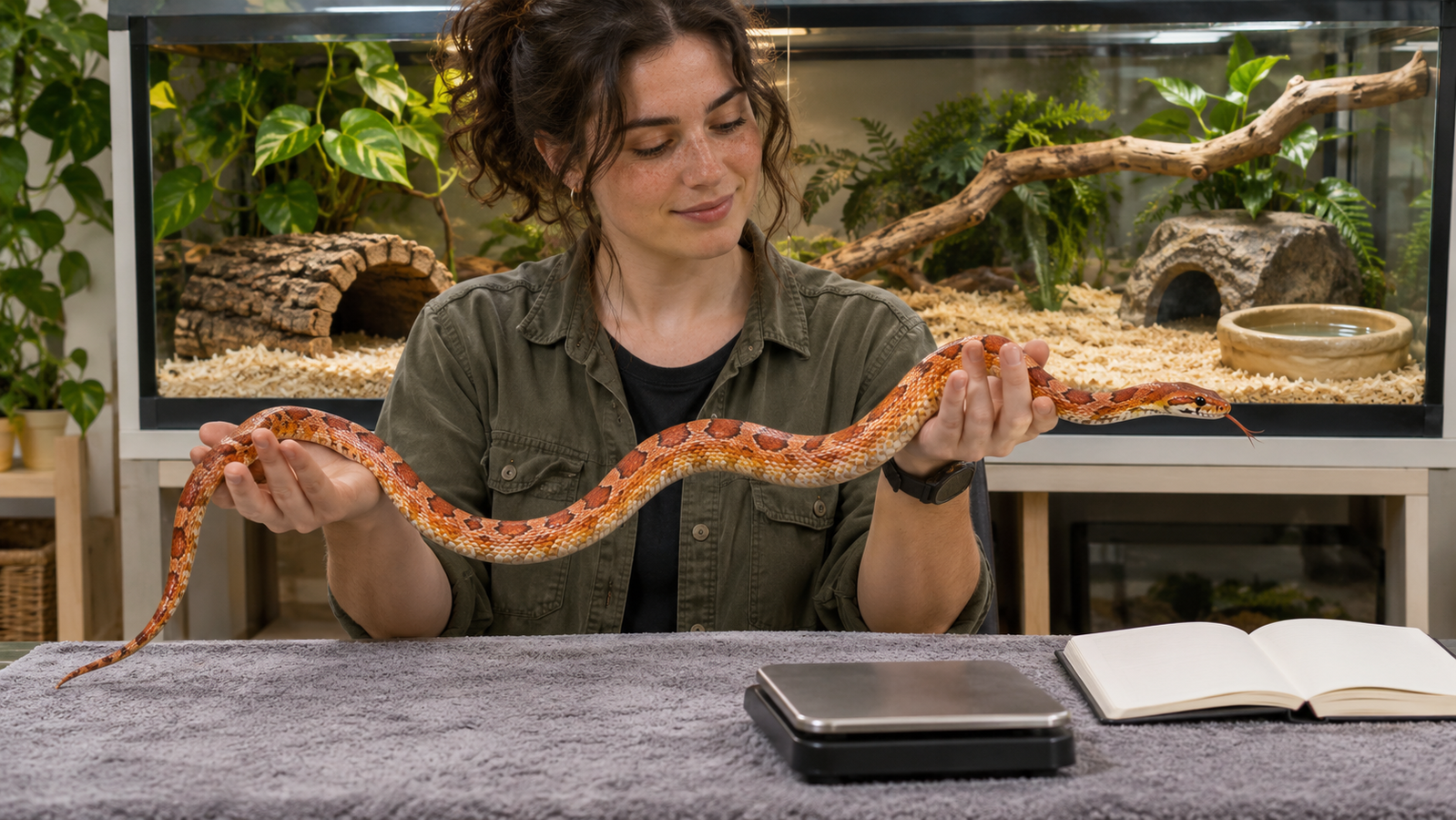
Record the scale reading with the date and units. Use a stable, safe weighing arrangement appropriate to the snake, and avoid handling during the post-feeding rest period. Note anything that affects comparison, such as a recent meal, defecation or a different scale. Do not overwrite a real measurement because it looks inconvenient.
At review time, place weights and meals on one timeline. The practical questions are whether the individual is growing appropriately, whether body condition has changed and whether a veterinary review is needed. A feeding chart does not answer those questions by itself.
Keep a dated plan entry when you change the interval or prey size. Write who advised the change and when it begins. The old meal history still matters, especially if another keeper takes over. Creatures can hold weight and feeding records with the animal; the keeper remains responsible for interpreting the pattern with a veterinarian.
A refusal is an observation, not a diagnosis
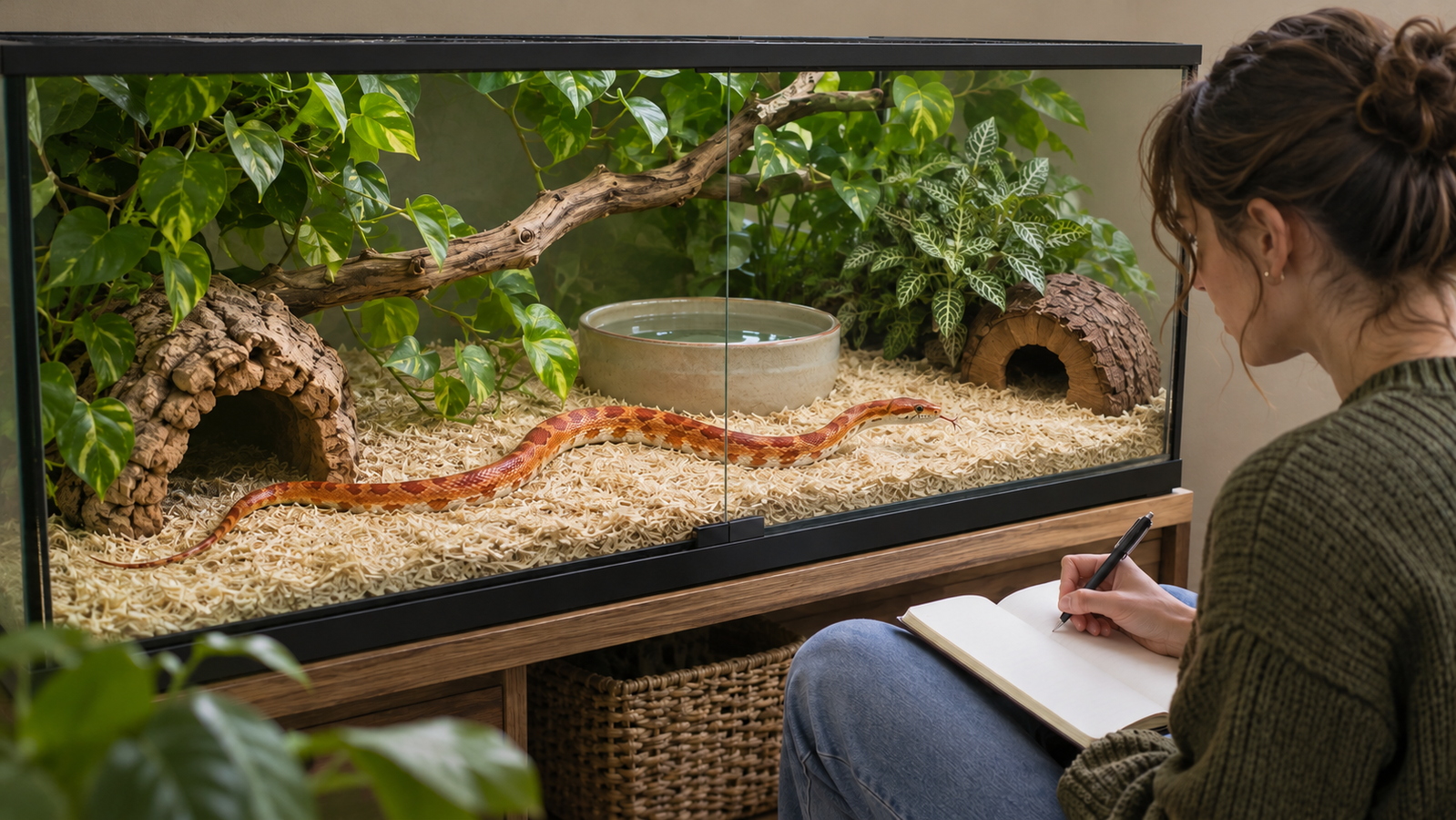
A shed, enclosure change and other events may coincide with a missed meal. Record them as context without declaring the cause. See the corn snake care guide for a broader husbandry review, and bring measured enclosure conditions to the veterinary conversation.
Seek prompt reptile veterinary advice for weight loss, regurgitation, abnormal breathing, injury or other illness signs. Do not try force-feeding. The Merck routine reptile care guide advises consulting a veterinarian before feeding-frequency changes or assisted feeding.
Use dead prey rather than live rodents. Merck’s husbandry guidance warns that live prey can injure reptiles and raises prey-welfare concerns. A refusal is a reason to review the individual snake and its environment, not to escalate to an unsafe feeding method.
Before calling, assemble the last accepted meal, later offers, prey details, weights, shed history and environmental readings. Keep a symptom note separate from guesses about its cause. Do not postpone the call to gather more data if the snake appears unwell.
Keep species plans separate in a mixed collection
A corn snake plan should not be copied from a ball python feeding chart. A collection dashboard is useful only when each animal retains its own schedule and exceptions. The reptile collection app comparison covers the records job across a collection.
For an incoming or departing snake, pass on the established prey, recent accepted and refused offers, dated weights and any veterinary instructions. Review routine costs with the corn snake cost guide and browse the corn snake hub for species context. A complete record is useful to the next keeper; it is not a guarantee of future feeding.
See Creatures for breeders for the broader animal-record features.
Do this next on Creatures
Keep the individual feeding plan, meals and weights attached to the animal you actually worked with. Animal profiles and records are free and unlimited; you need a free account to save your work.
- Add your corn snake, then use Add identifier on the profile for any existing identifier. See how to add an animal.
- Add a record for today’s observation. This opens for visitors; a free account is needed to save it. Follow adding a record and keep reminders and upcoming care separate from completed work.
- Add your breeder profile when you want a public introduction to your program. Read getting listed in the breeder directory.
- Create a listing alert for future searches.
- Browse corn snake listings and ask sellers for the individual animal’s records.
- Explore the breeder directory when you need to find and contact keepers yourself.