Paradox
Morph
Author: Elliott Garber, DVM · Published
Paradox describes a bearded dragon with unexpected, irregular patches of color interrupting its usual appearance. It is a descriptive morph label, not a separate species or a reliable simple inheritance formula. A dragon can look strikingly patchy without a photograph revealing why those patches developed.
The useful buying question is not just “Is it Paradox?” Ask what is known about that individual: its age, parentage, other stated traits, feeding history, health and how its appearance has changed. Treat claims about breeding outcomes separately from the visible pattern.

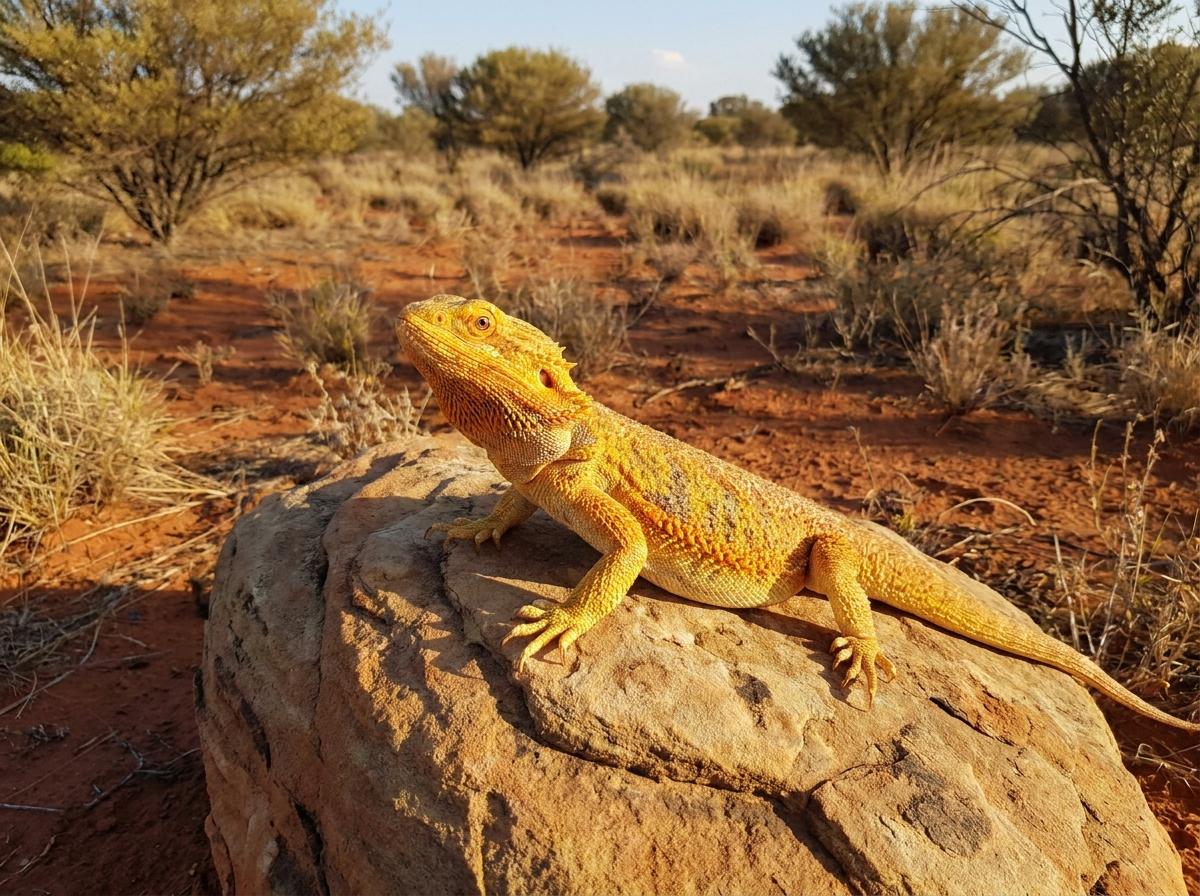
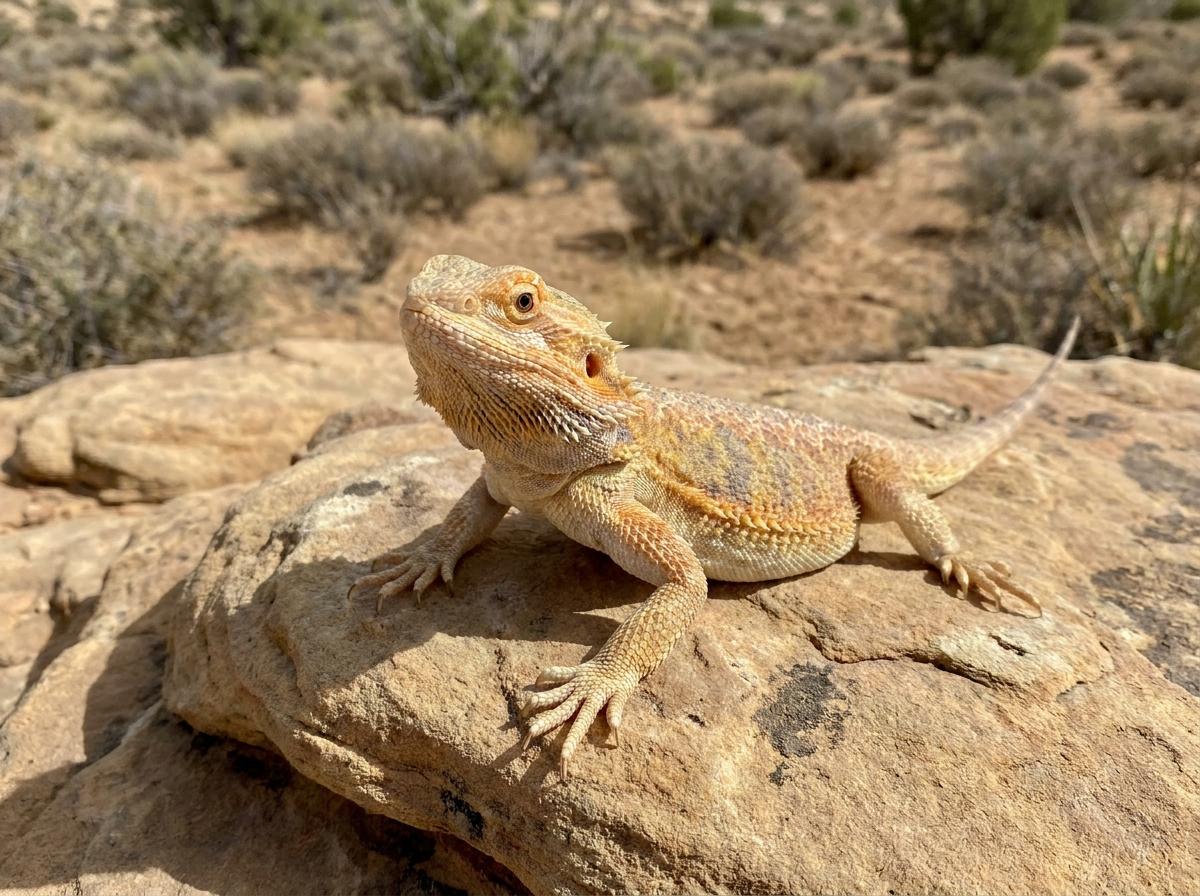
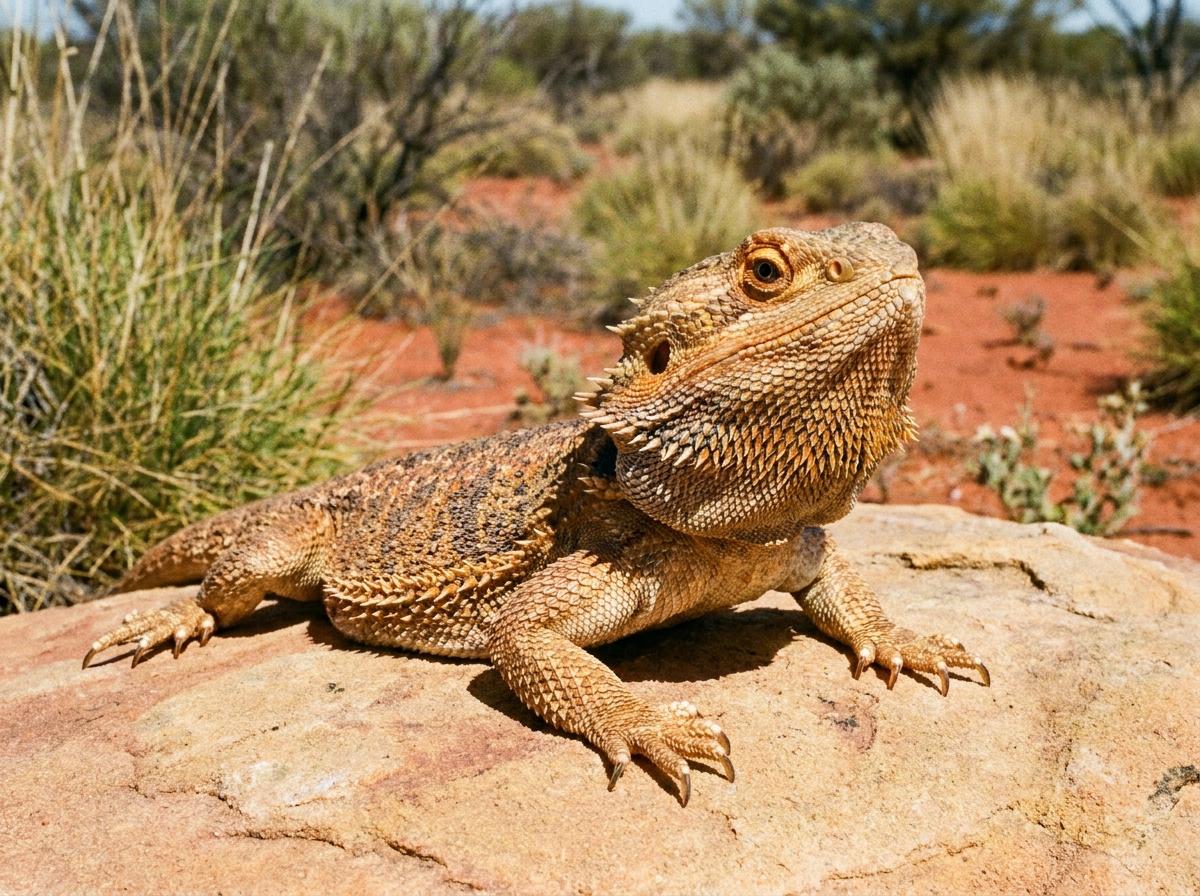
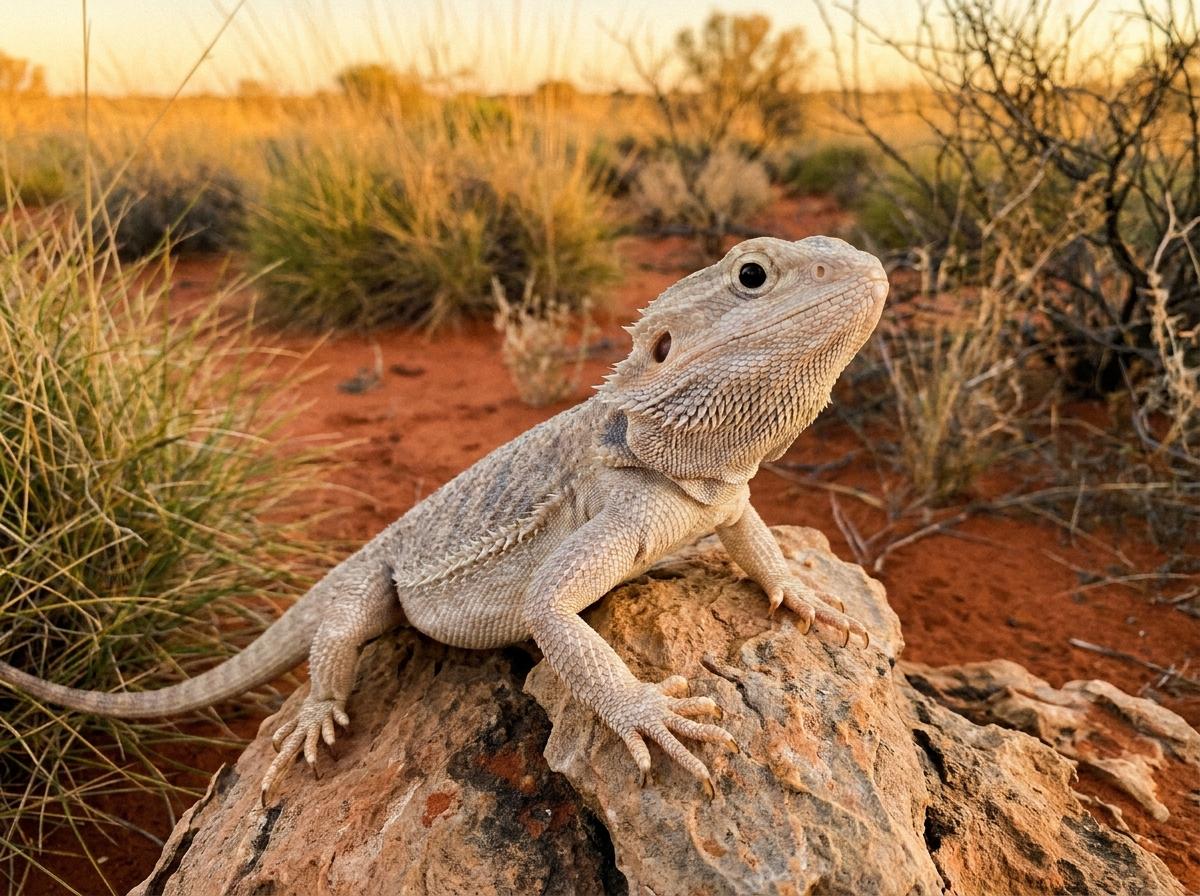
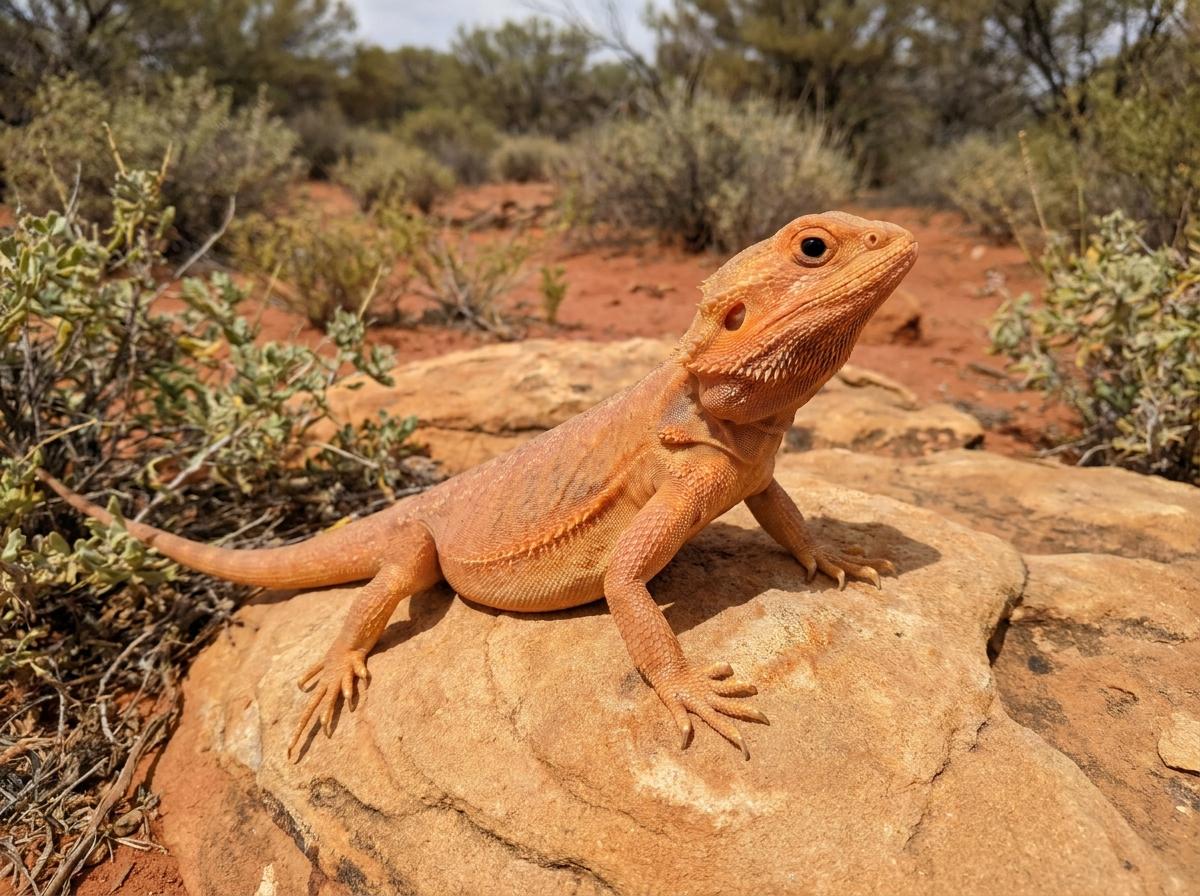
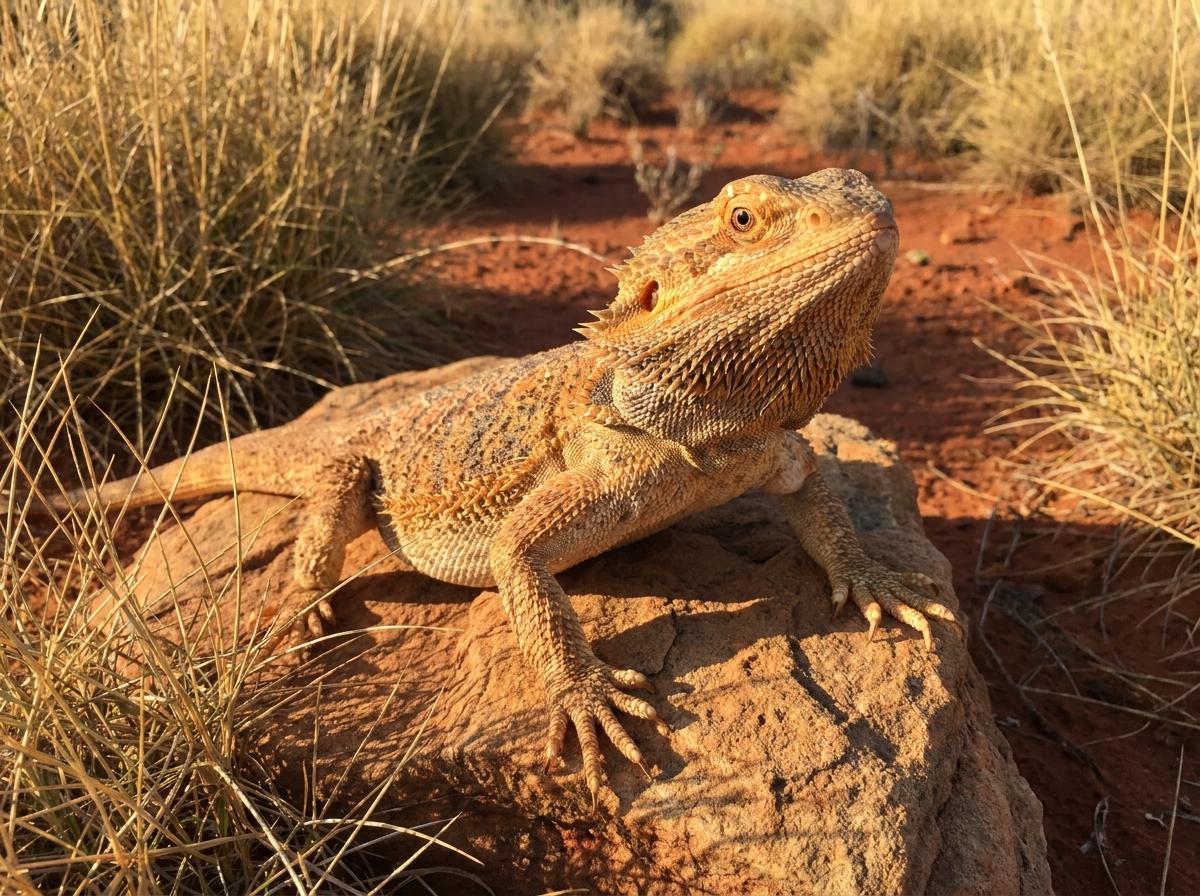
AI-generated illustration of a paradox-like color pattern. It demonstrates an appearance, not a proven genotype or a complete enclosure.
| Animal | Domestic bearded dragon |
|---|---|
| Label describes | Unexpected, irregular color patches |
| Inheritance | No dependable simple prediction from the label alone |
| Care priority | Measured heat, suitable UVB and opportunities to retreat |
| Buying evidence | Dated images, individual history and clear trait claims |
Browse listings, public profiles, breeders, or add your animal.
What the name can and cannot tell you
Breeder HereBDragons describes Paradox as irregular patches without a repeated pattern or symmetry, documenting blue, purple, black and gray examples. The Bearded Dragon Lady hobby guide also describes pale patches. The distinguishing feature is an unexpected patch interrupting the usual pattern, rather than ordinary paired back blotches, a cheek stripe or tail bands. No single patch color is required.
HereBDragons reports a strong association in its breeding experience with Translucent animals; the same hobby guide also discusses Hypo combinations. Those observations are not a diagnostic test or a dependable inheritance rule. Ask about each animal’s documented traits separately.
Published breeder descriptions document individual examples, but they do not establish that every Paradox animal shares a single tested genetic cause. We do not have a validated simple inheritance model to offer here. Be cautious about a sale based on a promised percentage of Paradox offspring, or a claim that appearance alone proves mosaicism or chimerism. Those are biological explanations requiring evidence beyond a photograph.
Keep other labels separate. A seller may also state Hypo, Translucent or Leatherback. Ask what supports each claim rather than allowing Paradox to stand in for the whole description. In particular, color pattern does not mean reduced scales, and Paradox should not be used as another name for Silkback. The REPTA welfare policy identifies serious concerns specific to Silkback dragons; those concerns should not be casually assigned to every patchy, normally scaled dragon.

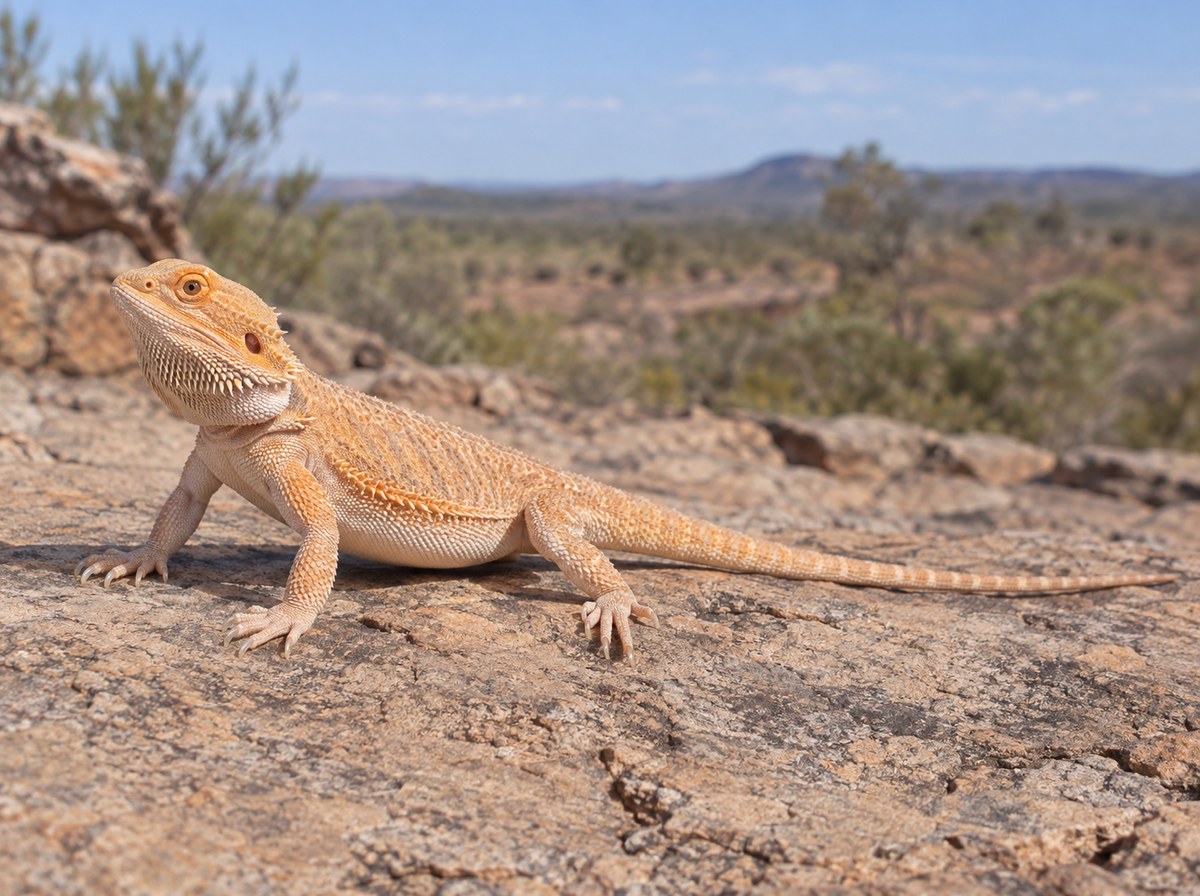
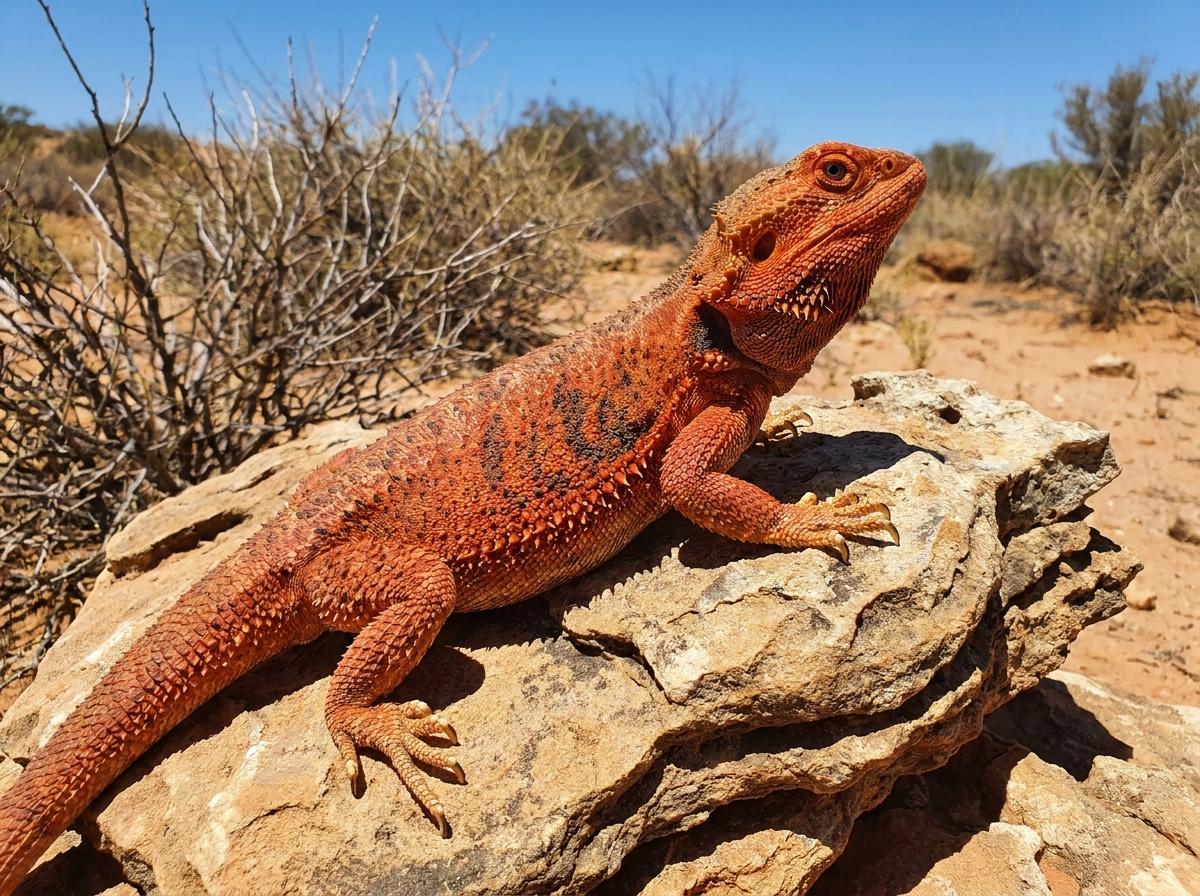
AI-generated detail with intact scales and a color patch. An illustration cannot distinguish pigment variation from disease in a real animal.
Do not diagnose a skin change from the morph name
An established pigment pattern and a new abnormal skin change are different questions. Ask for dated images before and after sheds, taken without color filters under similar lighting. This helps you understand the individual’s history without treating one heavily saturated picture as permanent color.
If an area is newly discolored, swollen, damaged or associated with a change in behavior, seek a reptile veterinarian’s assessment. Calling it Paradox is not a diagnosis. Equally, an unusual color patch by itself does not justify declaring an animal sick. The health assessment needs the animal, its history and its environment.
For a viewing, request a calm video showing ordinary movement and the full body, including toes and tail. Ask about weight records, appetite, supplements, shedding and veterinary visits. Do not encourage a seller to stress or overheat a dragon to intensify its colors for the camera.
Care remains bearded-dragon care
The RSPCA’s bearded dragon guidance gives a minimum adult enclosure of approximately 4 feet long by 2 feet high by 2 feet wide (120 × 60 × 60 cm). Its daytime targets are about 100 to 108°F (38 to 42°C) at the hot basking end and 72 to 79°F (22 to 26°C) at the shaded cool end. Use thermostat control and measure actual conditions.
The same guidance recommends a high-output 10 to 12% UVB fluorescent tube and a measured UV Index of 3 to 5 in the basking zone, falling to zero in shade. A lamp’s percentage alone does not establish the exposure at the animal. Check distance, guarding and output, and seek individual advice for an animal with unusual skin or eye sensitivity.
Paradox is not a reason to omit UVB, increase heat to “bring out color” or house dragons together for display. Set up and check the enclosure before collection. Ask for the animal’s current lighting, temperatures and diet, then make a considered transition with appropriate husbandry advice. Any additional skin or eye concern should be discussed with a reptile veterinarian rather than inferred from the color name.
Choose food and supplementation according to age, condition and a credible care plan. A color premium does not change the work of cleaning, maintaining equipment, providing suitable food and arranging veterinary care. Budget for the enclosure and continuing care first.

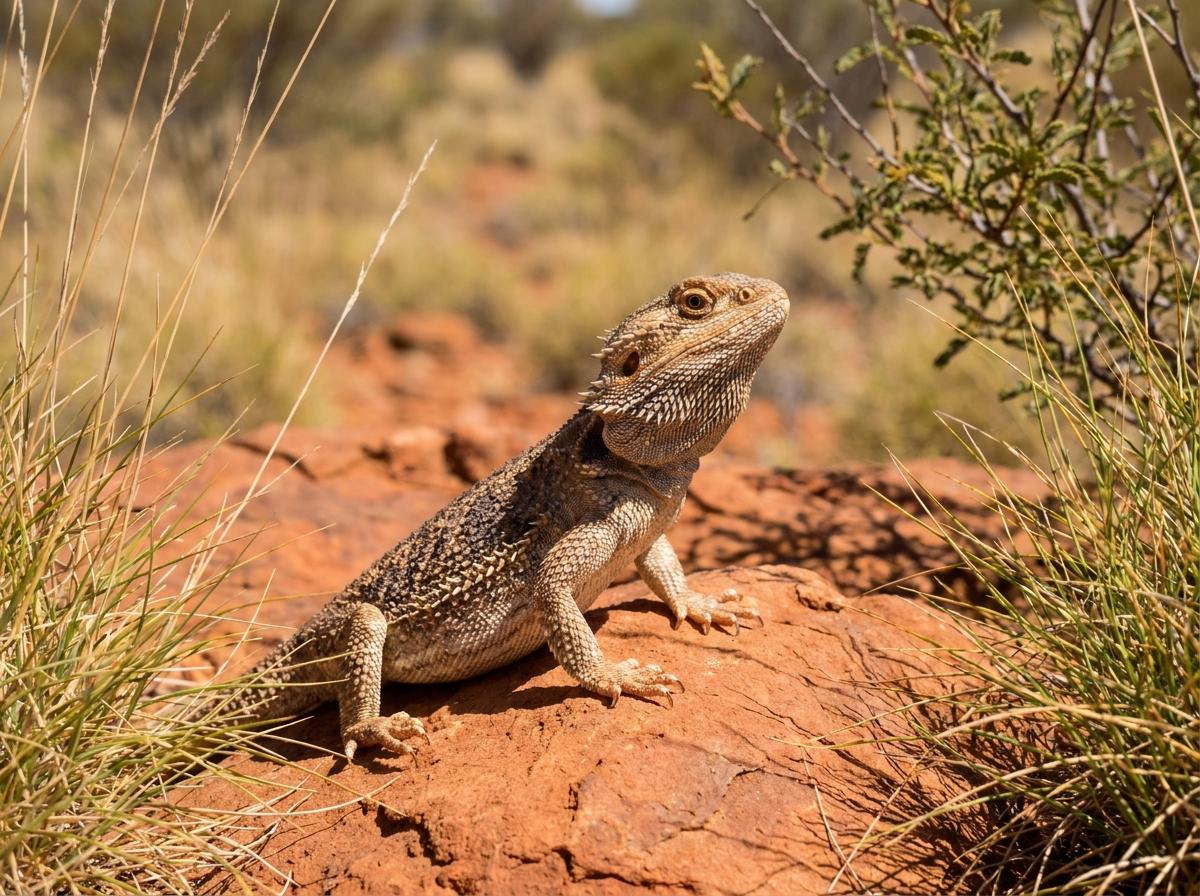
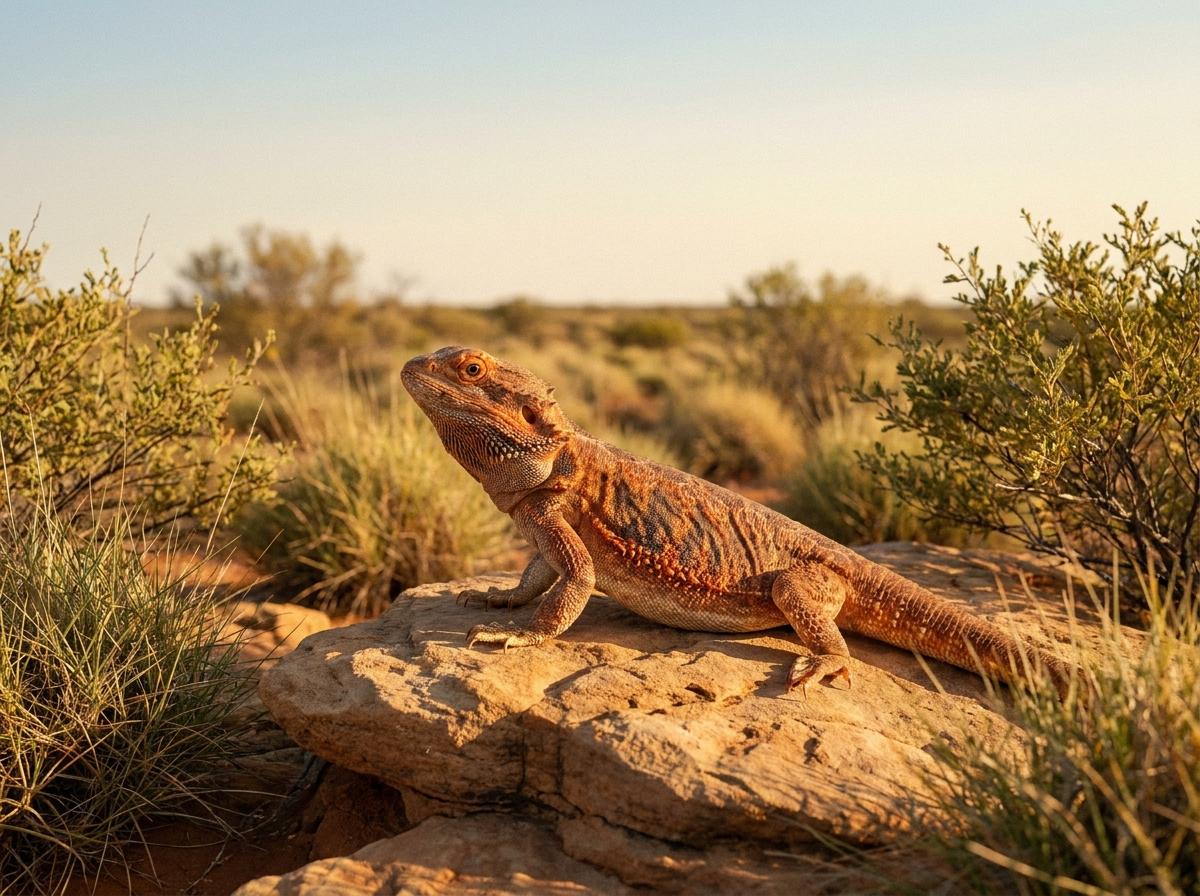
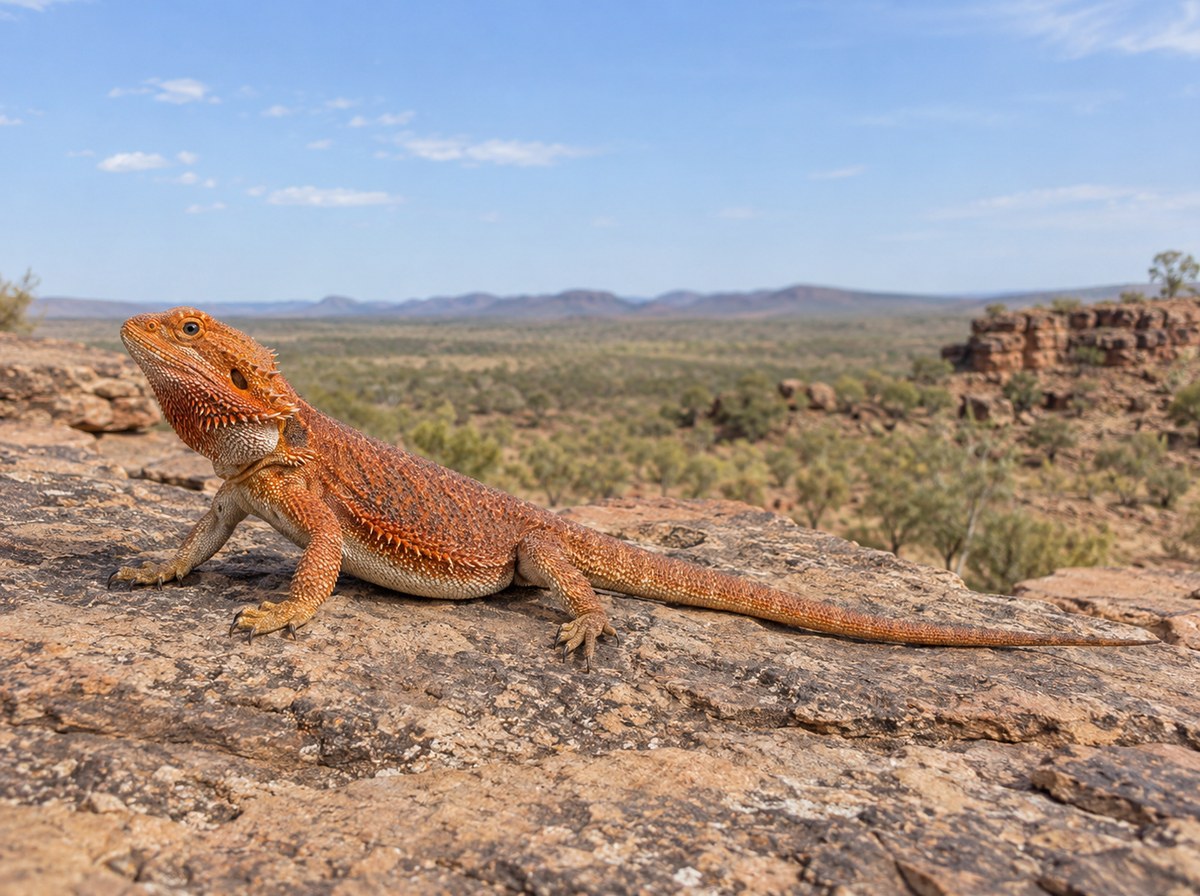
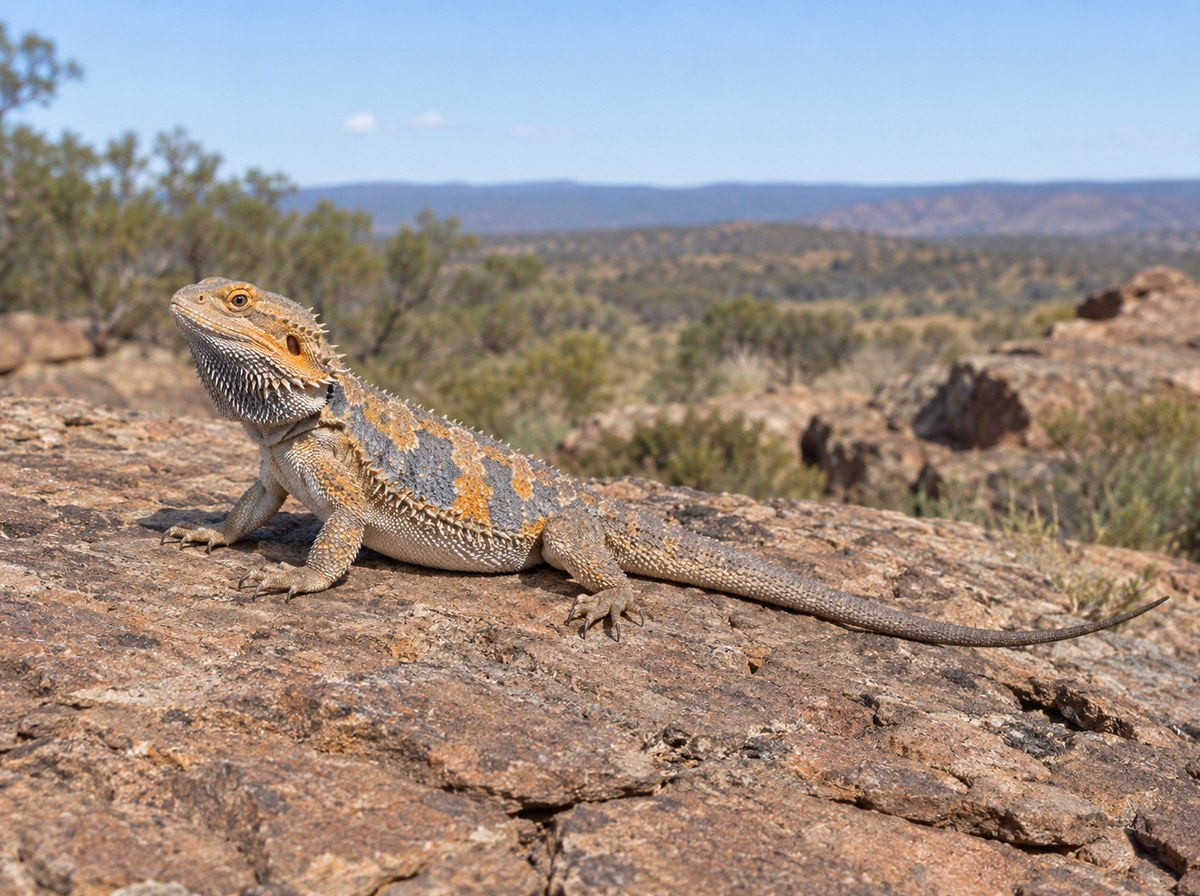
AI-generated illustration on a weathered log in an outback-style landscape. This scene is not an enclosure or a husbandry setup.
Price and seller questions
There is no universal Paradox price: the label covers variable appearance and very different seller claims. Compare current quotes for identified individuals, with the date, location, age and included costs clear. Asking prices alone do not establish what animals actually sell for.
A sensible written description separates visible markings from documented lineage and from predictions. Ask whether current photographs show the exact animal, whether additional traits are known or only suspected, and what health information and arrival terms are included. Do not pay a breeding premium on the assumption that attractive patches reliably reproduce.
Common questions
Is Paradox a separate bearded dragon species?
No. It is a color-pattern description used for domestic bearded dragons.
Can two Paradox dragons reliably produce Paradox babies?
The label alone does not support that prediction. Ask for the evidence behind any specific claim; no simple breeding percentage is established in this guide.
Does every Paradox dragon need special care?
The label itself does not define a separate care regime. Meet ordinary bearded-dragon needs and address individual health, skin or eye issues with a qualified veterinarian.
Do this next on Creatures
Use the bearded dragon hub to keep the color description separate from the animal’s species and care needs.