


Author: Elliott Garber, DVM · Updated
Seeing What the Judge Sees
Livestock judging is the structured evaluation of animals against a standard of excellence. Whether you are a 4-H member placing your first class of heifers, a breeder evaluating your own herd for culling and selection decisions, or a buyer assessing cattle at a sale, the ability to systematically evaluate livestock is one of the most valuable skills in the cattle industry.
Want to see high-quality animals up close? find breeders in your area on Creatures to connect with experienced breeders.
Judging is not subjective opinion. It follows a defined methodology: observe, compare, prioritize, and decide. The best judges process this sequence quickly and consistently, arriving at placings that would be similar regardless of which competent judge evaluated the same class. Learning this methodology sharpens your eye for livestock quality in every context, from the show ring to the sale barn to your own pasture.
This guide covers the fundamentals of livestock evaluation, the systematic approach used by experienced judges, how to develop your eye through practice, and how judging skills translate directly to better buying, breeding, and selling decisions.
The Four-Step Evaluation Method
Step 1: Information Gathering
Before evaluating the animal, understand the context. What class is this? What breed? What is the animal’s age, sex, and intended purpose (breeding or market)? The criteria for evaluating a yearling heifer in a breeding class differ from the criteria for evaluating a market steer. A bull should be evaluated for masculinity and structural soundness for breeding; a steer should be evaluated for muscling, finish, and carcass merit.
In a formal judging competition, the class description provides this information. When evaluating cattle for purchase or breeding decisions, you gather context from the seller, the catalog, or your own knowledge of the animal’s background.
Step 2: Observation
Observe the animal (or group of animals) systematically. Start with the overall impression from a distance, then move to specific structural evaluation.
From the side (profile view):
- Overall balance and proportion: Does the animal look “put together” with no one feature dominating or out of proportion?
- Topline: Level and strong from the shoulder through the loin to the rump, or does it dip behind the shoulder, hump through the loin, or slope steeply through the rump?
- Depth of body: Adequate spring of rib and depth of flank indicate capacity and feed conversion ability
- Length of body: Proportional length from shoulder to hip, not stuffy (too short) or rangy (too long)
- Leg structure: Correct set of the hock (not too straight/post-legged and not too much angle/sickle-hocked), adequate bone, clean joints
From the rear:
- Width and muscling through the stifle, quarter, and round
- Structural correctness: feet pointing straight ahead, hocks not turned in (cow-hocked) or out
- Levelness across the pins and hooks
From the front:
- Chest width and depth
- Front leg placement: straight and square, adequate width between the front legs
- Head and neck: breed character, clean throat, alert expression
In motion:
- Free, fluid movement with adequate reach and drive
- No lameness, stiffness, or short-striding
- Tracks straight (feet land in line with the direction of travel)
Step 3: Comparison
In a judging class, you are not evaluating animals in isolation. You are comparing them to each other. After observing each animal individually, compare them on the traits that matter most for the class.
Prioritize the differences. Two animals may be very similar in muscling but dramatically different in structural soundness. The bigger difference is the one that drives the placing. Experienced judges identify the “major grants and minor criticisms” between animals: the significant advantages that justify placing one animal over another, and the minor faults that are acknowledged but do not outweigh the advantages.
Step 4: Decision
Place the class from first to last based on your comparison of the animals on the traits that matter most. The top animal should have the fewest significant faults and the most significant advantages relative to the others.
In formal judging, you will need to defend your placing with oral reasons (see below). Even in informal evaluation (at a sale barn, in your own pasture), articulating why you ranked animals the way you did reinforces your evaluation skills and reveals gaps in your reasoning.
What Judges Prioritize
Structural Soundness
Structural soundness is the most heavily weighted trait in nearly every livestock evaluation context. An animal with poor feet and legs will break down, regardless of how well-muscled or well-balanced it appears. Judges evaluate:
- Feet: Correct shape (not overgrown, cracked, or misshapen), even toe size, adequate heel depth
- Hind legs (side view): Moderate set to the hock. Too straight (post-legged) leads to joint stress. Too much angle (sickle-hocked) leads to lameness.
- Hind legs (rear view): Hocks should be parallel, not turned in (cow-hocked) or bowed out
- Front legs: Straight when viewed from the front, with adequate width between them
- Movement: The ultimate test of structural soundness. A sound animal moves freely and fluidly. An unsound animal compensates, and the compensation is visible in the gait.
Our guide to showing cattle covers how judges evaluate animals in the ring, and our buying checklist provides a structured approach to evaluating structural soundness when purchasing.
Muscling
Muscling is the degree and pattern of muscle development, particularly through the quarter (hindquarter), loin, and forearm. In beef cattle evaluation, muscling reflects the animal’s genetic potential for lean meat production.
Evaluate muscling from the rear (width and depth through the stifle and round), from the side (thickness through the loin and forearm), and in motion (definition and expression when walking). Well-muscled animals show visible definition between muscle groups, especially through the stifle (where the round meets the gaskin).
Balance and Eye Appeal
Balance is the harmonious proportion of all parts. A balanced animal looks “right” from every angle, with no single feature disproportionate to the rest. Balance is partly objective (proportional measurements) and partly aesthetic (the animal simply looks correct). It is the trait that experienced judges evaluate almost instinctively because they have seen thousands of animals and can identify when something is off.
Breed Character
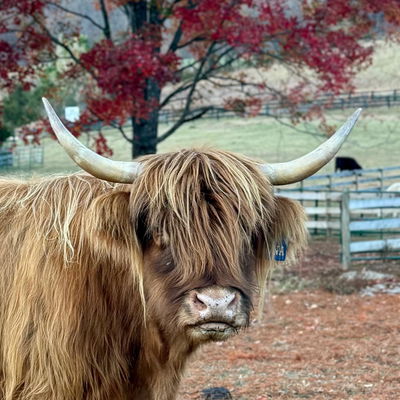
In breed-specific shows, judges evaluate how well the animal represents its breed’s ideal type. For highland cattle, this includes proper coat texture (wavy, not curly), dossan (forelock), horn set, and overall breed presence. For Angus, it includes smooth, clean lines, adequate size, and the breed’s characteristic muscling pattern. Each breed association publishes a breed standard that defines the ideal, and judges evaluate animals against that standard.
Condition
Judges evaluate whether the animal is in appropriate condition for its class. Overconditioned animals carry excess fat that can mask structural faults and indicate a producer who is feeding to compensate for genetic shortcomings. Underconditioned animals may have health or management issues. The ideal is an animal at its natural best: well-fed, healthy, and showing its genetic potential without artificial enhancement.
Oral Reasons
What They Are
In competitive livestock judging (4-H, FFA, collegiate), participants deliver oral reasons: a structured verbal defense of their placings for each class. Oral reasons are scored on accuracy (agreement with the official placing), terminology (use of correct livestock evaluation language), and delivery (organization, confidence, and completeness).
Even if you never compete in a judging contest, learning to articulate reasons develops your ability to evaluate livestock systematically. The discipline of putting your observations into words forces you to be specific about what you see and why it matters.
Structure of Oral Reasons
A standard set of oral reasons follows this format (using a 1-2-3-4 placing as an example):
- Opening statement: “I placed this class of [yearling Angus heifers] 1-2-3-4.”
- Top pair (1 over 2): Describe why you placed 1 over 2. Lead with 1’s biggest advantage (“In my top pair, I placed 1 over 2. 1 is a longer-bodied, more structurally correct heifer who stands on more bone and moves with more freedom of stride…”). Acknowledge 2’s advantages (“I will grant that 2 is the thicker-made heifer of the pair…”).
- Middle pair (2 over 3): Same structure. Grants and criticisms between 2 and 3.
- Bottom pair (3 over 4): Same structure. Why 3 places above 4.
- Closing statement (optional): A brief sentence reinforcing your top placing.
The entire set of reasons should take approximately 2 minutes. Competitive judging teams practice delivering reasons until the structure becomes automatic, allowing them to focus on the content rather than the format.
Key Terminology
Livestock judging uses specific terminology that communicates observations precisely:
- “Longer-bodied” / “shorter-coupled”: Describes relative body length
- “More expressive muscling”: Greater muscle definition and shape
- “Stands on more bone”: Larger bone circumference, indicating a stronger skeletal foundation
- “Freer moving” / “more freedom of stride”: Moves with a longer, smoother gait indicating better structural soundness
- “More spring of rib”: Greater curvature of the ribs, indicating body capacity
- “Leveler topped”: A more level topline (back)
- “Deeper flanked”: Greater depth through the flank area, indicating feed capacity
- “Higher quality” / “more refinement”: Smoother, cleaner appearance with less coarseness
Developing Your Eye
Practice Judging
Livestock judging is a skill that improves with practice. The more animals you evaluate systematically, the faster and more accurate your assessments become.
Create a free Creatures account and create a profile for your animals on Creatures on Creatures to track conformation details and build your eye for livestock quality.
Practice resources:
- Livestockjudging.com: Offers over 2,600 practice judging classes with photos, official placings, and reasons. This is the single largest online resource for livestock judging practice.
- University extension judging guides: Many land-grant universities publish free livestock evaluation manuals with photos and terminology guides. Oklahoma State, Texas A&M, and Penn State offer particularly thorough resources.
- Local livestock judging contests: 4-H, FFA, and collegiate judging contests provide live-animal evaluation experience with coaching and feedback. Many county extension offices host open judging clinics before fair season.
- Attend shows as a spectator: Watch the judge work. Before the judge places the class, make your own mental placing. Compare your placing to the official result and listen to the judge’s oral reasons to understand where your evaluation differs.
Judging at Sales and in Your Own Herd
The same skills that win judging contests apply directly to practical cattle management:
- Buying cattle: Evaluate the same traits a judge would before bidding at auction or purchasing through a marketplace. Structural soundness, muscling, balance, and breed character determine the animal’s productive value and longevity.
- Culling decisions: Rank your cows the same way you would rank a judging class. The bottom animals (poorest structure, lowest productivity, worst breed character) are your cull candidates. Systematic evaluation prevents emotional attachment from overriding objective assessment.
- Breeding decisions: Evaluate your herd’s weaknesses and select sires that correct them. If your cows lack depth of body, prioritize bulls with strong depth. If feet and legs are the weak point, structural soundness becomes the top priority in bull selection.
- Pricing stock: Understanding how judges evaluate cattle helps you price your own animals accurately. An animal that would place well in a strong class is worth more than one that would place at the bottom.
The Scoring System in Competitive Judging
How Placings Are Scored
In competitive livestock judging, each class has an official placing determined by an expert judge. Contestants are scored based on how closely their placing matches the official one, using a system called “cuts.”
Cuts represent how close the pairs are. A “close” pair (two animals that are very similar in quality) receives a small cut value (1 to 3 points). A “wide” pair (two animals that are clearly different in quality) receives a large cut value (4 to 7 points). The maximum possible score per class is 50 points.
If the official placing is 1-2-3-4 with cuts of 5-2-4, and you placed 1-3-2-4, you lose points only for switching the middle pair. Since that pair’s cut was 2 (close), you lose only 2 points for a class score of 48 out of 50. But if you switched the top pair (placing 2-1-3-4), you lose 5 points because that was a wide cut, scoring 45 out of 50.
This system rewards contestants for getting the close calls right but penalizes them more heavily for missing obvious placings.
Frequently Asked Questions
How do I get started in livestock judging?
Start by evaluating animals you see regularly, whether in your own herd, at a local sale barn, or at the county fair. Practice placing groups of four animals from best to worst, and try to articulate why you placed them the way you did. Then seek out coaching: a 4-H or FFA livestock judging team, a university extension judging clinic, or online practice classes through resources like livestockjudging.com.
Do I need to compete in judging to benefit from learning it?
No. The evaluation skills are valuable regardless of whether you compete formally. Many successful cattle producers never participated in a judging contest but learned the same skills through years of evaluating cattle for practical purposes. The systematic approach, terminology, and eye for livestock quality transfer to every aspect of cattle management.
What is the difference between showmanship and judging?
Showmanship is the exhibitor’s skill in presenting an animal in the ring (handling, posture, awareness of the judge, grooming). Judging is the evaluation of the animal’s inherent qualities (structure, muscling, balance, breed character). Showmanship judges the person; conformation judging evaluates the animal. Both are separate competitions at most fairs and shows, though they use complementary skills.
How long does it take to develop a good eye for livestock?
Like any skill, it varies by individual and practice intensity. Most people can learn the basics of structural evaluation and muscling assessment within a few months of regular practice. Developing the speed and confidence to evaluate cattle quickly and accurately takes years of repeated evaluation across many animals, breeds, and contexts. Competitive judging team members often describe a breakthrough moment after 6 to 12 months of intensive practice where evaluation becomes more intuitive.
Next Steps
- Read our guide to showing cattle for a deeper understanding of what judges evaluate in the show ring and how to present your animals effectively.
- Browse animals on the Creatures Marketplace and practice evaluating listings using the judging criteria covered in this guide. Compare your assessment with the seller’s description and pricing.
- Connect with experienced breeders in the Creatures directory who can mentor you in livestock evaluation specific to your breed and region.