



Dwarf Papillon Rabbit: Breed Profile, Markings, and Buying Guide
Author: Elliott Garber, DVM
The Dwarf Papillon is a small, spotted, butterfly-marked rabbit recognized by the American Rabbit Breeders Association (ARBA). “Papillon” is French for butterfly, and the name comes from the breed’s signature black marking that wraps around the nose like a pair of wings. Picture a compact, white rabbit with sharp, glossy black markings: a butterfly nose, a ring of color around each eye, a round spot on each cheek, fully colored erect ears, an unbroken stripe down the spine, and a scatter of spots along each side. Adults are tiny, with show animals weighing between 2.5 and 4.25 pounds, and they pair a lively, curious personality with the easy-care coat of a short flyback fur breed. This page covers what the breed is, where it came from, how the markings work, how to care for one, its health and lifespan, what it costs, and the questions buyers ask most.
What is a Dwarf Papillon rabbit?
The Dwarf Papillon is a small, marked breed of domestic rabbit. “Marked” means the breed standard is built around a specific pattern of colored markings on a white ground, rather than a solid coat color, and it is judged on how correct and balanced those markings are. The name pairs “dwarf,” for its small size, with “papillon,” the French word for butterfly, after the wing-shaped marking around the nose.
It belongs to a wider family of butterfly-marked, spotted rabbits. The same nose marking gives the much larger Checkered Giant and the English Spot their look, and French breeders historically called the English Spot “Lapin Papillon Anglais,” the English butterfly rabbit, for exactly this feature. The Dwarf Papillon is, in effect, the small companion-sized member of that spotted-rabbit group. If you are weighing it against other rabbits, the broader Creatures rabbit species page is a good place to compare it with breeds like the plush-coated Velveteen Lop, the wool-coated American Fuzzy Lop, and the racy Belgian Hare.
One point worth clearing up early: despite the “dwarf” in the name, this is a small rabbit defined by its weight class and stocky build, not the same compressed, round-headed look as a Netherland Dwarf. The ARBA working standard calls for a relatively stocky, full-arch body with a bold, well-proportioned head, and it sets the size by weight rather than by a dwarfing description. Treat “dwarf” here as “small,” and judge the animal in front of you on the standard, not on the name.
History and ARBA recognition
The Dwarf Papillon is a recent arrival in the United States, but its roots are European. The breed developed in Germany under the name Zwergschecken, which translates roughly to “dwarf check” or “dwarf spotted,” part of Europe’s long tradition of small spotted rabbits. The modern push to bring it to North America took shape around the 2015 Europa show in Metz, France, where small papillon-type rabbits from several European countries were exhibited together, and foundation stock was then imported to the United States from France and Switzerland (Dwarf Papillon, ARBA).
A small core group of breeders established the rabbit in the United States under the name Dwarf Papillon and carried it through ARBA’s multi-year recognition process. That process is deliberately demanding: a new breed has to be presented at consecutive national conventions and pass review before it is accepted into the Standard of Perfection. The breed cleared that bar in 2020, when the chocolate Dwarf Papillon was recognized by ARBA as its 50th breed (Dwarf Papillon, ARBA).
Since then the breed has continued to add varieties through the same standards process. The early working standard covered black, blue, and chocolate marked animals, and lilac, tortoise, and tri-color have since been brought forward as additional varieties. Because the breed is still young and growing in the United States, the precise list of accepted varieties is best confirmed against the current ARBA Standard of Perfection at the time you are reading, rather than assumed.

The markings, explained
The whole point of a Dwarf Papillon is its pattern, so it is worth understanding the parts. On a clean white ground, the breed standard asks for a specific set of markings, each one a separate judged feature (ARBA Dwarf Papillon working standard).
- Butterfly. The signature marking. The colored marking circles the nose from lip to lip in the shape of butterfly wings, with a central “nose fork” rising toward the forehead. A split butterfly or a white spot inside it is a disqualification on the show table.
- Eye circles. An even ring of color surrounds each eye. The two circles should match and stay separate from the ear markings, cheek spots, and butterfly.
- Cheek spots. A round spot of color on each cheek, balanced with the other head markings and clearly separated from the eye circles. A missing or doubled cheek spot is a disqualification.
- Ears. The ears are colored solidly down to the base, with the color cut off cleanly at the base. Any white spot on an ear is a disqualification.
- Spine marking. A strip of color running in an unbroken line from the base of the ears, along the back, through the tip of the tail. Importantly, the standard wants a clean stripe, not a herringbone or barred effect, which is treated as a fault.
- Side markings. Individual spots or groups of spots on each side, balanced left to right, well separated from the spine, and not carried too far down toward the belly. Fewer than two spots or groups on a side is a disqualification.
If you are buying purely as a pet, you do not need a show-perfect animal, and a rabbit with a slightly off cheek spot or an uneven eye circle makes exactly as good a companion as a champion. The marking detail matters most if you intend to show or breed, where it is the difference between a pet-quality and an exhibition-quality rabbit. Either way, the markings are why the breed exists, and understanding them helps you read what a seller is describing.
What a Dwarf Papillon looks like
Beyond the pattern, the Dwarf Papillon has a clear body type laid out in its standard. It is a small, compact, full-arch rabbit, which means it carries its body up off the table in a continuous arch from the back of the neck over the hindquarters, posed with the forefeet extended, rather than sitting low and blocky. The body is relatively stocky with shoulders and hindquarters of roughly equal width and a short, well-rounded topline (ARBA Dwarf Papillon working standard).
The head is bold and well-proportioned, set short to the body, with a fairly wide muzzle and forehead. The ears stand erect in a slight open V and should be rounded at the tips, of good substance, and not overly long. The coat is a short, dense, fine flyback fur, the easy-care type that snaps back into place when stroked from tail to head, with none of the wool of an Angora or Fuzzy Lop. Adult show weight runs from 2.5 to 4.25 pounds, with a 2 pound minimum, which places the Dwarf Papillon firmly among the small rabbit breeds.

Temperament
Dwarf Papillon keepers and breeders generally describe the rabbit as bright, active, curious, and social, a small rabbit that likes to explore, learns routines quickly, and engages with people on its own terms. That is a practitioner consensus rather than a formally studied breed trait, and as with any rabbit, individual personality varies a great deal with handling, housing, and how much gentle daily interaction the animal gets from a young age.
It is worth setting expectations honestly: rabbits in general are prey animals, and most do not enjoy being picked up and held the way a dog or cat might, even when they are affectionate and bonded to their people. A confident, well-socialized Dwarf Papillon can be a wonderful companion that comes when called and seeks out attention, but the relationship is usually built at the rabbit’s level, on the floor, rather than by carrying it around. Children should be supervised and taught to interact calmly and close to the ground.
Care and housing
A Dwarf Papillon needs the same core care as any companion rabbit, and the breed’s short flyback coat actually makes it one of the lower-maintenance options on the grooming front.
Diet
Diet is the single most important thing you control, because it drives both digestive health and dental health. The bulk of a rabbit’s diet should be unlimited grass hay, such as timothy, with the rest made up of a measured portion of plain pellets and a daily serving of fresh leafy greens, plus constant access to clean water. The House Rabbit Society and veterinary sources are consistent that hay should be available in unlimited amounts, because the long fiber keeps the gut moving and wears down the continuously growing teeth (House Rabbit Society, GI stasis). Go easy on sugary treats and fruit.
Housing
House a Dwarf Papillon indoors where you can watch it daily, in an enclosure large enough to stretch out and stand up, with secure space to exercise outside the pen every day. Rabbits are intelligent and get bored, so they need chew-safe toys and things to investigate. Provide a litter area, since rabbits can be litter-trained, and keep the living space clean and dry.
Grooming
This is where the breed is easy. The short, dense, fine flyback fur needs only light, regular brushing, perhaps once or twice a week, with more frequent brushing during a seasonal molt to remove loose hair the rabbit would otherwise swallow. Routine checks of the teeth, eyes, nails, and rear end take a minute and catch small problems early. The marked white coat shows dirt readily, but rabbits are fastidious self-groomers and should not be bathed, which is stressful and dangerous for them.
Health and lifespan
A Dwarf Papillon kept well can be a long-lived pet. Veterinary and rabbit-welfare sources commonly put the lifespan of a well-cared-for indoor companion rabbit in the range of 8 to 12 years, with spayed or neutered indoor rabbits at the higher end (House Rabbit Society, how long do rabbits live). There is no authoritative breed-specific lifespan figure for the Dwarf Papillon, so treat that as the general companion-rabbit expectation rather than a breed guarantee.
The health priorities are the same as for rabbits as a whole. The most important one to recognize is gastrointestinal (GI) stasis, a slowdown or stop of the digestive system that is a genuine emergency: if a rabbit stops eating or stops passing droppings for 12 hours or more, it needs a veterinarian urgently. A correct high-fiber, hay-based diet is the main thing that prevents it (House Rabbit Society, GI stasis). Because rabbit teeth grow continuously, dental disease is the other big preventable problem, and again hay does the work by wearing the teeth down. Spaying female rabbits is strongly recommended on health grounds, as unspayed does have a high rate of uterine cancer as they age. Find a veterinarian who is comfortable treating rabbits before you need one, and defer all medical decisions to that veterinarian, who can examine the animal.
Cost and availability
Because the Dwarf Papillon is a young breed that only reached ARBA recognition in 2020, it is still relatively uncommon in the United States, and the pool of breeders is small compared with long-established breeds. That scarcity is the main thing that shapes both price and availability.
There is no single reliable public price for a Dwarf Papillon, and we will not invent one. As a general guide, pet-quality small rabbits typically change hands for a modest sum, often in the low hundreds of dollars or less, while a well-marked, show-prospect or breeding-quality animal from a careful breeder usually costs more, reflecting its markings, pedigree, and the work behind it. The exact figure depends heavily on quality, region, and how many breeders are active near you, so treat any number you see as a rough starting point and confirm it with the seller.
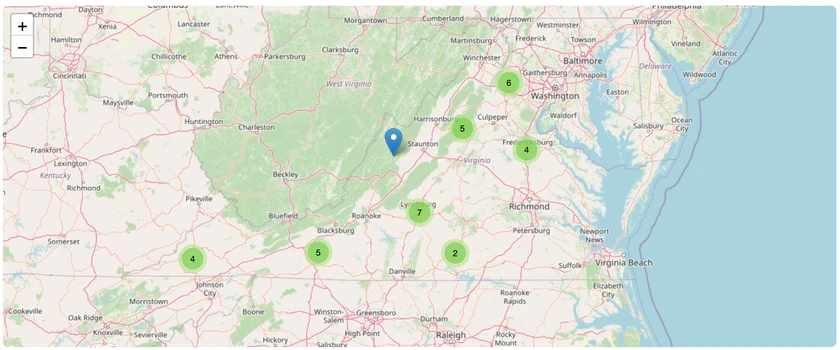
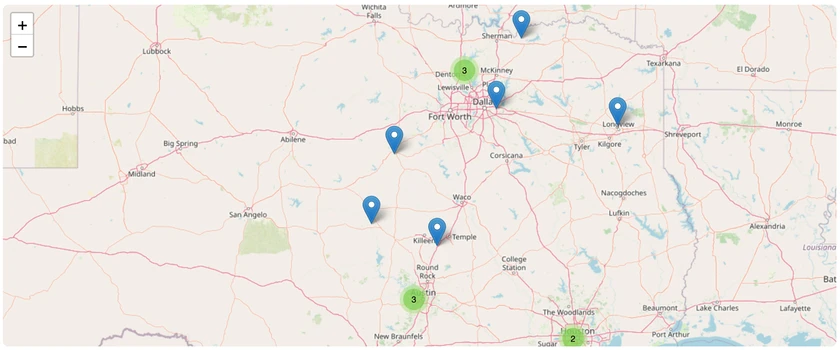
Practically, the bigger challenge with a newer breed is simply finding one. You may need to travel, get on a waiting list, or watch for stock to become available rather than expecting a nearby litter on demand. That makes a saved listing alert (below) a genuinely useful tool: instead of checking repeatedly, you can let Creatures tell you when a Dwarf Papillon is posted.
Buying considerations
Because this is a marked breed and a young one, buy on evidence and on the animal in front of you.
- Match the animal to your goal. For a pet, prioritize a healthy, well-socialized rabbit with bright eyes, clean ears and rear, good body condition, and a calm temperament. Marking faults that matter on a show table, a slightly uneven eye circle or an off cheek spot, have no effect on what kind of companion the rabbit makes. If you intend to show, then the markings and body type described above become the thing you are paying for.
- Ask about diet and health history. A good seller will tell you what the rabbit is eating (you want a hay-based diet), its age, and any health or vet history. Plan to keep it on the same food at first and transition gradually.
- See it in person or on clear video. Confirm the rabbit is alert, moving normally, eating, and free of discharge from the eyes or nose, with a clean rear and no signs of overgrown teeth.
- Confirm provenance and paperwork. For a breed this new, be clear on exactly what is being represented, especially if the animal is sold as show or breeding quality, and ask for a pedigree if one is claimed.
You can browse current Dwarf Papillon listings on the Creatures marketplace and look for breeders in the Creatures directory. Because the breed is still uncommon, a saved listing alert is often the most practical way to catch one when it appears.
Frequently asked questions
Is the Dwarf Papillon an ARBA-recognized breed?
Yes. The chocolate Dwarf Papillon was recognized by ARBA in 2020 as its 50th breed, after coming through the association’s multi-year recognition process. Additional colors and varieties have been brought forward since.
Why is it called a “Papillon” rabbit?
“Papillon” is French for butterfly, and it refers to the colored marking that wraps around the rabbit’s nose in the shape of butterfly wings. The same nose marking gives the larger Checkered Giant and English Spot their look, which is why those spotted breeds share the butterfly name.
How big does a Dwarf Papillon get?
It is a small rabbit. The ARBA standard sets senior show weight at 2.5 to 4.25 pounds, with a 2 pound minimum, on a compact, stocky, full-arch body.
Are Dwarf Papillons good pets?
Generally yes for an owner ready for a rabbit’s needs. Keepers describe them as active, curious, and social, and the short flyback coat is easy to groom. Like all rabbits, they need a hay-based diet, daily exercise, and a rabbit-savvy veterinarian, and most prefer interaction at floor level over being held.
Do Dwarf Papillons need a lot of grooming?
No. The short, dense, fine flyback fur only needs light brushing once or twice a week, with more during a seasonal molt. There is no wool to maintain, unlike an Angora or a Fuzzy Lop.
How long do Dwarf Papillons live?
There is no breed-specific figure, but a well-cared-for indoor companion rabbit commonly lives around 8 to 12 years, with spayed or neutered indoor rabbits often at the upper end of that range.
Do this next on Creatures
Whether you are researching the breed, hunting for a hard-to-find Dwarf Papillon, or already keeping one, Creatures is the records, marketplace, and directory layer to do it in one place.
Find one. Browse Dwarf Papillons on the marketplace and search trusted breeders in the Creatures directory.
Get alerted. The breed is still uncommon, so set a free Dwarf Papillon listing alert and we will tell you when one is posted. No account needed to start. See saving searches and using your watchlist for how alerts and your watchlist work.
Add your rabbit. Already have a Dwarf Papillon? Create a free animal profile in a few minutes, no account needed to start. The walkthrough is in adding an animal to Creatures.
Track health and care. Start a health and care record. The record sheet opens for any visitor to look around, and a free account saves what you enter. See adding a record and health and medical records for the full how-to, and set reminders and upcoming care so a vet check or nail trim never slips.
Raise the breed? If you breed Dwarf Papillons, create a breeder profile so buyers searching for this uncommon breed can reach you. No account needed to start.