

Japanese Amberjack
Seriola quinqueradiata
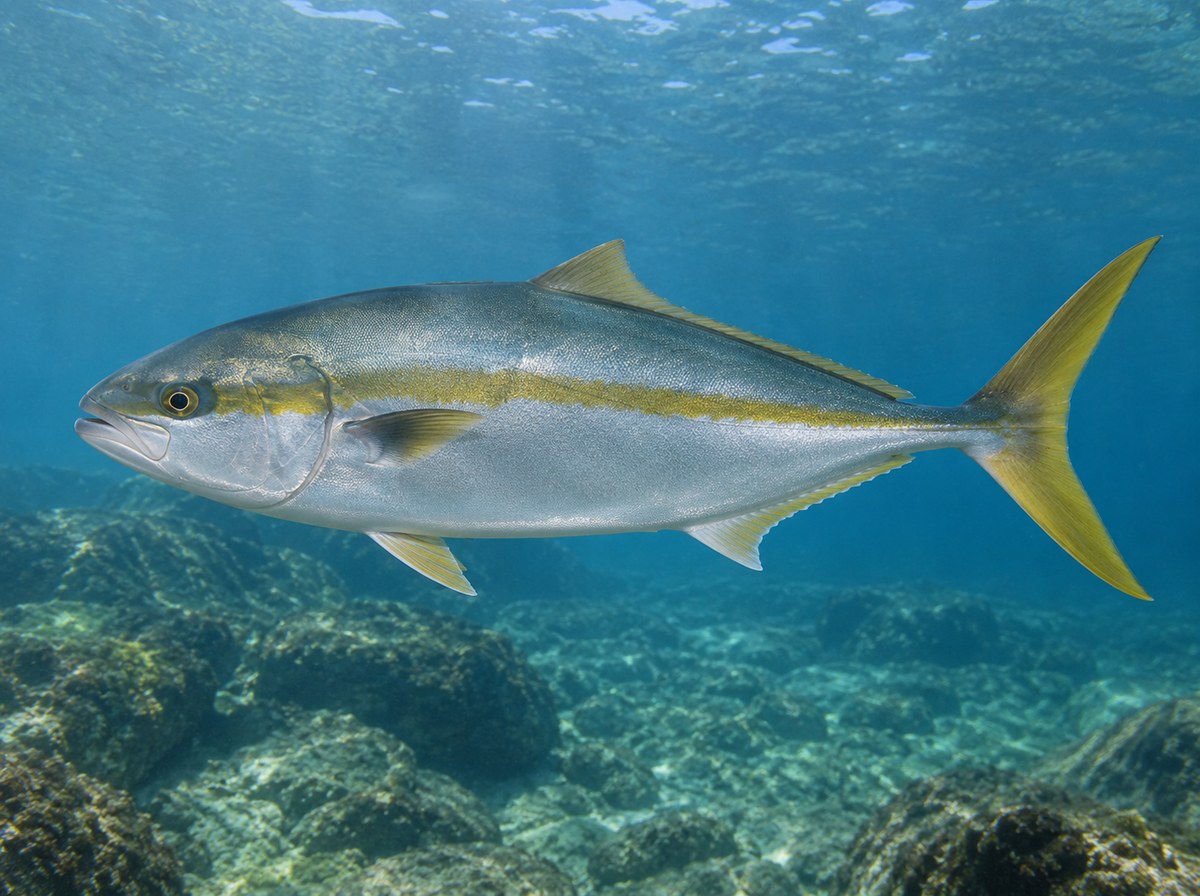
The Japanese amberjack (Seriola quinqueradiata) is a fast, schooling jack of the northwest Pacific, best known in Japan as buri and, at younger market sizes, hamachi. It has a streamlined silver body, a yellowish side stripe, a forked tail, and firm, oily flesh that made yellowtail a familiar name in sushi and sashimi markets. Wild fish migrate seasonally along the coasts of Japan, Korea, and nearby waters, feeding on small fish and squid as they grow from drifting juveniles into powerful coastal predators.
For people, this is one of Japan's most important marine aquaculture species. Juveniles may be hatchery produced or collected under regulation, then raised in sea cages where stocking density, current flow, feed quality, parasites, and red-tide risks affect both welfare and harvest quality. Buyers and seafood programs often distinguish farmed Japanese amberjack from related yellowtail species, because names overlap in trade. Responsible production increasingly emphasizes traceable fingerlings, efficient feeds, health monitoring, and farm sites where waste and escapes can be managed.