


Crossbred
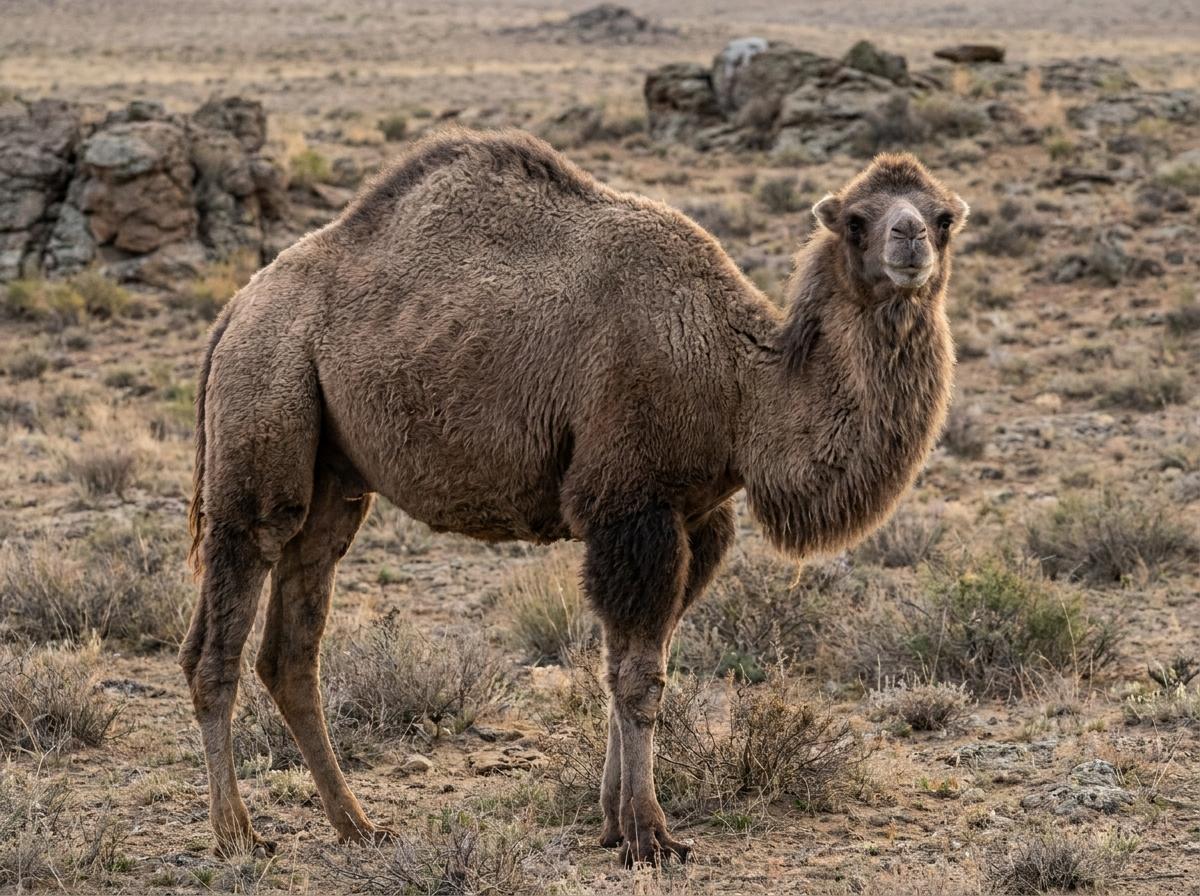
Crossbred hybrid camels are animals with both dromedary and Bactrian ancestry, usually involving Camelus dromedarius and Camelus bactrianus lines. The term can cover first-generation crosses as well as backcrossed camels that are mostly one parent species but retain some mixed ancestry. Appearance varies: many have one large elongated hump or a partially divided hump, a strong frame, long legs, and a coat ranging from light brown to reddish or dark brown. In Central Asia, the Middle East, and parts of Russia and Turkey, such camels have been valued for combining load-carrying strength, milk or meat production, and tolerance of difficult climates.
Care and handling depend on the individual and on how much it resembles its dromedary or Bactrian background. Herd managers look at temperament, foot condition, coat density, heat and cold stress, and trainability rather than relying on the crossbred label alone. These camels need sturdy fencing, experienced handling, coarse forage or browse, salt and minerals, and access to water suited to the work expected of them. Breeding records are especially useful because later-generation crosses can produce uneven hump shape, size, wooliness, and performance.
Colors: Dark Brown, Light Brown, Reddish-Brown