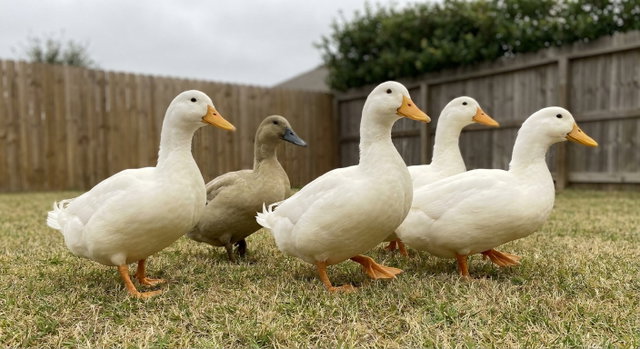
Mulard
Author: Elliott Garber, DVM · Published
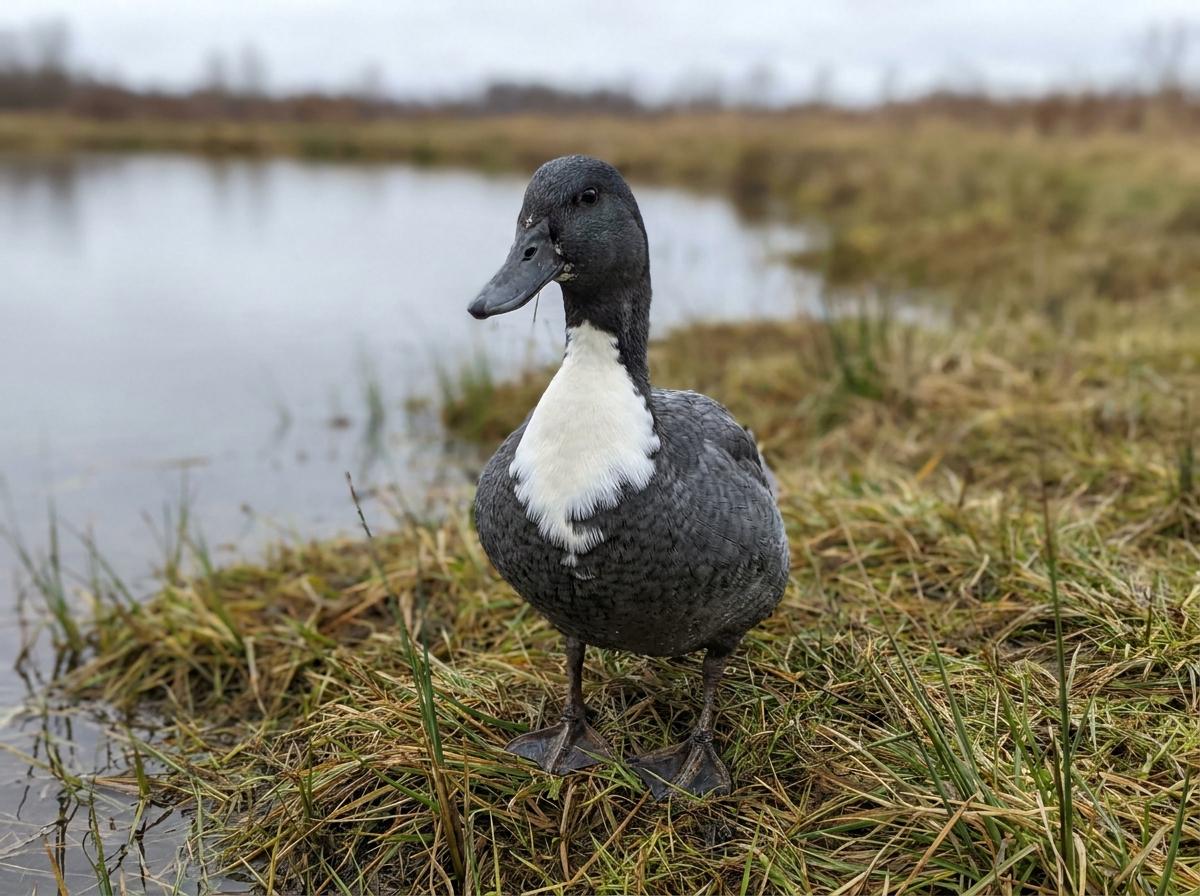
A mulard duck (also spelled moulard, and often just called a mule duck) is a hybrid, not a breed. It comes from crossing a Muscovy drake with a female of the common, mallard-derived domestic duck, most often a Pekin, and the ducklings that result are sterile. That one fact shapes everything else about the bird: every mulard has to be produced fresh from two separate parent flocks, most of the world’s mulards are raised commercially for meat and foie gras, and a homestead flock of mulards is a group of birds you raise, not a line you can breed forward.
This page covers what a mulard is, how it is produced and why it cannot reproduce, how it compares with its Muscovy and Pekin parents, what it is raised for, what to check before you keep any, and where the rules get unusual (in the United States, the Muscovy parent is a regulated migratory bird). Mulard ducklings are only offered here and there, so if you want to know when one is listed, set a free mulard listing alert on Creatures and you will hear about it without checking back. For every other duck, start at the Creatures duck species page.
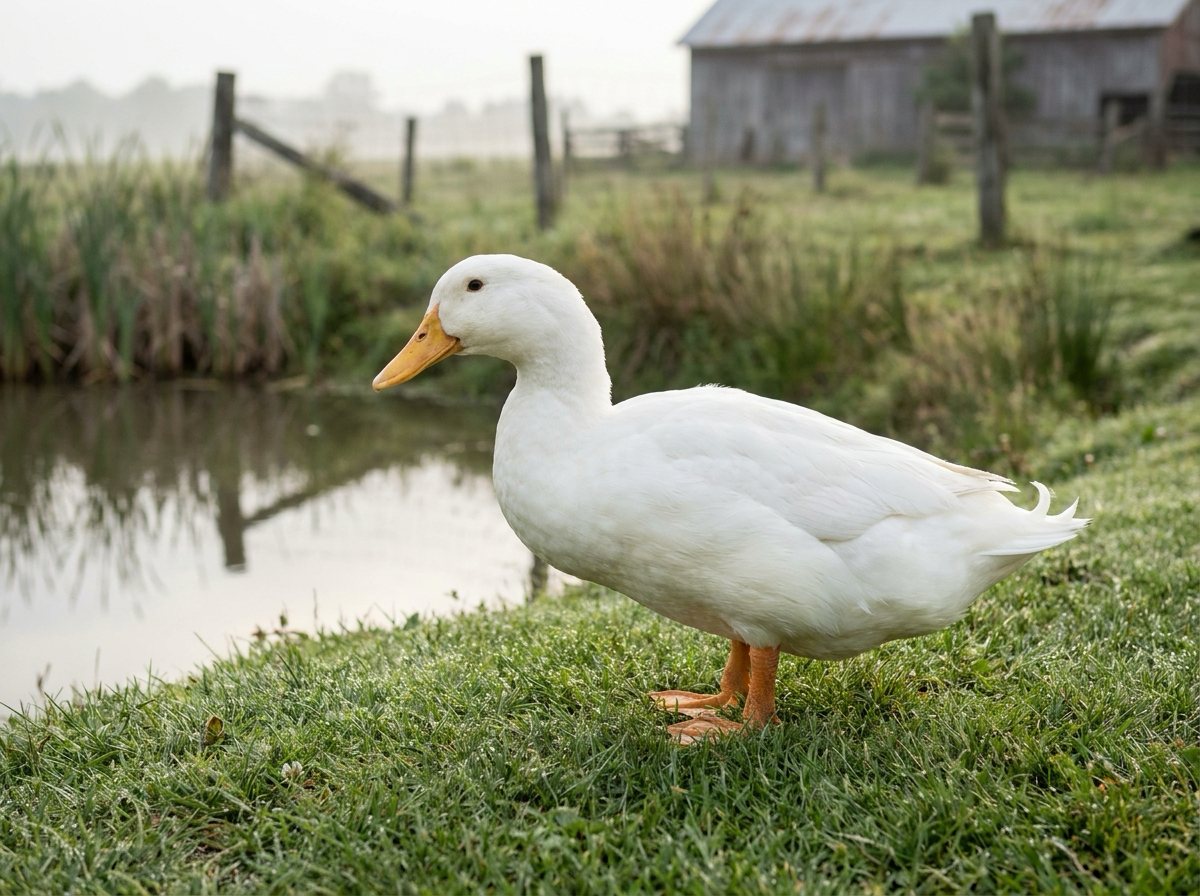
| What it is | A sterile hybrid, not a breed: Muscovy drake crossed with a common domestic duck hen |
|---|---|
| Also called | Moulard, mule duck; the reverse cross (common drake on a Muscovy hen) is a hinny duck |
| Usual parents | Muscovy (Cairina moschata) drake on a Pekin or Pekin-type hen |
| How it is made | Mostly by artificial insemination, because natural mating between the two parent species gives low fertility |
| Can it breed? | No. Mulards are sterile, so new birds must come from the parent flocks each time |
| Incubation | About 32 to 33 days (EFSA), between the common duck’s 28 and the Muscovy’s 35 |
| Main uses | Meat, and in some countries foie gras, mainly from males |
| US rules | The Muscovy parent is a listed migratory bird; check federal and state rules before you buy |
Browse listings, public profiles, breeders, or add your animal.
What is a mulard duck?
Domestic ducks fall into two groups that are much further apart than most people expect. The Cornell University Duck Research Laboratory calls the first group common ducks: the Pekin, Aylesbury, Rouen, Call, Indian Runner, Khaki Campbell, Cayuga and their relatives, all believed to descend from the mallard and all able to interbreed and produce fertile young. The second is the Muscovy, Cairina moschata, which Cornell describes as “distinctly different genetically from common ducks,” with fleshy caruncles on the head and face and a longer incubation.
Cross the two and you get a hybrid. Cornell’s naming is simple: a Muscovy male on a common female gives a mule duck, and a common male on a Muscovy female gives a hinny duck, borrowing the words used for horse and donkey crosses (the hinny and the mule are the equine versions). Some commercial breeders give their hybrids their own names, and “Moulard” is the one Cornell cites for a Muscovy drake crossed with a Pekin hen. Mulard is the common alternative spelling. In Taiwan, Cornell notes, the cross of a White Muscovy male on a Kaiya hen (itself a Pekin and Tsaiya cross) is simply called the Mule Duck.
So the word “breed” fits loosely at best. Creatures lists Mulard on its duck breeds page because people keep, buy and record these birds, but there is no breed standard, no registry, and no way to breed a second generation. A mulard is defined by its parents.
The parents: Muscovy drake and Pekin hen
The two parent species bring very different things to the cross, and the mulard sits between them on most traits.
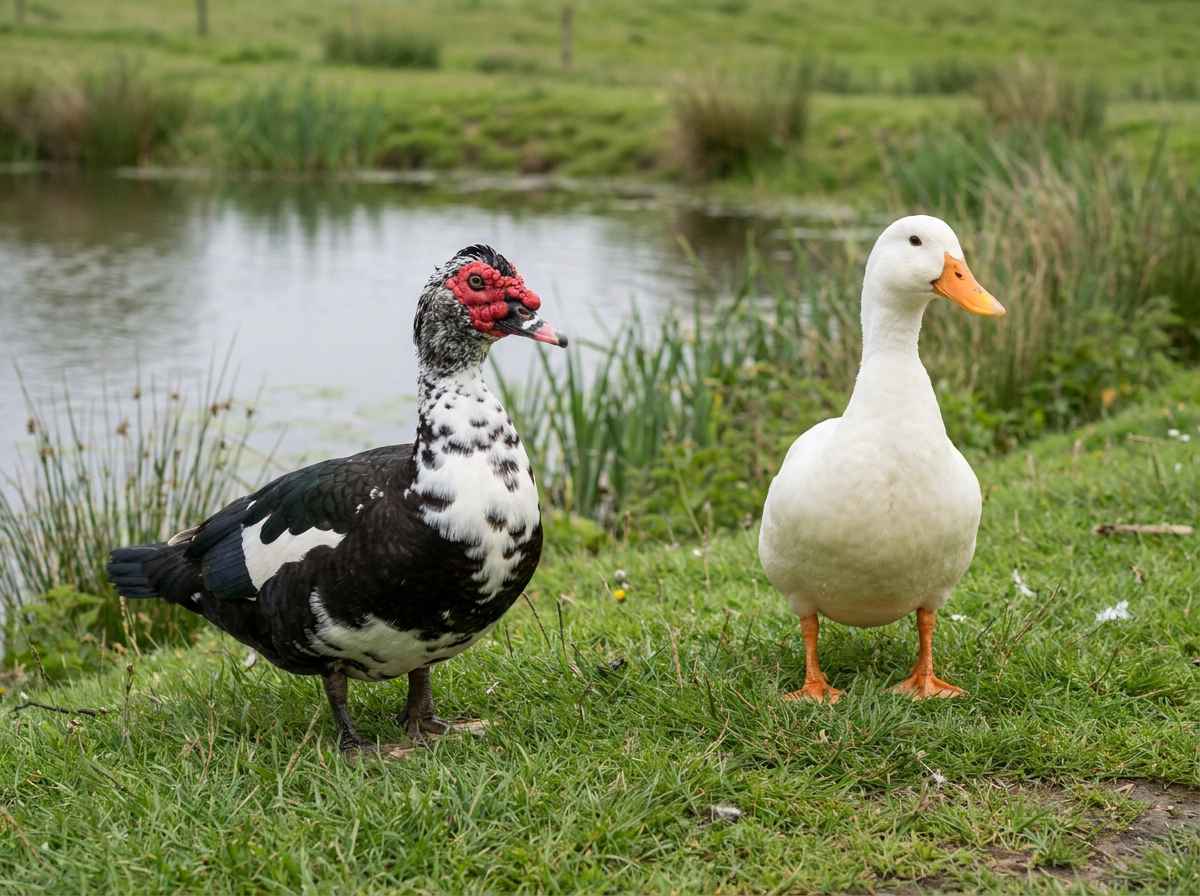
The Muscovy side. Cornell describes Muscovy males as weighing 30 to 50 percent more than females, tolerating hot weather better than common ducks, and carrying a large breast muscle (in males it often weighs about 700 grams at 13 weeks). The drawbacks Cornell lists are that big size gap between the sexes and lower fertility than most common breeds. Muscovy eggs take about 35 days to hatch.
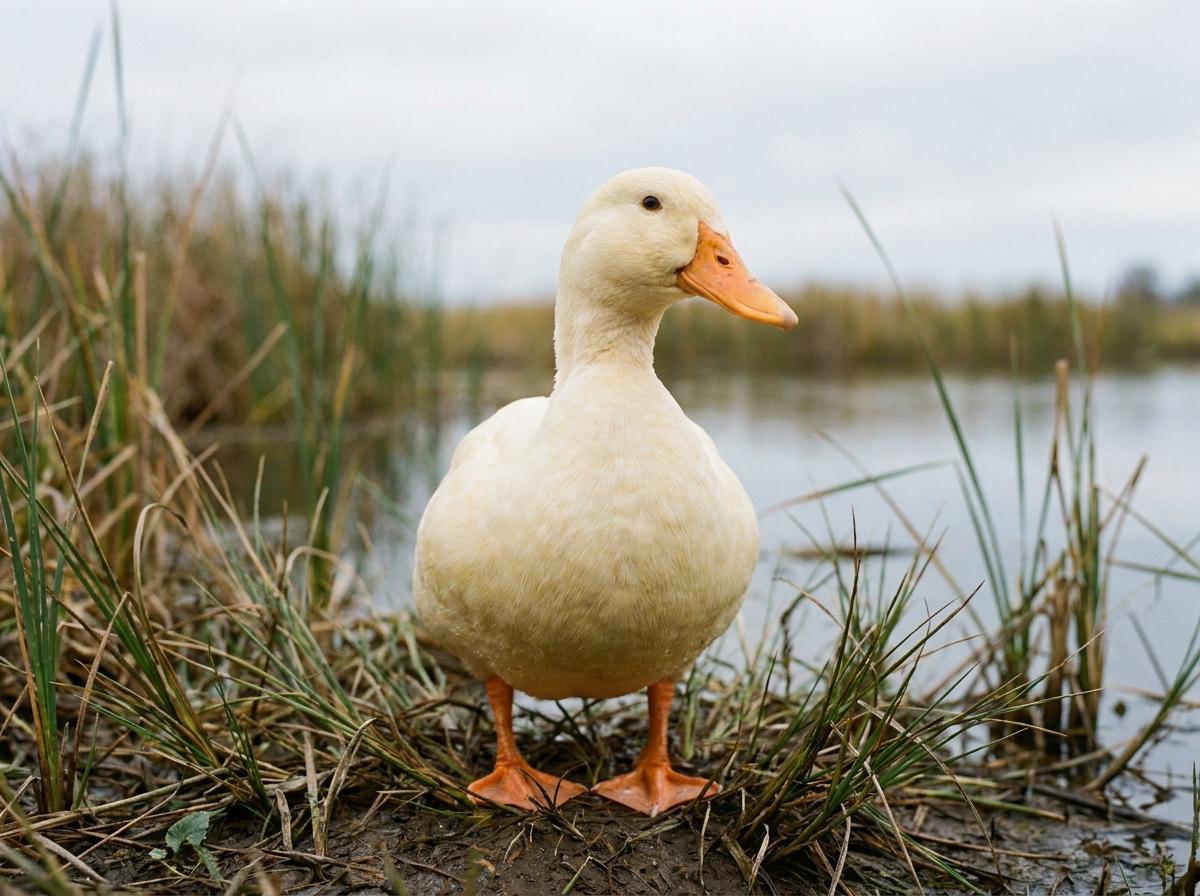
The Pekin side. The Pekin is the classic white meat duck. Cornell reports that Pekins reach about 90 percent of adult weight by 7 weeks when properly fed, and that commercially grown Pekins commonly weigh around 7 pounds (3.2 kg) at 7 weeks. Common duck eggs take about 28 days to hatch.
What the cross gets from each. Cornell’s summary is that mule ducks are an improvement over the pure Muscovy because the size difference between males and females is much smaller, and better than the Pekin because they carry more lean meat. The European Food Safety Authority’s 2023 scientific opinion on the welfare of ducks, geese and quail on farm adds a useful frame: depending on the trait, the mule duck can resemble one parent (its behaviour is closer to the Muscovy’s), fall midway between them (growth), or outperform both through hybrid vigour (for example feed intake capacity and liver weight).
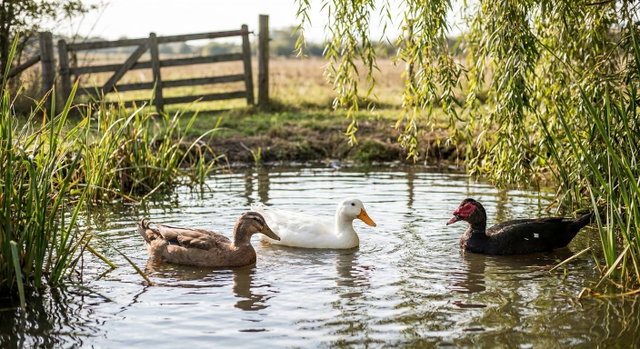
Side by side, the three birds line up like this:
- Muscovy: its own species (Cairina moschata), fertile, eggs hatch in about 35 days, drakes 30 to 50 percent heavier than ducks.
- Mulard (mule duck): a hybrid of the two, sterile, eggs hatch in about 32 to 33 days, a much smaller size gap between the sexes.
- Pekin: a mallard-derived common duck, fertile, eggs hatch in about 28 days.
Why mulards are sterile, and how they are produced
Hybrids between distantly related species are often sterile, and the mulard is a textbook case. Cornell is blunt about it: whatever the mating method, the offspring “are sterile and cannot be used for breeding.” That is why a mulard keeper cannot hatch the next generation from their own mulards, and why mulard supply depends on someone keeping Muscovy drakes and common duck hens as separate parent stock.
The cross itself is not easy. When Muscovies and common ducks are left to mate naturally, Cornell says the fertility rate is usually very low, which is why artificial insemination is now common practice. EFSA describes the same thing at commercial scale: because the parents are two different species, natural mating gives low fertility, so artificial insemination is used to produce mule ducks, with the Muscovy drakes kept as a separate parental flock. Even with insemination, the cross is less fertile than a purebred mating. In one INRA study of common duck hens inseminated with either common-duck or Muscovy semen, fertility in the crossbred eggs ran about 31 to 40 percent across the laying season against about 54 to 61 percent for the purebred eggs (Sellier and colleagues, Theriogenology, 2005).
How long mulard eggs take to hatch
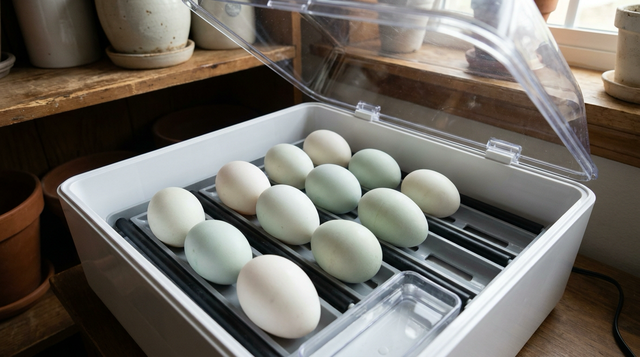
Because the embryo is a cross, incubation lands between the two parents. EFSA gives embryonic development of about 32 to 33 days for mule ducks, against about 35 for Muscovies and 27 to 28 for common ducks. A 2023 French study of one commercial mule duck genotype reported an average total incubation period of 30 days for its eggs (Andrieux and colleagues, Frontiers in Physiology), so the exact figure varies with the parent lines and the incubator settings. Plan for a longer set than a Pekin hatch and do not give up on a mule duck clutch at day 28. The timing, candling and humidity basics for ordinary duck eggs are in our sister guide, how long do duck eggs take to hatch, and if you also hatch geese, how long goose eggs take to hatch covers their longer, breed-dependent timing.
Mule hatches also skew male. A French study found 58.9 percent males among normally hatched mule ducklings, and traced the imbalance mainly to higher late-incubation losses in female mule embryos rather than to any difference at fertilization (Batellier and colleagues, Theriogenology, 2004).
If you do hatch eggs yourself, you can keep the whole clutch on Creatures: start an egg clutch (free, signed in) to set eggs, mark each one at candling, and record the hatch, then see recording births and creating a litter for turning hatchlings into a group of animals.
Size, growth, appearance and temperament
There is no breed standard for mulards, so there are no official weights. What the research literature gives is relative: growth roughly midway between the Muscovy and the common duck, and a much smaller size difference between drakes and ducks than in a pure Muscovy. When EFSA modelled space needs, it used a single working weight of 4.4 kg (about 9.7 pounds) for Muscovy and mule ducks together and said plainly that it grouped them “due to lacking data,” so treat that as a planning figure, not a target weight for your birds. Final size depends heavily on the parent strains, sex, feed and age at processing.
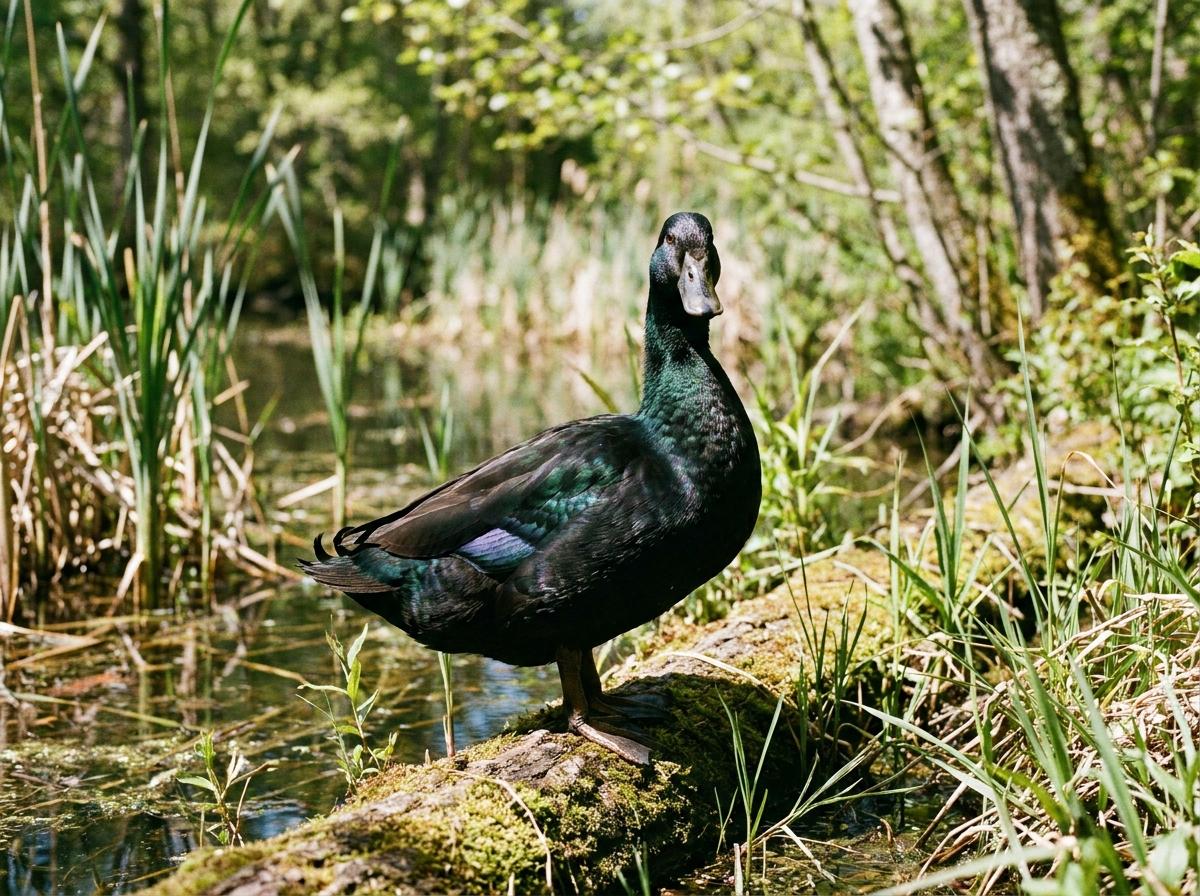
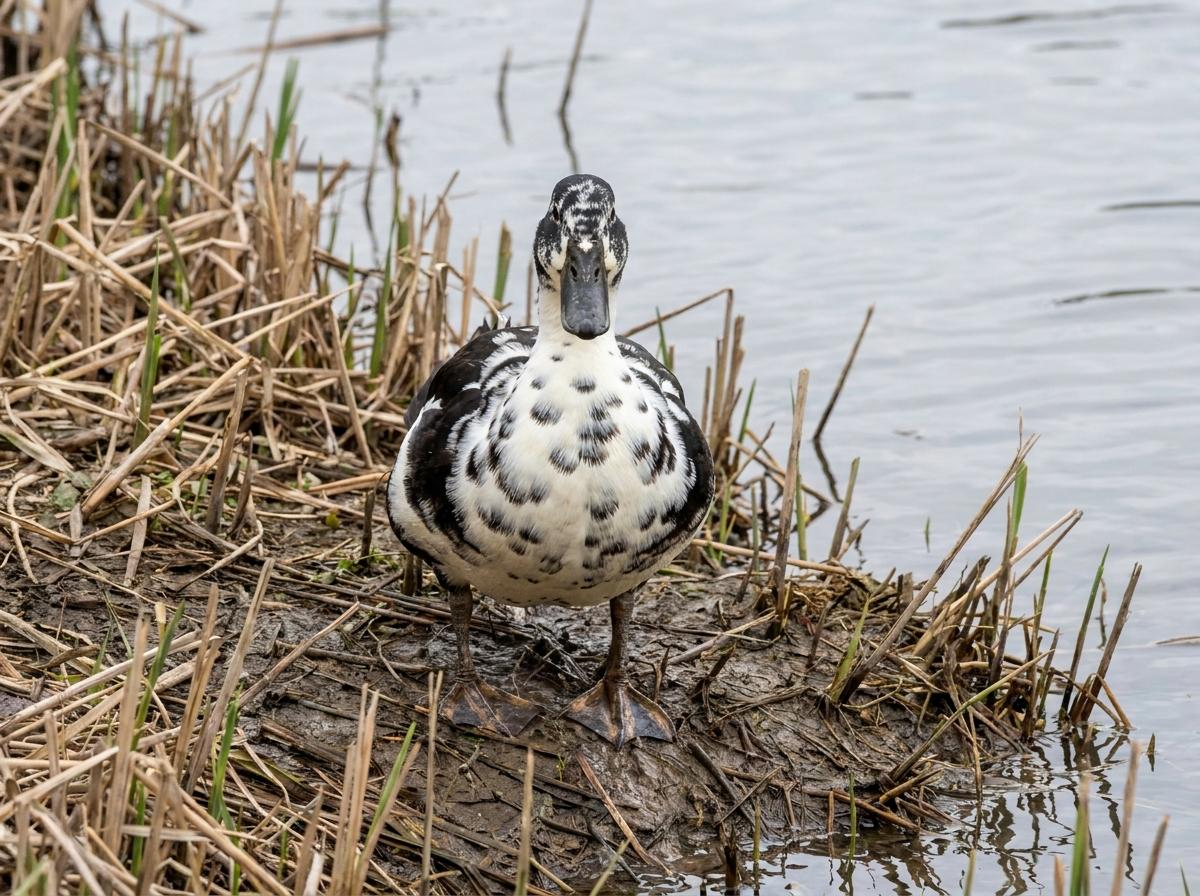
Plumage follows the parents. A white Muscovy on a white Pekin-type hen gives white or mostly white ducklings, and commercial breeders plan for it: a Taiwanese program, for instance, built its dam strain from a long-fertility Tsaiya line and a Pekin line chosen because it gives white mule ducklings, then selected mainly for fertility (Liu and colleagues, 2015). Coloured Muscovy or coloured common-duck parents give coloured or patterned mulards, so the look varies more than a true breed’s would.
Temperament. EFSA cites work finding mule duck behaviour closer to the Muscovy than to the common duck, and one study in which mule ducks were more fearful of people at 10 weeks of age than either parent line. In practice that means calm, regular handling from duckling age pays off if you plan to keep mulards past the usual processing age.
What mulards are raised for
The mulard exists as a production bird. Cornell notes that Mule Ducks are popular in Taiwan for their taste and high proportion of lean meat. In Europe, and above all in France, the main commercial use is foie gras. EFSA’s opinion describes the system without much ornament, and the facts are worth knowing whatever your view of it:
- Duck foie gras in the EU comes predominantly from male mule ducks. EFSA explains that female livers are smaller and more veined, so usually only males are reared for foie gras.
- Mule ducklings are sexed at the hatchery, by vent inspection, feather colour or eye colour, and the females are commonly eliminated after hatching. In some lines, EFSA reports that in-egg sexing by eye colour at about day 10 of incubation is gradually replacing post-hatch sorting.
- After a growing period, ducks for foie gras go through a preparation period and then a short overfeeding (force-feeding) period. EFSA notes a European recommendation that sets minimum housing standards for Muscovy and mule ducks in this phase, and assessed housing during this phase as part of its welfare review.
Overfeeding is contested. Researchers working inside the French sector have written that “overfeeding in ducks is questioned” because of possible damage to health and discomfort, and have measured how welfare indicators change during the process (Litt and colleagues, Animal, 2020). Some countries and local jurisdictions restrict force-feeding or the sale of foie gras, and the rules differ from place to place, so check your own national and local law rather than relying on a general summary.
For a small farm, the relevant use is simpler: mulards are raised as meat birds, valued for lean meat and a less lopsided size difference between the sexes than pure Muscovies.
Keeping mulards on a small farm or homestead
Mulards are kept on small farms mainly as a batch of meat birds, and occasionally as non-breeding flock members. Because they cannot reproduce, keepers tend to buy ducklings in, raise them, and buy again next season.
Check the US rules first
This is the part most guides skip. In the United States the Muscovy is on the federal list of migratory birds (50 CFR 10.13), and under 50 CFR 21.48(g) live Muscovies and their eggs may be acquired or possessed only to raise them to be sold as food, apart from birds lawfully held before March 31, 2010, and may never be released to the wild. The federal definition of a migratory bird in 50 CFR 10.12 also covers “a mutation or a hybrid” of any listed species. We are not aware of official guidance spelling out how those rules apply to a backyard mulard flock, so before you buy mulards (and certainly before you keep Muscovy drakes to produce them), ask the U.S. Fish and Wildlife Service migratory bird permit office for your region or your state wildlife agency. Outside the US, check your own country’s rules.
Housing and water
These are big, heavy waterfowl, and the welfare points that matter most are the same ones EFSA stresses for Muscovy and mule ducks on farms:
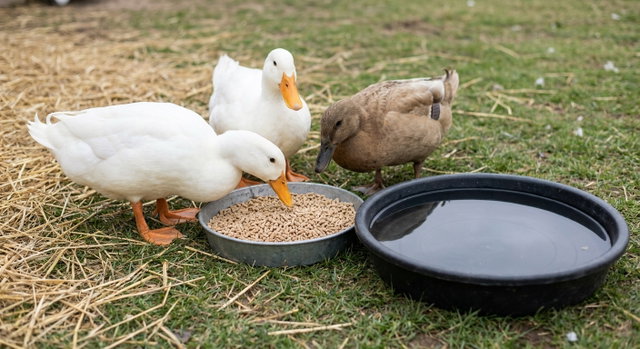
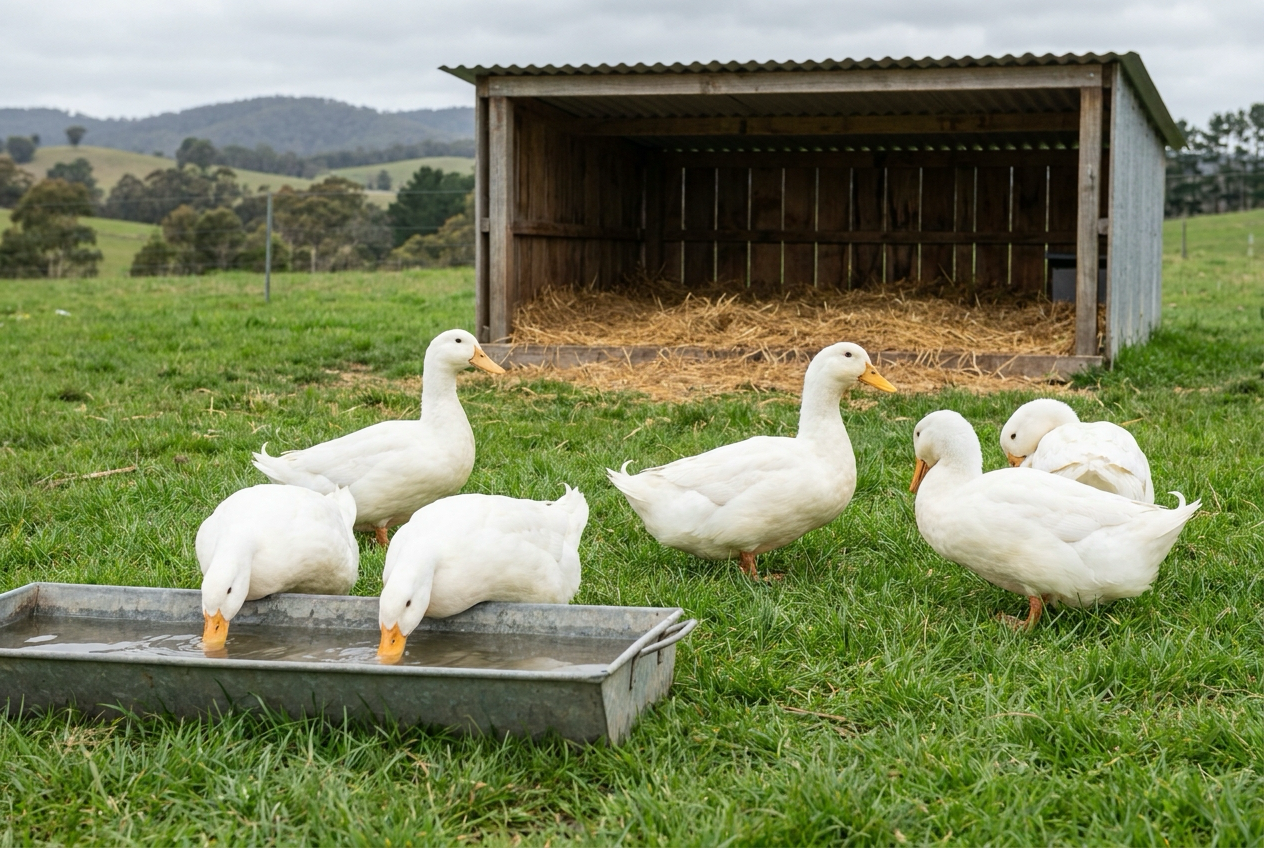
- Water they can dip their heads in. EFSA treats access to water for the birds’ biological needs as a key welfare factor and frames its space recommendation around water that allows head dipping; ducks that cannot perform comfort behaviour show eye problems and poor plumage. A wide, shallow trough or tub that you refresh often works for a small flock.
- Enough room on dry ground. EFSA calculated that a 4.4 kg Muscovy or mule duck needs about 4,061 square centimetres (roughly 4.4 square feet) of dry floor to move, rest, preen and forage normally, in a setting where water for head dipping is also provided. That is a welfare floor, not a generous allowance.
- Dry, clean bedding and sound footing. EFSA lists locomotory disorders, including lameness, as relevant for waterfowl in every housing system, and one experimental study it cites saw gait problems in mule ducks rise between 3 and 5 weeks of age. Keep litter dry around the waterer, avoid slippery or rough floors, and watch young birds’ legs during fast growth.
- Shelter and shade, plus secure night housing against predators.
Feeding
Feed them as you would any other meat duck: a waterfowl or meat-bird ration matched to age, plenty of clean water at all times, and forage if you have it. Our guide to what ducks eat covers starter and grower rations, safe treats, what never to feed, and niacin, which matters more for ducklings than for chicks (one of the requirement trials it cites was run on mule ducklings). Given the leg problems EFSA flags in growing waterfowl, follow the ration directions rather than pushing growth.
Raising ducklings
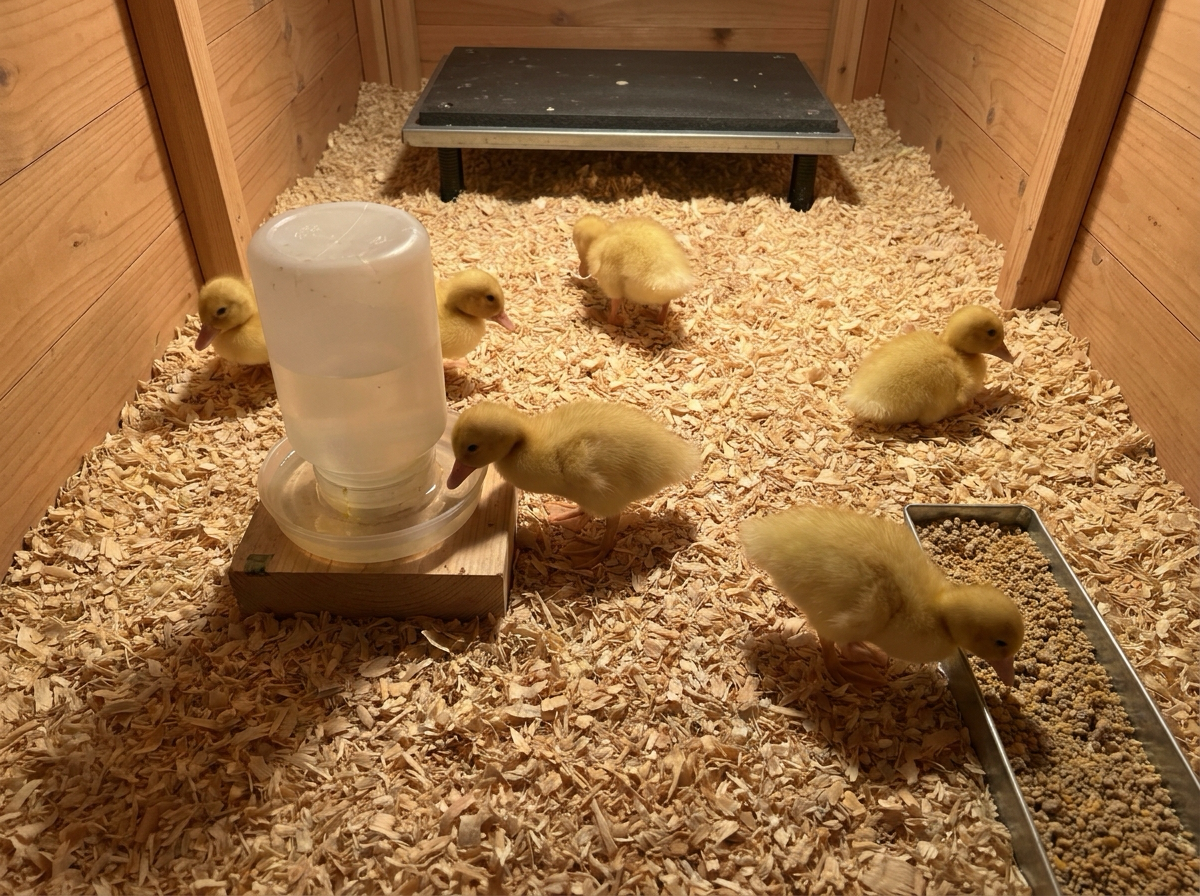
Mule ducklings are brooded like any other heavy meat ducklings: warmth they can move toward and away from, deep dry bedding, a waterer they can dip their bills into but cannot climb into and chill in, and starter feed.
Health
Treat mulards as you would any commercial meat duck: buy from a source that can tell you about the parent flocks and hatchery hygiene, keep new birds apart from an existing flock at first, keep wild waterfowl away from feed and water where you can, and call a veterinarian with poultry experience at the first sign of trouble. Medical decisions belong with that vet, not with a general article.
Keeping records
Because every mulard batch is a one-off, records are the only memory you have of what worked: hatch or arrival date, source and parent lines, feed changes, weights, losses and processing dates. That record is what lets you compare one supplier or one season against the next.
You do not need a profile for every bird. Creatures lets you track animals without individual profiles, which suits a batch of meat ducks, and you can apply records to a whole group at once.
How long do mulards live?
There is no published, mulard-specific lifespan figure we could verify, and most mulards are processed young, so very few live out a natural span. Domestic ducks in general can live many years with good care; our duck lifespan guide covers what drives that. If you keep a mulard as a long-term flock member, the heavy-body issues above (legs, feet, weight control) are what to manage as it ages.
Buying mulard ducklings
Only hatcheries that keep the two parent flocks can produce these ducklings, so supply is limited and can be seasonal, and in the United States the Muscovy rules above apply to the parent side. Things worth asking before you buy:
- What exactly is the cross? Which Muscovy line and which common duck hen (Pekin, Pekin-type, or something else)? That tells you more about size and colour than the name on the listing.
- Mule or hinny? A hinny duck (common drake on a Muscovy hen) is a different cross, and EFSA notes it is not used for the same purposes as the mule duck.
- Hatch date and sex. Ask whether the ducklings are sexed or straight run; mule hatches tend to run male.
- Is the seller clear on the legal position where you live?
- Price. We found no dated, public price data for mulard ducklings to quote, so compare current offers directly. For a realistic overall budget (brooder, feed, housing, processing), see how much a duck costs.
You can check current mulard listings on the Creatures marketplace, and search the breeder directory for waterfowl farms near you. New to saved searches? See saving searches and using your watchlist. Need names for a new batch? Try the duck name generator.
Frequently asked questions
Is a mulard duck a breed?
No. It is a hybrid between a Muscovy drake and a common, mallard-derived domestic duck hen, usually a Pekin. There is no breed standard or registry, and because mulards are sterile, every one has to be produced from the two parent species.
Can mulard ducks reproduce?
No. Cornell’s Duck Research Laboratory states that offspring of Muscovy and common duck crosses are sterile and cannot be used for breeding, whatever the mating method.
What is the difference between a mule duck and a hinny duck?
Direction of the cross. A mule (mulard or moulard) duck has a Muscovy father and a common duck mother. A hinny duck has a common duck father and a Muscovy mother. The mule is the commercially important one.
How long do mulard eggs take to hatch?
About 32 to 33 days according to EFSA, compared with about 28 for Pekins and 35 for Muscovies. One French study of a commercial genotype averaged 30 days, so the figure varies with the parents and incubation conditions.
Why are mulards used for foie gras?
Hybrid vigour gives them a large feed intake capacity and liver weight, and males produce larger, less veined livers than females. In the EU, most foie gras comes from male mule ducks. The practice is contested on welfare grounds and restricted in some places.
Can I keep mulards as pets?
People do keep them, but they are heavy production birds that cannot breed, and in the United States the Muscovy side of the cross falls under federal migratory bird rules. Check with the U.S. Fish and Wildlife Service or your state wildlife agency first, and plan for their size, water and leg-health needs.
Do this next on Creatures
Supply is thin and can be seasonal, so the most useful first step for a buyer is an alert. If you already keep mulards, records are where Creatures helps most.
Get alerted. Set a free mulard listing alert and Creatures emails you when mulard ducks are posted. No account needed to start. How it works: saving searches and using your watchlist.
Look now. Browse mulard ducks on the marketplace to see what is listed today.
Find a farm. Search the Creatures breeder directory for waterfowl breeders and farms, and ask them about mulards directly.
Add your mulards. Create a free mulard profile in a few minutes, no account needed to start. The walkthrough is in adding an animal to Creatures.
Record weights, feed and health. Add a record for a weigh-in, a feed change or a health note. The record sheet opens for any visitor, and a free account saves what you enter. See adding a record.
List your farm. Keep Muscovy or Pekin parent flocks, or raise mulards to sell? Add your farm to the directory so buyers looking for this hard-to-find cross can reach you, and read getting listed in the breeder directory.