Cayuga
Author: Elliott Garber, DVM · Published
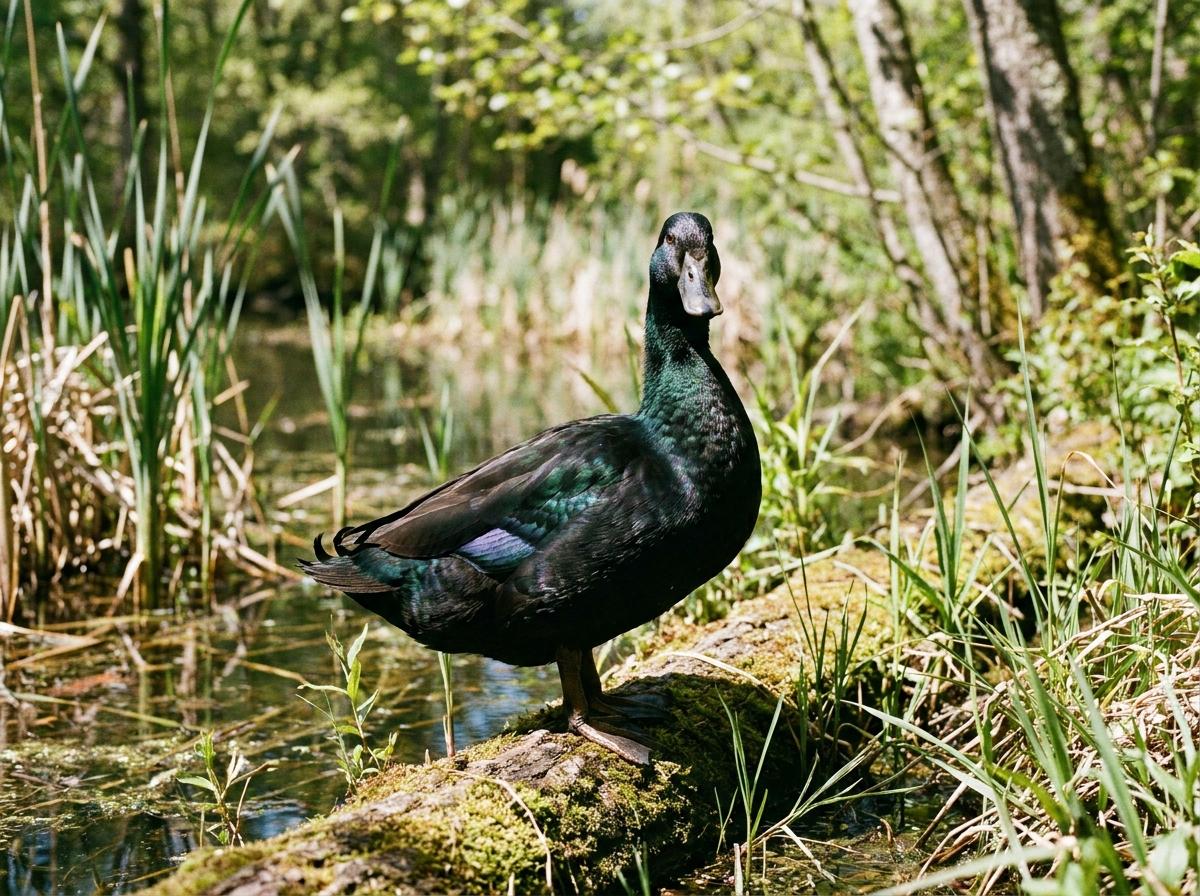
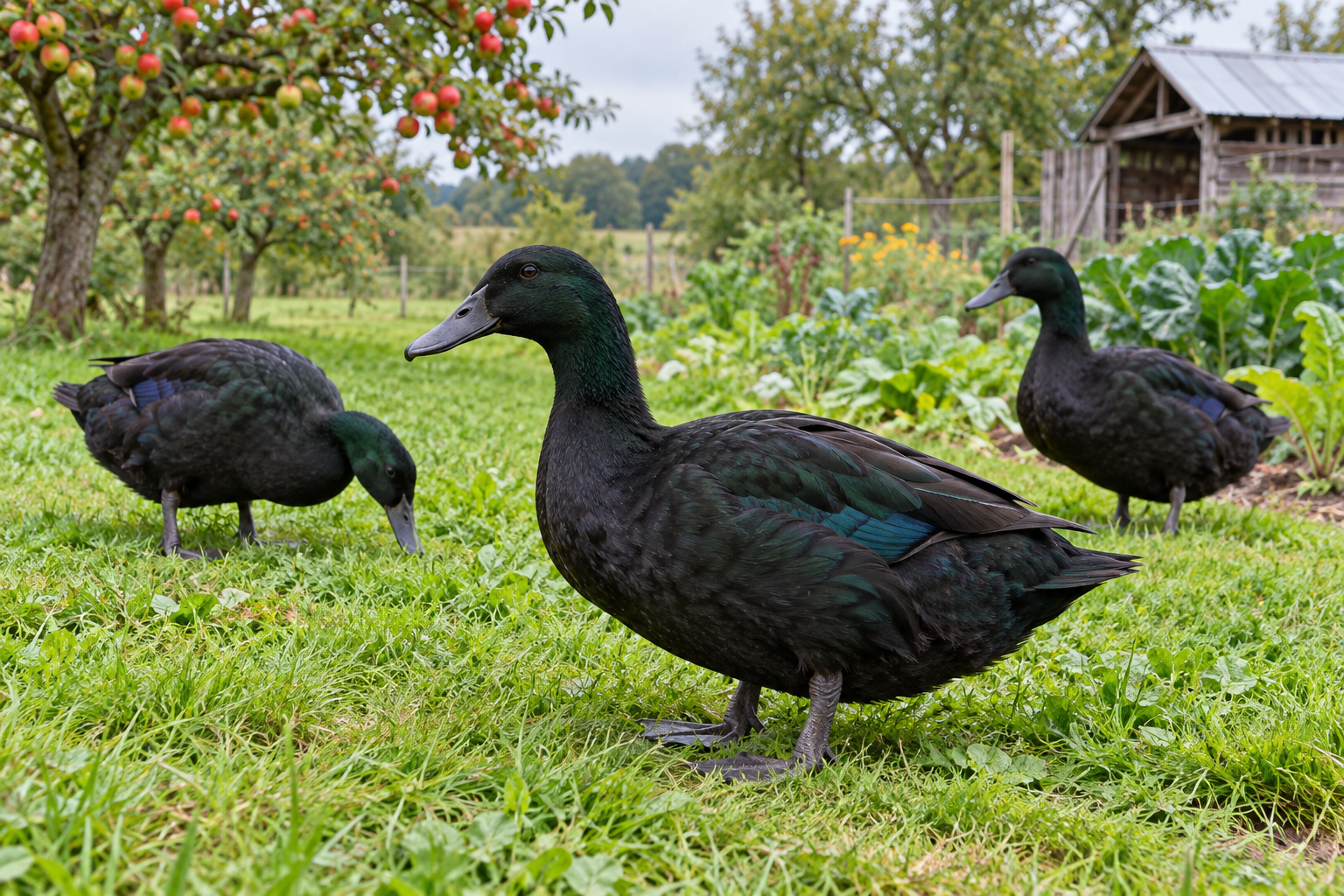
The Cayuga is an American domestic duck recognized by its black plumage and green sheen. It is kept for eggs, meat, exhibition and companionship, but the famous dark eggs need some context: their color can lighten through a laying season. When you choose your birds, the free duck name generator can suggest names. Keep a permanent ID alongside each name for later care and breeding records.
| Animal | Domestic duck |
|---|---|
| Identity | American breed associated with New York |
| Appearance | Black feathers with iridescent sheen |
| APA class | Medium Duck; Black variety |
| Egg color | Can begin dark and become lighter in the season |
| Conservation | Livestock Conservancy: Watch, checked October 2026 |
| Best buyer evidence | Adult flock photographs and parentage or breeding records |
Browse listings, public profiles, breeders, or add your animal.
What makes a Cayuga a Cayuga?
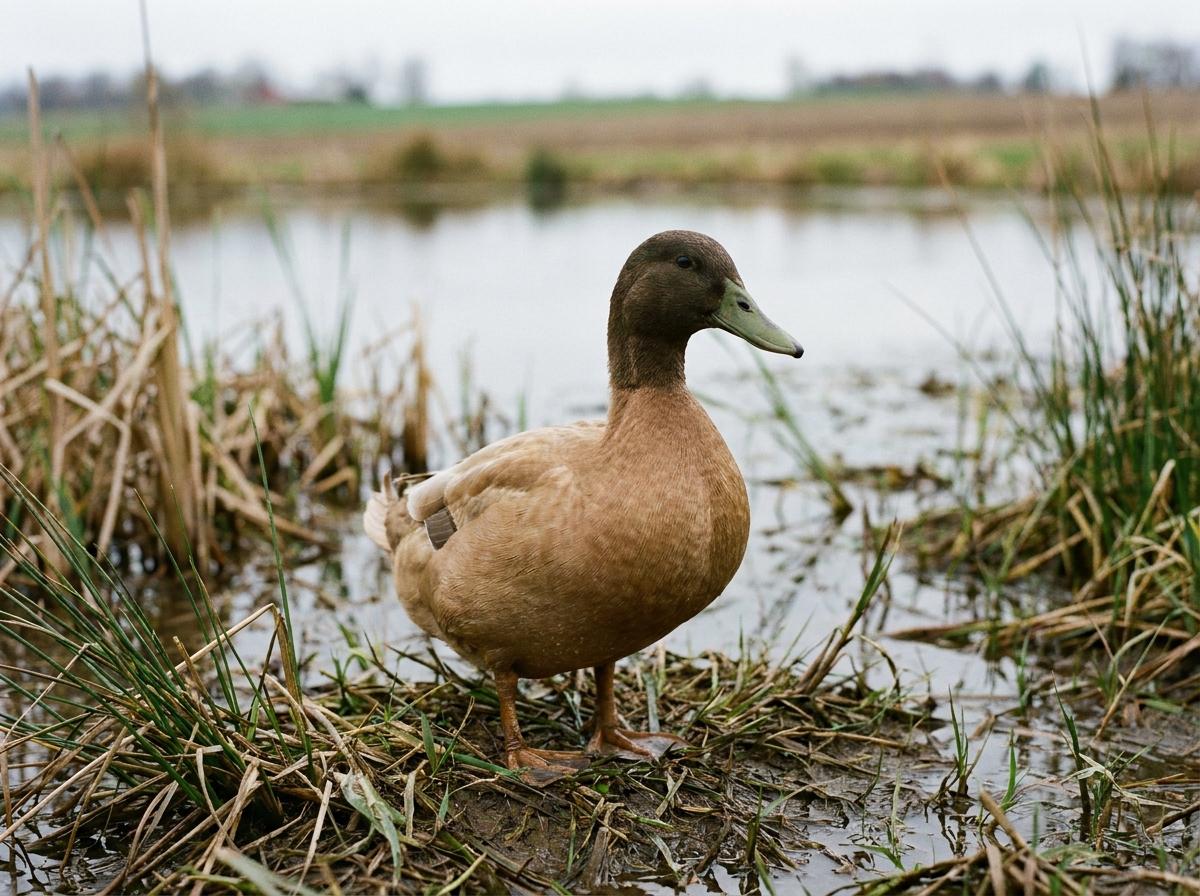
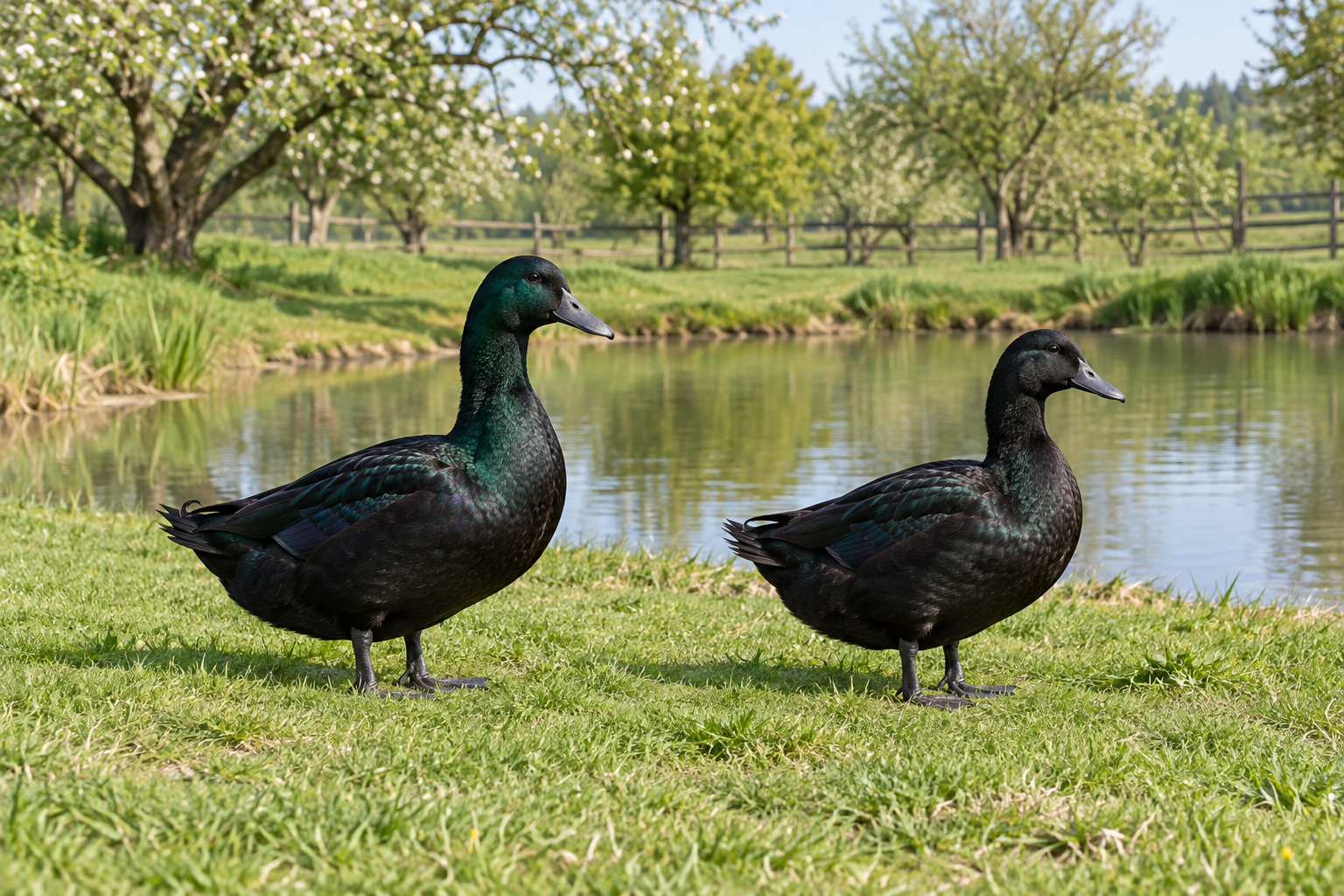
The Livestock Conservancy’s Cayuga profile connects the breed to New York’s Finger Lakes and describes a deep, broad body with the front carried slightly raised. In sunlight, the black feathers can show green, blue or purple iridescence. This is reflected light, not a separate green color variety. Some birds develop white feathering as they age. The Conservancy gives about 7 to 8 pounds as a mature-weight reference, rather than a prescribed target for every bird.
The American Poultry Association’s current accepted list places the Cayuga in the Medium Duck class and lists Black. A dark duck is not automatically a Cayuga. Black East Indian bantams (APA: East Indie) and mixed domestic flocks can also produce black birds, so breeding history matters if you want conservation or exhibition stock. A photograph alone cannot establish pure breeding or show eligibility.
For a show prospect, ask which current standard and show rules the breeder uses, and assess the bird’s structure as well as color. For a backyard flock, prioritize comfortable movement, sound feet and a compatible group over a perfectly dark feather coat. A white feather on an older bird is a different question from an unexplained breed label on a sale listing.
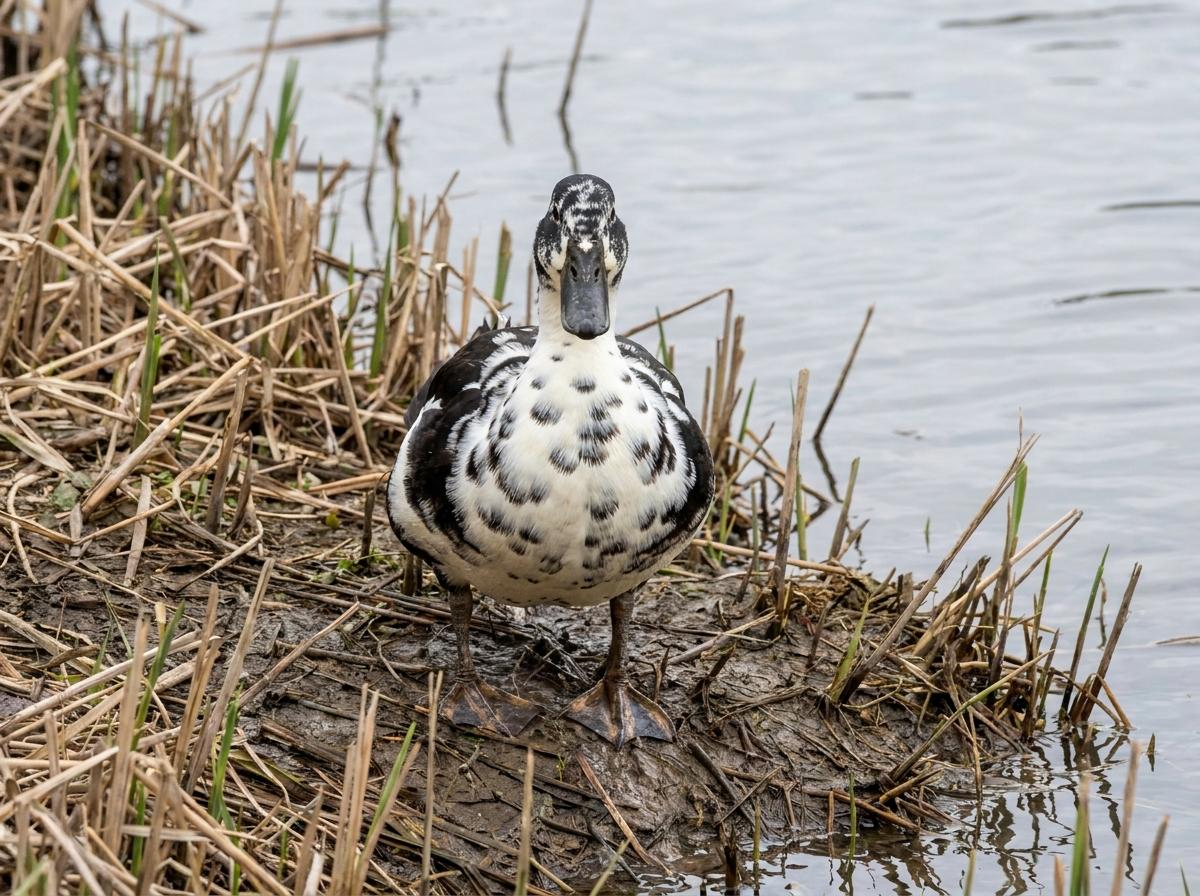
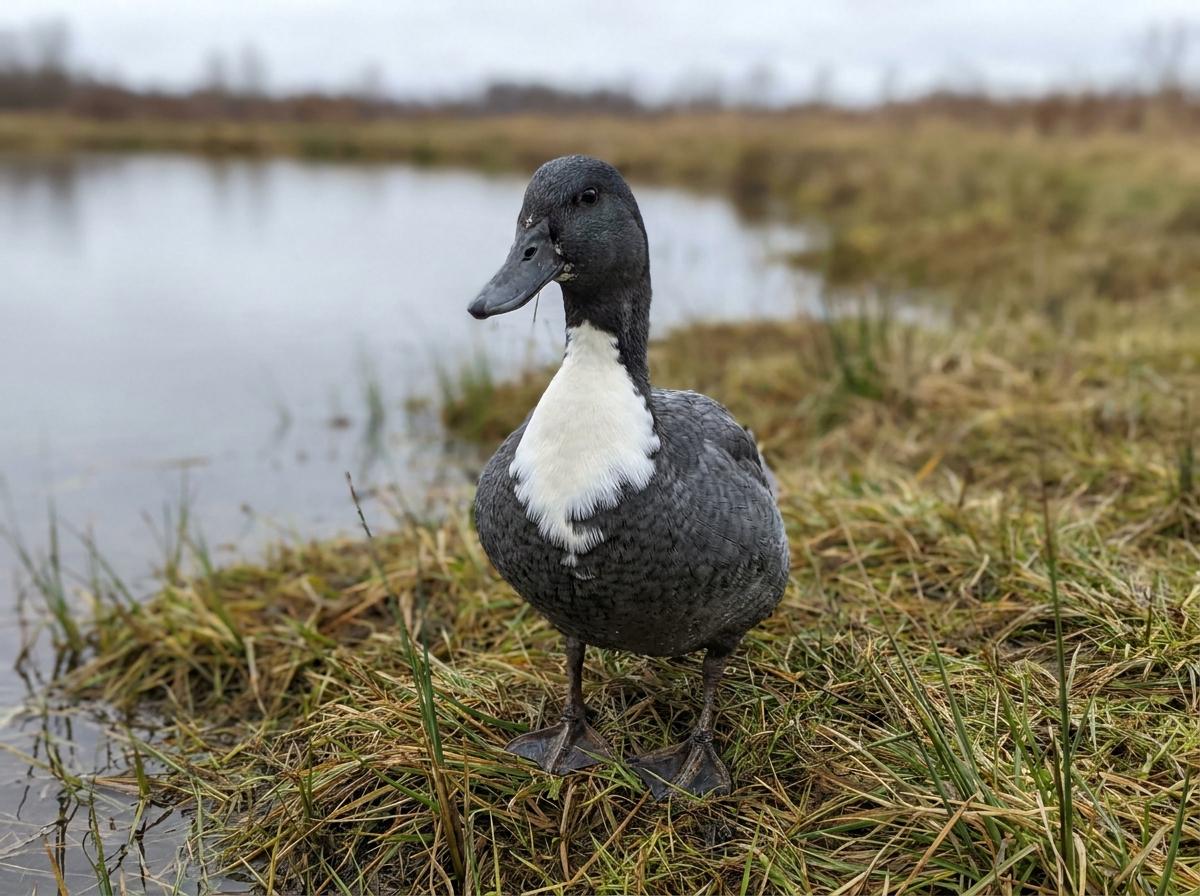
Compare the black Cayuga with the white-bibbed Swedish Blue and the cap-and-saddle Magpie. The duck species hub also links other domestic breeds, including the Pekin.
Do Cayugas lay black eggs?
Some Cayuga eggs look charcoal or nearly black, especially early in a laying season, and later eggs may be much lighter. The Conservancy describes this seasonal fading. Do not buy on a promise that every egg will be black, or treat a pale egg by itself as proof that the hen is not a Cayuga.
Ask to see a dated sequence from the seller’s actual hens rather than a single dramatic egg photograph. Keep notes of the bird, laying date and observed color. A shell’s appearance does not prove fertility, parentage or how well an egg will hatch. If your goal is a dependable household egg supply, the flock’s observed output and care needs matter more than the darkest shell it has ever produced.
Housing, water and daily care
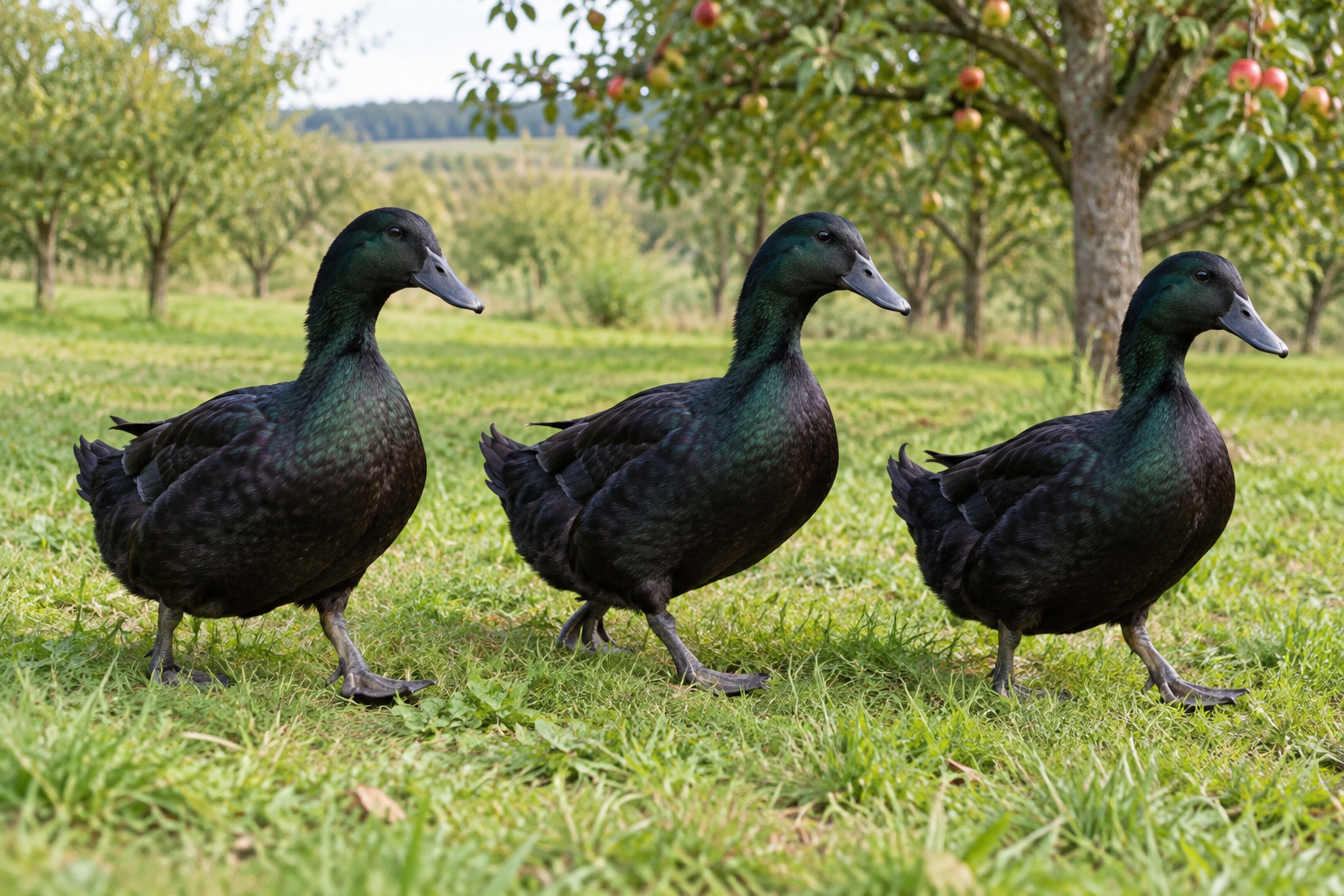
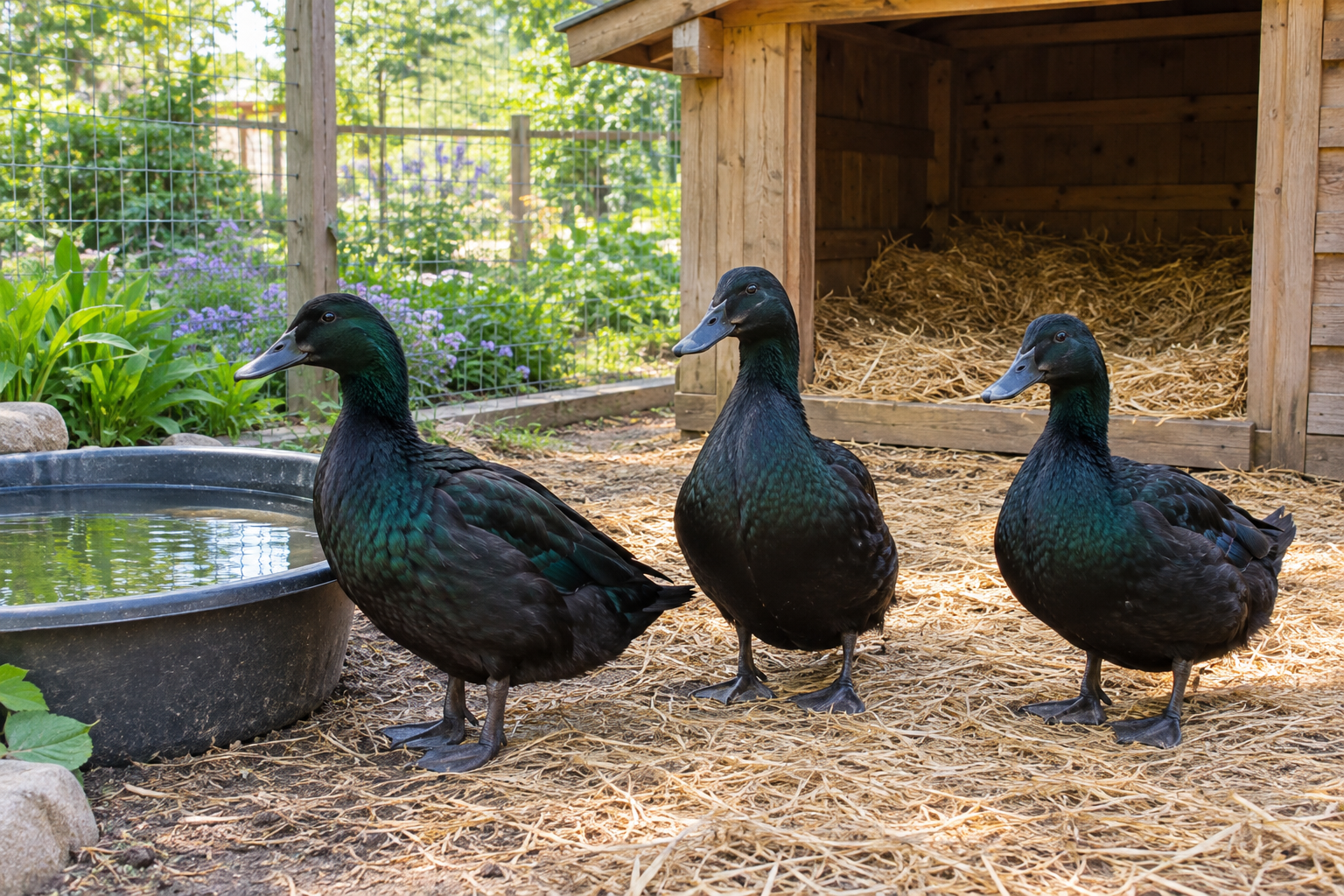
Keep ducks with compatible duck companions and plan the group before ordering ducklings. Provide a secure night shelter, dry absorbent bedding, ventilation without a cold draft, shade and enough outdoor room to move and forage. The University of Wisconsin duck-care guidance emphasizes predator protection, fresh feed and frequent removal of wet litter. A pretty pond cannot substitute for a dry place to rest.
Keep drinking water available with feed and use a container that lets adult birds wash their bills and heads, following waterfowl care guidance from NSW Education. Put the splash area where it drains away from bedding. Any bathing pool needs an easy route in and out and frequent cleaning; stale water is not a benefit. Ducklings need age-appropriate brooding and safe drinking arrangements, not unsupervised access to a deep adult pool. Ask an extension poultry specialist to review your brooder before the birds arrive.
A complete duck or waterfowl ration appropriate to growth, maintenance or laying is a better foundation than grain, bread or garden leftovers. Cornell’s Duck Research Laboratory explains that duck nutrient requirements differ from chicken requirements and warns about moldy feed. Cornell says chicken feed can serve as a satisfactory substitute when duck feed is unavailable. For ducklings, ask the feed supplier or veterinarian whether the specific feed provides enough niacin and what adjustment, if any, is needed; do not add supplements by guesswork. Foraging is enrichment and additional food, not a measured replacement for a balanced ration. The duck feeding guide gives a practical starting point.
Health and welfare checks
Watch how each bird walks, eats and joins the flock. A duck that repeatedly hangs back, struggles to walk, stops eating or has breathing difficulty needs prompt veterinary assessment. Do not dismiss a change because the breed has a reputation for hardiness. USDA’s Defend the Flock guidance recommends clean equipment and footwear, wildlife protection and quick action when appetite, behavior or egg production changes, or birds die unexpectedly. Report unexpected deaths or several sick birds to your state veterinarian or USDA at 1-866-536-7593.
Arrange a separate area for new or sick birds and agree the introduction plan with your veterinarian. Keep wild waterfowl away from domestic feed and water. Handle birds calmly, support the body, and get experienced help for any examination you cannot do safely. Records help a veterinarian reconstruct a problem; they do not establish its diagnosis.
Breeding and records that answer real questions
If you intend to breed Cayugas, first make a plan for the adults, surplus drakes and every duckling you may hatch. Choose healthy, sound birds with documented origins. Ask how the breeder avoids repeatedly pairing close relatives and how birds are identified within a black-feathered flock. Conservation value comes from a documented breeding population, not merely producing more dark ducklings.
Keep the breeding group and dates beside the set-egg count, candling observations and actual hatch outcome. Creatures has a clutch workflow for signed-in keepers to record eggs and outcomes; it does not control an incubator or guarantee a hatch. Record uncertain parentage as uncertain when multiple drakes have access. For individual names, the duck name generator is a convenience, while a stable ID remains useful when birds look alike.
Buying Cayugas and budgeting for the flock
Decide whether you want pets, household layers or documented breeding stock before comparing offers. Those are different purchases. Ask whether ducklings are sold sexed or unsexed, what the seller means by a breeding pair, and how they handle a mistaken sex identification. A pair selected only for color may not meet your flock plan.
There is no useful universal Cayuga price: age, sex, breeding documentation, location and transport all change an offer. Get a current written quote and budget separately for companions, secure housing, feed, bedding, water management and veterinary care. The duck cost guide helps build that budget without assuming the purchase price is the main expense.
Before committing, ask:
- Can I see the adult parents and their normal housing, not only duckling photos?
- How are the birds identified, and which parents or breeding group produced them?
- What are they eating, and what health or movement problems have occurred in this flock?
- What dated egg records support the seller’s description of laying and shell color?
- What is included in the price, and how will the birds travel safely?
Cayuga duck FAQ
Are Cayugas silent ducks?
No. The Conservancy describes them as relatively quiet and notes that hens tend to be louder than drakes, but that is not a promise of silence. Listen to the seller’s adult flock, consider nearby neighbors and check local keeping rules before buying.
Can they live on a pond without a house?
Plan secure night housing and daily care. A pond does not remove predation, weather or disease risks, and dark plumage does not make a duck predator-proof.
Do white feathers mean a Cayuga is sick or crossbred?
The Conservancy describes age-related white mottling. A feather change alone cannot diagnose illness or prove ancestry. Evaluate sudden changes with the bird’s condition and history, and ask a veterinarian about health concerns.
How long will a Cayuga live?
Avoid treating a breed-specific lifespan estimate as a promise. The domestic duck lifespan guide explains the role of management and why buying a duck is a long-term flock commitment.
Do this next on Creatures
- Wait for a suitable bird. Save a Cayuga duck listing alert to hear about future matching listings. This does not mean birds are available now. How saved searches work.
- Start an individual profile. Add your Cayuga duck. No account is needed to start; a free account keeps the profile. Adding an animal.
- Keep observations together. Add a health, weight or egg record. The form opens for visitors; a free account saves the record. Adding a record.
- See current listings. Browse Cayuga duck listings and check the seller’s actual location, bird details and availability.
- Research farms. Browse the breeder directory, then ask each farm about its current flock. Directory coverage is not confirmation of stock, breed verification or an endorsement.
- Describe your own flock. Start a farm or breeder profile. Explain what you keep and the records you can provide. Creating an organization.