


Chinese Giant Salamander
Andrias davidianus
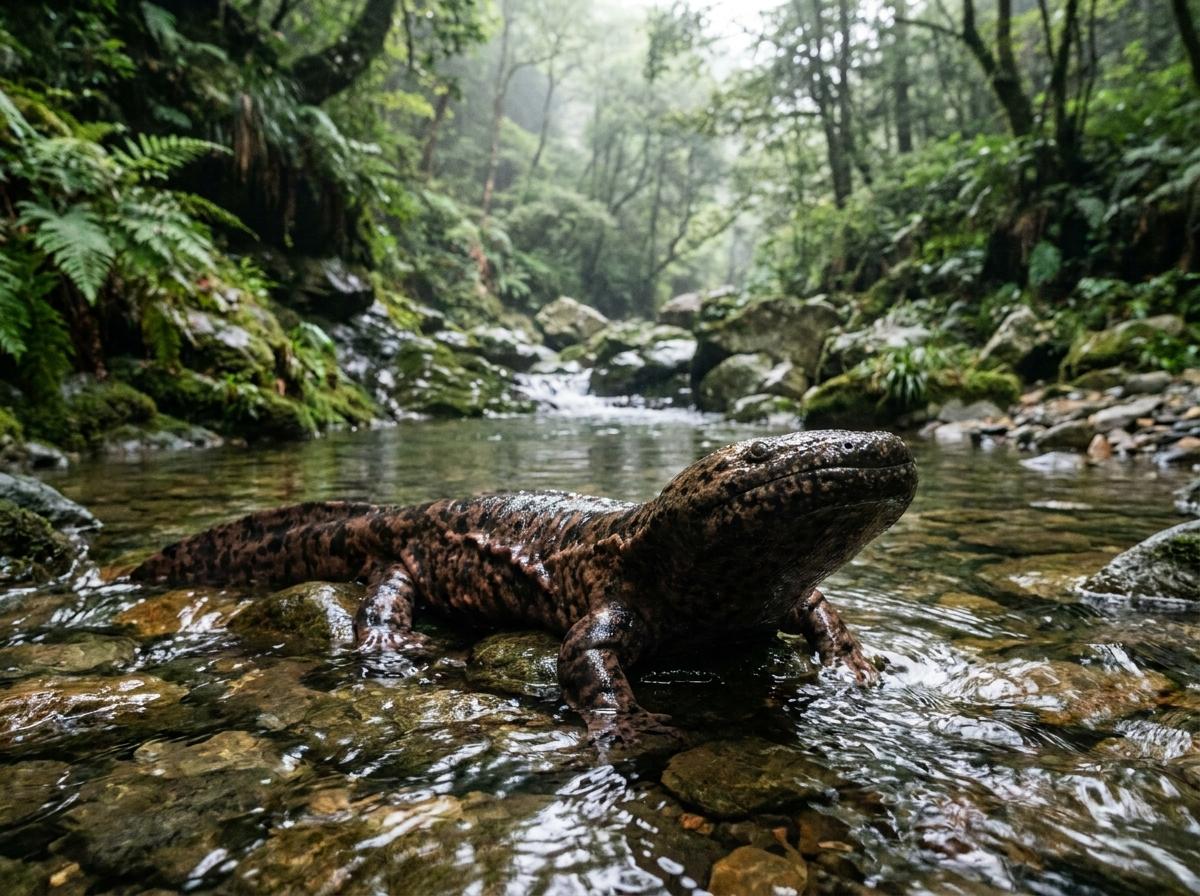
The Chinese giant salamander, Andrias davidianus, is a huge, fully aquatic amphibian from cold mountain streams and rivers in China. It has a flattened head, tiny eyes, wrinkled skin folds along the body, and a mottled brown or gray pattern that blends with rock. Historically treated as a single species, Chinese giant salamanders are now understood to represent several deeply separated lineages, making identification and conservation planning more complicated. They hunt at night by sensing movement and vibration, taking fish, crustaceans, worms, and other aquatic prey.
Human use has shaped the species' current crisis. Giant salamanders have been collected for food and stocked in farms, where hybridization, disease, and escapes can threaten remaining wild genetics. They are not appropriate pets; successful management requires cold, clean, highly oxygenated water, secure rock shelters, low stress, and strict biosecurity. Zoos, research groups, and conservation facilities increasingly focus on genetic testing before breeding or release, along with habitat protection in headwater streams. For rescue or rehabilitation work, knowing an animal's origin is as important as keeping it alive.
Colors: Wild Type