CFA Registration: Litters, Blue Slips, Cattery Names and 2026 Fees
Author: Elliott Garber, DVM · Published
CFA registration happens in two steps: the breeder registers the litter, then each kitten is registered individually from the “blue slip” that litter registration produces. A kitten gets breeding rights only when the breeder writes the litter’s PIN on that slip. Before you start, you can lay out the sire, dam and grandparents with the free cat pedigree chart maker and check every name and number against the parents’ certificates.
Rules and fees checked November 14, 2026. This guide uses The Cat Fanciers’ Association’s Registration Overview, its Rules for Registration (effective February 2026) and its price list (effective May 1, 2026). Where an older FAQ answer on the overview page quotes a lower fee, the price list is the current figure.
| Checked | November 14, 2026 |
|---|---|
| Who registers the litter | The breeder: registered owner of the dam at mating, or her lessee |
| Parents | Sire and dam must both be registered or recorded with CFA |
| Kitten paperwork | One blue slip per kitten, issued with the litter certificate |
| Breeding rights | Only with the 5 digit Litter PIN written on the blue slip; otherwise Not For Breeding |
| Name limit | 35 spaces, cattery prefix and suffix included |
| Litter fee | $20 within 4 calendar months of birth, $25 after |
| Cattery name | $100 for the first 5 years, 12 spaces maximum |
How CFA registration works: litter first, then kittens
CFA’s system runs on three documents, and it helps to know which one you are holding:
- The litter application. The breeder fills it in with the birth date, number of living kittens, sire and dam details, and signatures. It can be filed online through eCat or on the paper litter application.
- The Certificate of Litter Registration. CFA returns this to the breeder. It carries the Litter PIN, a random five digit number that only the breeder sees. CFA staff do not have access to it.
- The blue slip. This is the individual registration application for one kitten. The breeder fills in its section and hands it to the buyer (or keeps it for a kitten staying home), and the owner then registers the kitten in their own name.
Once a kitten is individually registered, the owner holds a Certificate of Registration. That certificate is what later carries a transfer of ownership on its back.
Our cat pedigree papers guide covers the buyer’s side of this: how to check that the paperwork you are given matches the kitten and its parents. This article is the breeder’s side: getting the litter and kittens registered correctly in the first place. If you register with both associations, the sister guide to TICA registration covers the other system.
Before you register a litter
CFA’s Rules for Registration define the breeder as the registered owner of the dam at the time of mating, or the lessee of the dam. The litter application must come from the breeder, with two exceptions: a new owner of record of the dam may submit it if the breeder’s information and signatures are completed, or someone else may submit it with a signed letter of permission from the breeder.
Check these before anything else:
- Both parents are on CFA’s books. The sire and dam must each be registered or recorded with CFA. A queen registered only with another association needs CFA registration first (see “Bringing a cat over from TICA or another registry” below).
- Signatures. The application needs the signature of the sire’s owner and the dam’s owner. If a parent is co-owned, one owner’s signature is enough.
- Parent age and spacing. CFA says it will question any litter where a parent was under 7 months (210 days) when the litter was born. It sets no annual limit on litters from one female, but each litter must be at least 65 days apart.
- Leases. A lease must be recorded with CFA, with a copy of the agreement signed by all registered owners, when the owner’s name is to be left off all transactions during the lease. Otherwise the lease section on the litter application itself is enough. CFA does not supply a lease form; its overview page describes what a simple lease letter must name.
For online filing, CFA’s pre-register checklist asks for a free eCat account, a breeder number or a cattery name registration number, each parent’s registration number and the date its registration certificate was issued, and a credit card. Without a breeder or cattery number you register that first litter by mail. If you do not own the sire, eCat emails the sire’s owner, and the application proceeds once they respond. If the sire’s owner has no email address, CFA says to file by mail instead.
Litter application, step by step
The paper form (and the eCat screens that mirror it) moves through the same sections. Work from the original certificates, not from memory or a sale listing.
- Birth information. Breed, date of birth and number of living kittens. Use your birth record, not the projected due date. If you planned the mating with the cat gestation calculator, replace the projection with the actual date once the kittens arrive. The actual date also starts the clock on the litter fee.
- Sire information. Registered name, CFA registration number, the owner or lessee at the time of mating, and that owner’s signature.
- Dam information. Registered name, CFA number, breeder’s name and address, the breeder’s CFA registered cattery name if any, the breeder or cattery number, and the breeder’s signature.
- Litter owner. Only if a pregnant queen, or a queen with kittens, has been transferred to a new owner.
- Kitten registrations (optional at this stage). You can register individual kittens on the litter application itself: two name choices, sex, color, eye color, coat length, any other characteristics, date of sale and owner details for each. Tick Not for Breeding, Neuter or Spay as applicable.
CFA’s litter registration fee is $20 if submitted within 4 calendar months of the birth date and $25 after that. The rules also say there is no time limit on submitting litter, cat or transfer applications. So late paperwork is still accepted; it just costs more. Kittens registered on the litter application cost $20 each.
A few rules catch breeders out on the kitten lines:
- Colors that the parents cannot produce. If a kitten shows a color, pattern or coat length that is accepted for the breed but that its parents would not be expected to produce, CFA registers it with a restricted Not For Breeding registration. A kitten showing a recessive trait not accepted in the breed is not registered.
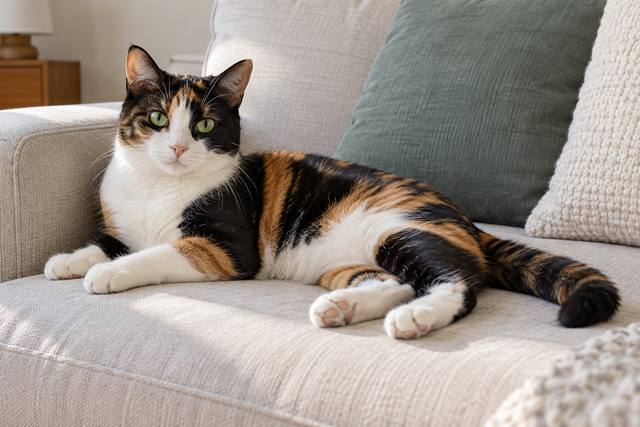
- Red and cream males with patches. A male cat showing sex-linked red patching (a calico or patched tabby male, for example) is registered Not For Breeding, and CFA will not register litters listing him as sire.
- More than one sire. CFA has allowed multiple-sired litters since January 1, 2009, but parentage must be determined by an accepted DNA testing facility before registration. Each sire gets its own litter application, with the DNA results for the sires, dam and all kittens.
Blue slips, the Litter PIN and breeding rights
This is the part of CFA registration most worth getting right, because CFA’s software makes the default safe for the breeder. Every kitten is registered Not For Breeding (NFB) unless the breeder writes the Litter PIN in the PIN box on that kitten’s blue slip. That applies even when the breeder is also the kitten’s registered owner. Each litter gets its own PIN, and it is valid only for that litter.
- Selling a kitten with breeding rights: write the Litter PIN on its blue slip.
- Selling a pet kitten: leave the PIN off. CFA will register it NFB without any further signature.
- Worried about the PIN being guessed: CFA suggests a large “X” in the PIN box. Its staff will not accept a PIN written over an X.
Removing an NFB restriction later needs either the PIN or the breeder’s signed, notarized permission, plus a correction fee. Changing a cat recorded as altered back to unaltered needs signed, notarized statements from both the breeder and a veterinarian.
Many breeders hold the blue slip back until a buyer sends proof of spay or neuter. CFA describes that as common practice and says it cannot help a buyer obtain papers until the sales contract’s terms are met. If a buyer has met the terms and still has no blue slip, CFA’s overview lists the documents it needs (the breeder’s pedigree or written sales agreement, proof of full payment and proof the other conditions were met) before it contacts the breeder. Write your release conditions into the sale agreement so both sides know when the slip changes hands.
Two other blue slip rules to know:
- Lost blue slips. Only the breeder can request a duplicate, at no charge, and CFA mails it only to the breeder.
- Mistakes. CFA does not accept white-out or erasures in Section C of a blue slip. Correct it with CFA’s Supplemental Transfer Form instead.
Naming rules for CFA kittens
A kitten’s whole registered name, including the cattery prefix and any suffix, letters, numbers, spaces and words like “of” or “the”, may not exceed 35 spaces. The application asks for two name choices; CFA issues the first choice unless it conflicts with the naming rules.
- Cattery prefix. If the breeder has a registered cattery name, it is required as the prefix, and it can never be removed or changed, even with the breeder’s permission. When co-owners of the dam each hold a cattery name, only one prefix may be used for every kitten in that litter.
- Suffix. A new owner may add their own registered cattery name as a suffix, preceded by “of”, if the name stays within 35 spaces. Only one prefix and one suffix are allowed.
- Banned words. “Champion” and “Champ” may not appear in a cat’s name, and profanity is not permitted.
- Renaming later. Possible only if the cat has never earned a title or a National or Regional award, has no national or regional points this season, has no CFA registered litters, and you are the current registered owner. A cat first registered in the breeder’s name also needs the breeder’s signed agreement.
Owner names have their own limits: one to four owners, real people only (no company names, “Mr. and Mrs.” or “and family”), within 35 spaces.
If you are stuck for ideas, the cat name generator gives you a long list to trim against the 35 space limit.
Registering a cattery name with CFA
A cattery name identifies the breeder and the line of breeding, and once registered it becomes the prefix on every kitten you breed. CFA’s cattery name page and rules set these conditions:
- No more than 12 spaces, punctuation and blanks included.
- At least two letters different from any existing registered cattery name. Double letters count as one, and a plural “s” does not count as a difference.
- No given names (Marie, John), titles (Princess, Earl), award titles, recognized breed names, heavily used cat names, profanity or possessives ending in ‘s.
- Registered and printed in capital letters.
The application asks for four names in order of preference, so check all four against CFA’s online Cattery Name Index first and do not list a name you would not use. CFA will not reserve a name while you decide. Names issued since January 1, 1988 must be renewed every five years; an unrenewed name cannot be used and can be reissued to another breeder. A permanent cattery name is available to owners whose renewals are current.
Your cattery name is also worth using consistently outside CFA: on your farm or cattery profile, your website and your kitten listings. Our cattery website guide covers what buyers look for there.
CFA registration fees for 2026
These are the CFA price list amounts effective May 1, 2026, in US dollars. Some FAQ answers on CFA’s overview page still show older, lower figures for transfers and duplicates; use the price list.
| Litter, early bird | $20 (within 4 calendar months of birth) |
|---|---|
| Litter, regular | $25 |
| Kitten on litter application | $20 |
| Kitten, early bird | $20 (within 30 days of the date of sale) |
| Kitten, regular | $25 |
| Registration by pedigree | $48 ($23 refunded if the cat cannot be registered) |
| Household pet or companion cat | $20 |
| Cattery name | $100 (includes the first 5 years) |
|---|---|
| Cattery name renewal | $60 per 5 year period |
| Permanent cattery name | $200, on top of regular registration |
| Transfer, early bird | $20 (within 30 days of the date of sale) |
| Transfer, regular | $25 |
| Duplicate or corrected certificate | $20 |
| Certified pedigree, PDF | $35 (3 generations) to $85 (6 generations) |
| Expedited handling | $30 for up to 2 transactions, on top of the registration fee |
A first litter from a new cattery therefore runs roughly the $100 cattery name plus the litter fee plus $20 or $25 per kitten, before any expediting. CFA says individual registrations are normally processed within 10 working days.
Transferring a CFA registered cat
When a registered cat changes hands, the present registered owners complete and sign the transfer statement on the back of its Certificate of Registration, and every registered owner must sign. Enter the date the cat actually changed hands, since that becomes the official transfer date, and the new owner’s name and mailing address. Mail the certificate with the fee and CFA issues a new certificate in the new owner’s name. The early bird transfer fee applies within 30 days of the transfer date.
Keep a copy of the signed certificate before it goes in the mail. If you sell kittens regularly, keep a note of which kittens left as blue slips and which as transfers of an already registered cat, because the buyer’s next step differs.
Bringing a cat over from TICA or another registry
A cat registered with another association CFA accepts, including TICA, FIFe, GCCF and WCF among others listed in the rules, can be registered with CFA by certified pedigree without a CFA litter registration. The general requirement is a certified pedigree with five generations of ancestry, issued by the registrar of the cat’s current association, with the parents counted as generation one. Several breeds differ: the rules list, for example, 8 generations for Persian, Siamese and Russian Blue, and 3 for Devon Rex, Oriental and Siberian. LaPerm and Selkirk Rex need only a copy of the other registry’s certificate. Our Selkirk Rex guide explains why that breed is handled differently.
Useful details from CFA’s overview and rules:
- Ask first. For $25, CFA will review a 4 generation pedigree (a photocopy is fine) and tell you whether the cat can be registered and what it needs.
- Recorded cats. A cat with one generation fewer than its breed requires can be recorded for breeding only. Recorded cats cannot be shown at CFA shows. Abyssinian, Bengal, British Shorthair, Colorpoint Shorthair and Persian must have the full number of generations.
- Names and titles. CFA keeps the original registered name where possible, and titles won with other associations are not carried onto CFA records.
- Timing. CFA asks you to allow 15 to 30 business days after it receives the application and payment.
The ancestry has to be documented, not reconstructed. If a gap turns up, our guide to missing cat pedigree ancestors shows how to keep it honest in your own records. If you plan to show the cat, how CFA and TICA cat shows work explains what registration unlocks.
Keeping CFA papers with each cat on Creatures
Creatures is where you keep the working records behind the paperwork. It does not file anything with CFA: you still register litters, kittens, cattery names and transfers through eCat or by mail, and storing a CFA number or certificate on Creatures never registers or certifies a cat.
What you can do:
- Store the registration. Add a Registration record to the cat’s profile. Pick CFA from the registry list and enter the registered name, registration number, a link and notes (for example “NFB” or “breeding rights, PIN given”). A cat also registered with TICA gets a second Registration record naming TICA. The care, growth and identity records guide explains these fields, and microchip numbers go on the cat’s identifiers.
- Record the litter once. Record the queen’s breeding with the sire (picked from your cats or typed in), and Creatures projects the due date and reminders. When the kittens arrive, the birth record creates a profile for each kitten as one litter. Recording births and creating a litter walks through it. That gives you one list of sexes, colors and birth date to copy onto the litter application.
- Check parent links. Each profile carries a pedigree you can view and export, and the pedigree and lineage guide covers it. The free cat pedigree chart maker works without an account. Neither replaces a CFA certified pedigree.
- Bring in existing papers. Import reads PDFs and photos of papers and shows the proposed names, IDs and parents for you to check before anything saves; you can start as a visitor, and a free account saves the result. The import guide lists file types and limits.
- Put the blue slip terms in writing. Agreements let you issue your own sale contract for e-signature, including when the blue slip is released. Creatures does not write contract terms for you. See what agreements are and how signing works.
- Show the cattery. A cattery profile under your CFA cattery name can be listed in the breeder directory and feed a free Creatures website.
Saving any record needs a free account. The add-record form opens for visitors so you can see the fields first.
Questions breeders ask about CFA registration
Can my kitten buyer register the kitten without me?
Not normally. The individual registration application, the blue slip, comes from the breeder. CFA will only step in when the buyer can show the breeder’s pedigree or written sale agreement, full payment, and that every other condition was met.
Is there a deadline to register a CFA litter?
CFA’s rules say there is no time limit on litter, cat or transfer applications. The fee is lower ($20 instead of $25) when the litter is submitted within 4 calendar months of the birth date.
Can I register a kitten with breeding rights if I keep it myself?
Yes, but you still have to write the Litter PIN on its blue slip. Without the PIN, CFA registers it Not For Breeding even when the breeder is the owner.
Can I register a TICA cat with CFA?
Often, by certified pedigree, as long as the breed and the colors in the background meet CFA’s requirements for that breed. Send CFA a 4 generation pedigree for review first if you are unsure.
Does a pedigree chart count as CFA papers?
No. A chart you make yourself organizes ancestry. CFA’s Certificate of Registration and its certified pedigree are the official documents.
See all the cat guides on Creatures for breeding, pregnancy, kitten growth and show records, including how many kittens a cat can have and how long cats are pregnant.
Do this next on Creatures
Start with the cats whose papers you are handling now: the queen with a litter on the way, or the kitten whose blue slip is about to change hands.
- Add your queen or stud with the registered name you already use. The adding an animal guide walks through the form.
- Add a CFA registration record with the number and NFB status. The form opens for visitors; a free account saves it. The record guide covers each field.
- Create your cattery profile under your CFA cattery name. It has a guest signup path, and the breeder directory guide explains how listing works.
- Browse the breeder directory to see how other catteries present themselves, or to find a stud owner to contact.
- Save a cat listing alert if you are looking for a registered queen or stud for your program. The saved searches guide explains alerts.
- Browse current cat listings and ask each seller which registry the cat is with and whether it carries breeding rights.