






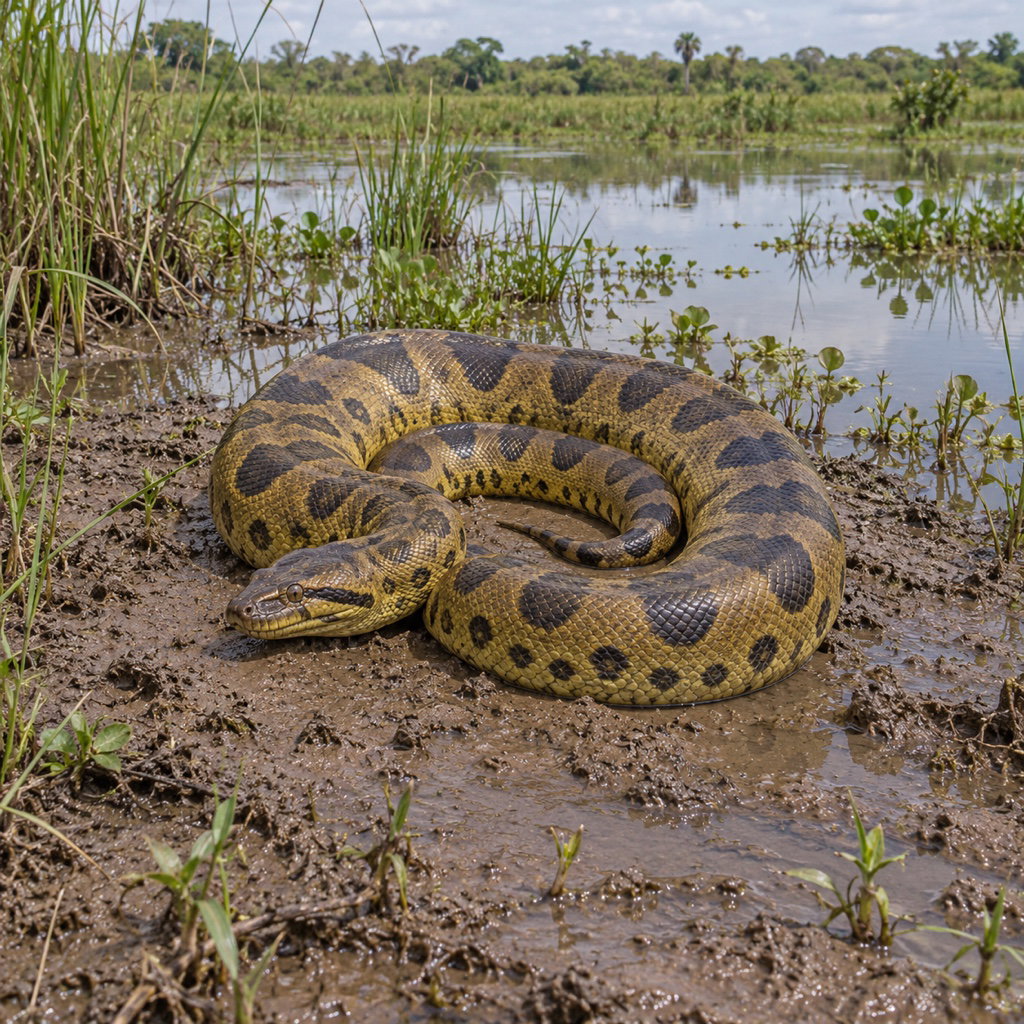
Yellow Anaconda
Eunectes notaeus
The yellow anaconda, also called the Paraguayan anaconda, is a large, mostly aquatic boa of the Paraguay River basin, from the Pantanal of Bolivia, Paraguay and western Brazil south to northeastern Argentina and northern Uruguay. It is smaller than the green anaconda: adults commonly reach 10 to 14 feet (3 to 4.4 meters), and females grow longer and much heavier than males. The body is yellow to golden tan with black blotches and spots, and it spends much of its time in marshes, swamps and slow, vegetated rivers.
Captive yellow anacondas need a secure, heated enclosure with a large water area, and a large adult is strong enough that handling calls for an experienced keeper and a second person. Females give birth to live young, so plan where a litter will go before pairing. In the United States the species is listed as injurious wildlife under the Lacey Act, which restricts importing and transporting it, and some states, including Florida, prohibit keeping it, so check local rules before acquiring or moving one.
Colors: Wild Type











