

Weddell Seal
Leptonychotes weddellii
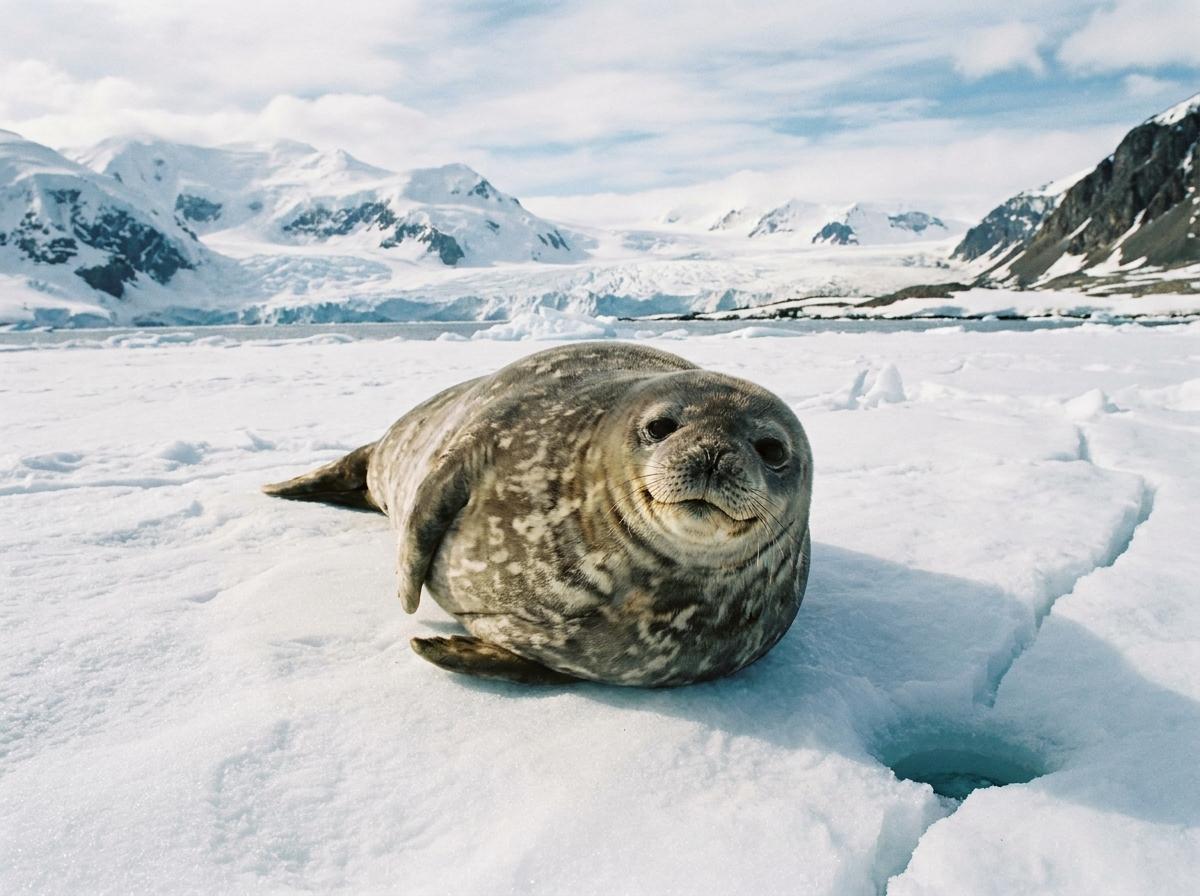
The Weddell seal (Leptonychotes weddellii) is a large true seal of Antarctica, strongly associated with fast ice along the continent's coast. Adults have rounded heads, short muzzles, and mottled gray-brown coats that help distinguish them from leopard and crabeater seals. They are capable under-ice divers, hunting Antarctic cod, other fish, squid, and crustaceans through breathing holes that they keep open by scraping the ice with their teeth. Females give birth and nurse pups on sea ice, where colonies are easier to observe than many other Antarctic marine mammals.
Human contact is mainly through field research and protected-area management rather than ownership. Scientists use flipper tags, satellite transmitters, acoustic recording, and remote cameras to study diving physiology, survival, pup production, and the effects of changing sea-ice conditions. Work around breeding groups is usually tightly controlled to limit disturbance, and any rehabilitation would require specialized cold-water facilities. Weddell seals are not a common zoo species; their conservation depends more on Antarctic Treaty protections, fisheries oversight, contaminant monitoring, and long-term observations of local populations.
Colors: Wild Type