


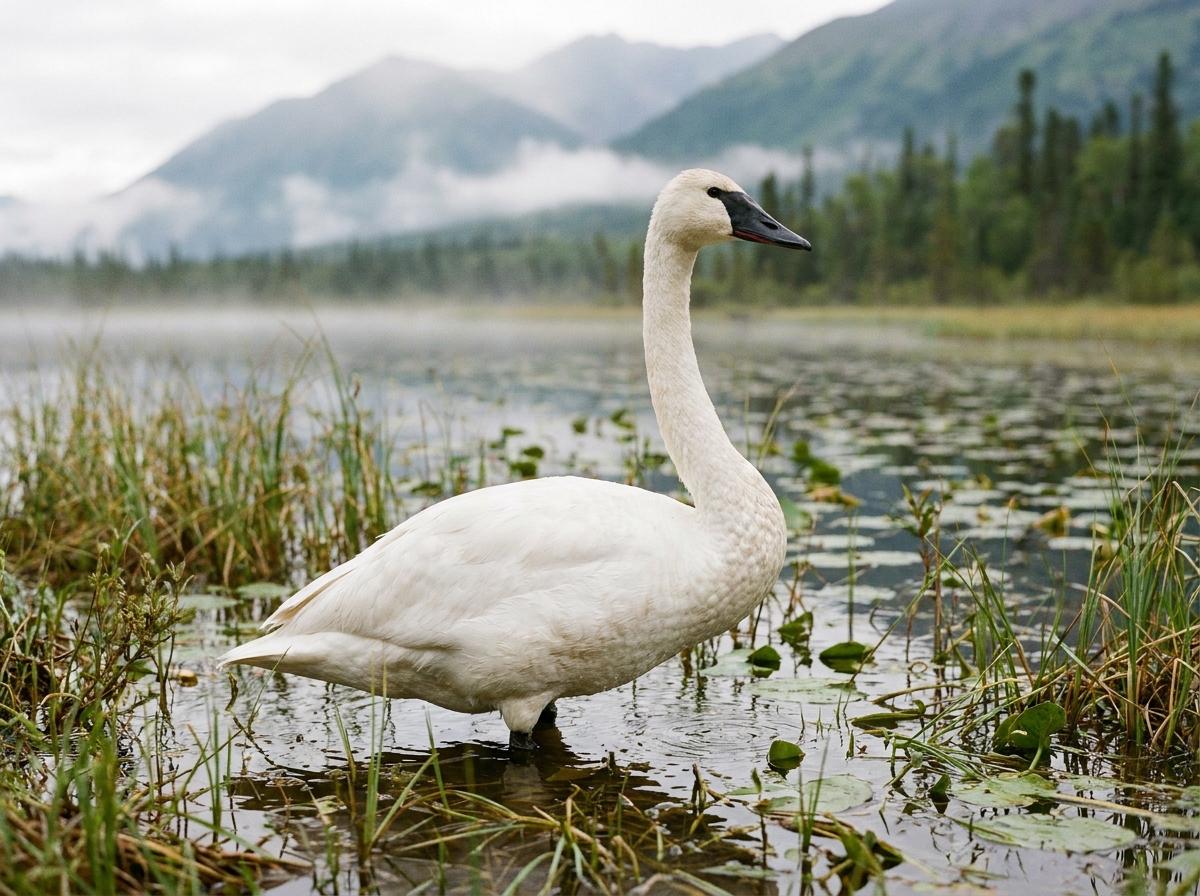
Trumpeter Swan
Cygnus buccinator
The trumpeter swan, Cygnus buccinator, is the largest native waterfowl of North America and a heavy-bodied white swan with a long straight neck, black bill, and deep, resonant call. Adults are all white, while cygnets and young birds are gray-brown before molting into adult plumage. Trumpeter swans breed on marshes, lakes, beaver ponds, and slow rivers, building large nest mounds near water and feeding on submerged vegetation, pondweeds, sedges, grasses, and waste grain. Historic hunting and habitat loss nearly eliminated them from much of their range, but reintroduction and wetland protection restored many populations.
In human care, trumpeter swans appear in accredited zoos, wildlife rehabilitation, conservation breeding, and some permitted waterfowl collections rather than ordinary backyard ponds. They need extensive clean water, grazing space, shelter from severe weather, and separation from predators and aggressive birds during nesting. Pairs can be territorial, especially around cygnets, so handling is usually limited to experienced staff. Managers also watch for lead poisoning from old shot or fishing tackle, avian influenza risk, and collisions with fences or power lines. In the wild, banding, migration monitoring, and wetland stewardship remain important tools.
Colors: Black, Brown, Cream, Gold, Gray, Leucistic, Melanistic, Mottled, Piebald, Red, Silver, Spotted, Tan, White, Wild Type