


Silkworm
Bombyx mori
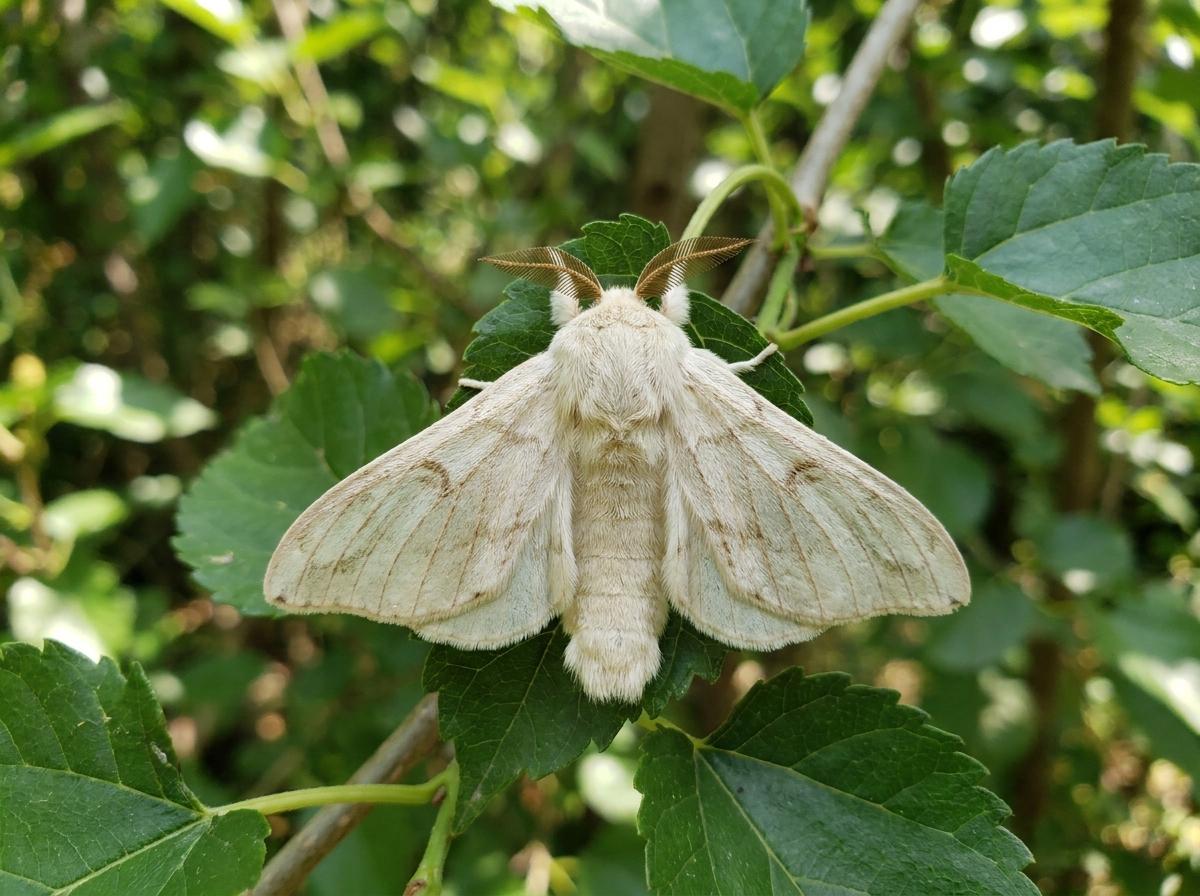
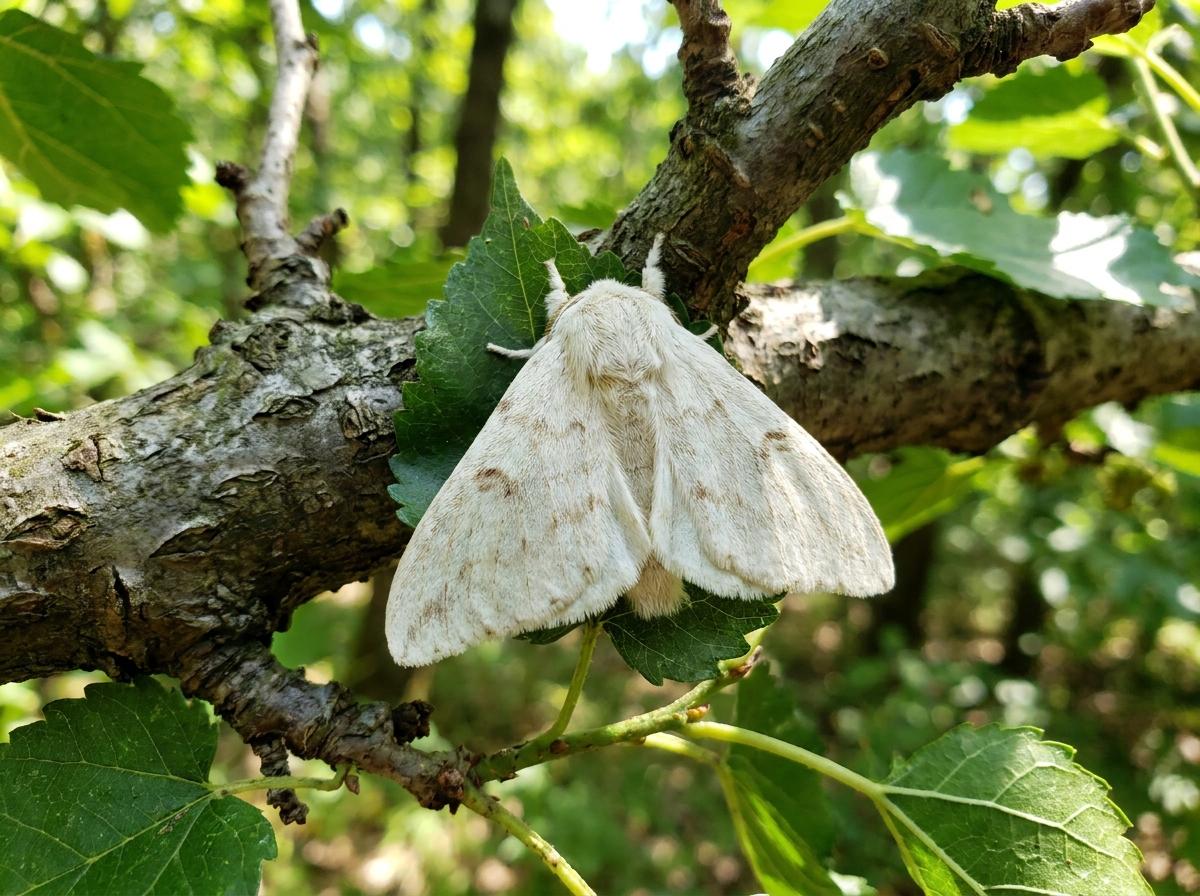
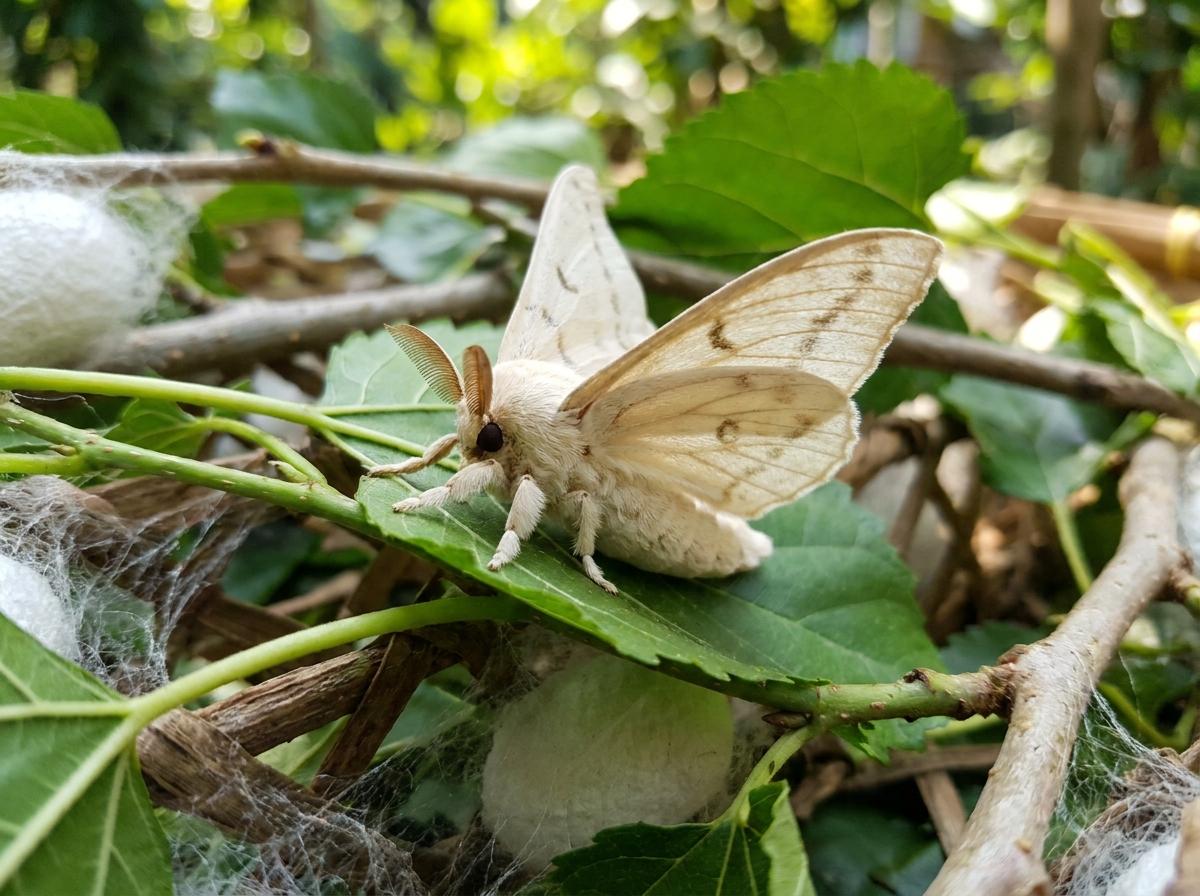
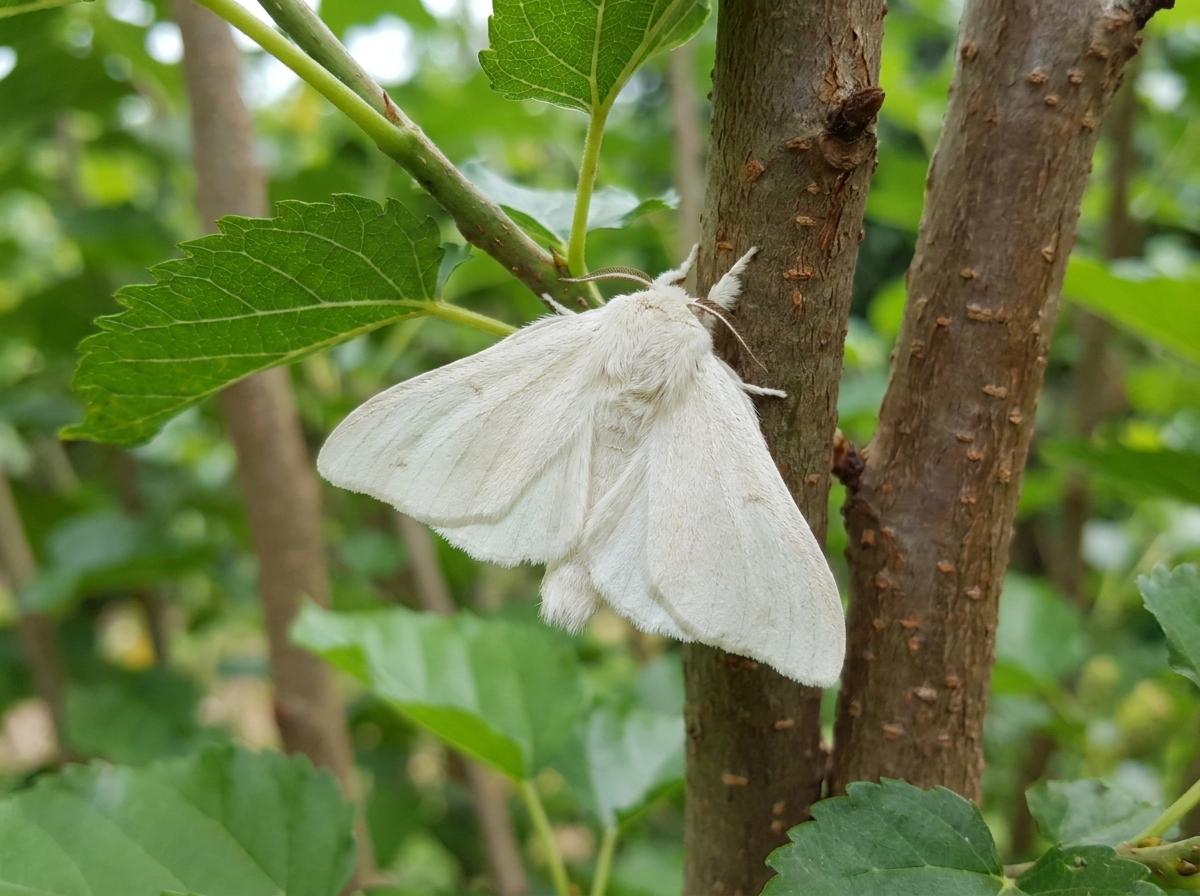
The silkworm, Bombyx mori, is the domesticated larva of the silk moth, developed from the wild silk moth Bombyx mandarina through thousands of years of selection in Asia. The caterpillars are soft-bodied, pale and dependent on people, while the adult moths are heavy, weak fliers that do not feed. Larvae eat mulberry leaves or prepared mulberry-based chow and spin a cocoon made from a continuous silk filament before pupating. Strains differ in cocoon color, number of generations per year, larval markings and disease resistance.
Silkworms are raised by sericulture farms, schools, laboratories, hobbyists and reptile keepers who use them as feeder insects. Successful rearing depends on fresh unsprayed mulberry or clean chow, steady warmth and dry, uncrowded trays; moldy food or wet litter can spread disease quickly. Breeding is simple once moths emerge, but diapause egg strains need cool storage to hatch predictably. For silk production, cocoons are usually processed before the moth cuts the filament, while small educational colonies often allow adults to emerge and mate.