


Golden Poison Frog
Phyllobates terribilis
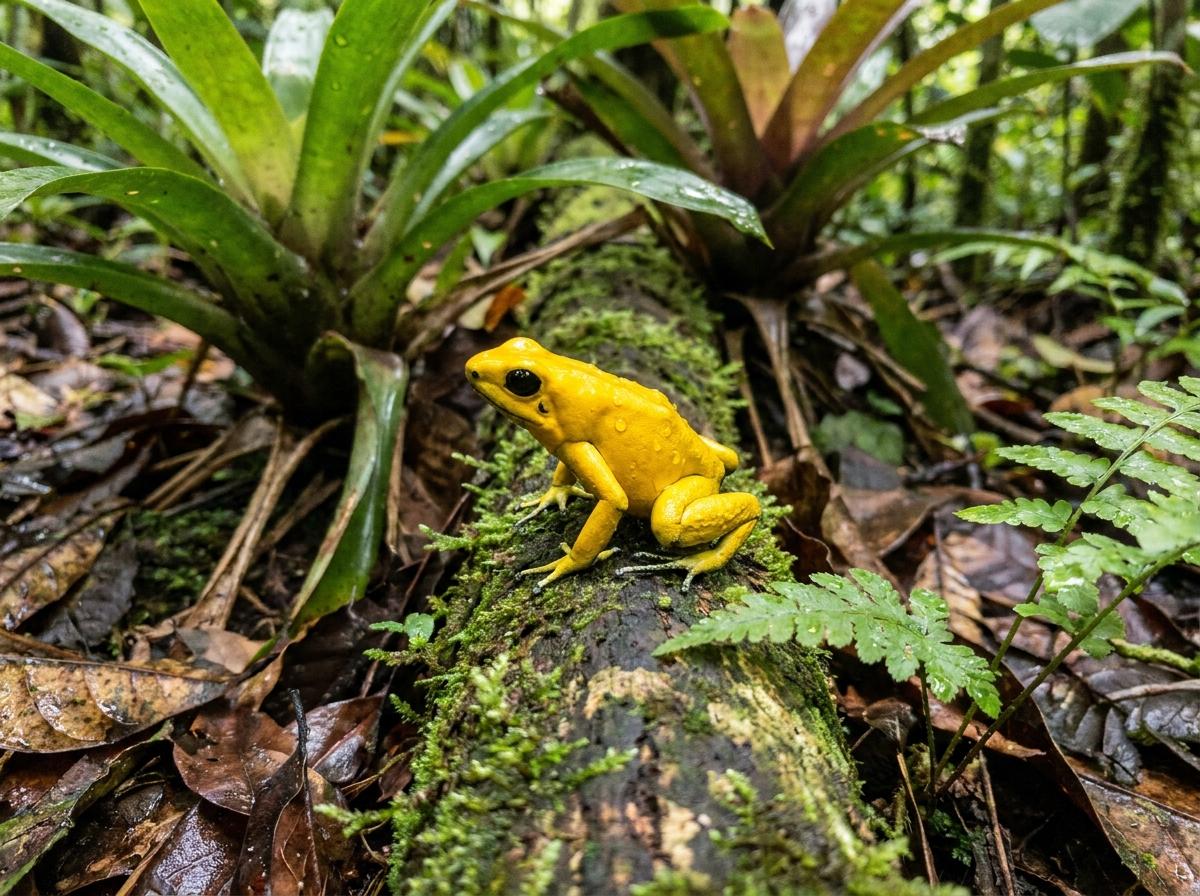
The golden poison frog (Phyllobates terribilis) is a small bright dart frog from humid lowland rainforest in western Colombia. Wild individuals are famous for extremely potent skin alkaloids, which are linked to natural diet rather than produced from ordinary captive foods. Color can be yellow, orange, or mint-green depending on population. Like other dart frogs, it is active by day, uses moist leaf litter and vegetation, and has complex reproductive behavior involving terrestrial eggs and tadpole transport.
Captive-bred golden poison frogs are kept by advanced amphibian hobbyists and zoos, but they still require careful, clean vivarium work. Enclosures need stable warmth, high humidity, ventilation, leaf litter, plants, hiding cover, and very small feeder insects dusted appropriately. Wild-caught animals should be avoided, and handling should be minimal because amphibian skin is sensitive even when captive frogs lack the wild toxin profile. Breeders track line, locality when known, egg care, tadpole rearing, and froglet size, while conservation programs focus on rainforest protection and disease monitoring.