

Eastern Lowland Gorilla
Gorilla beringei graueri
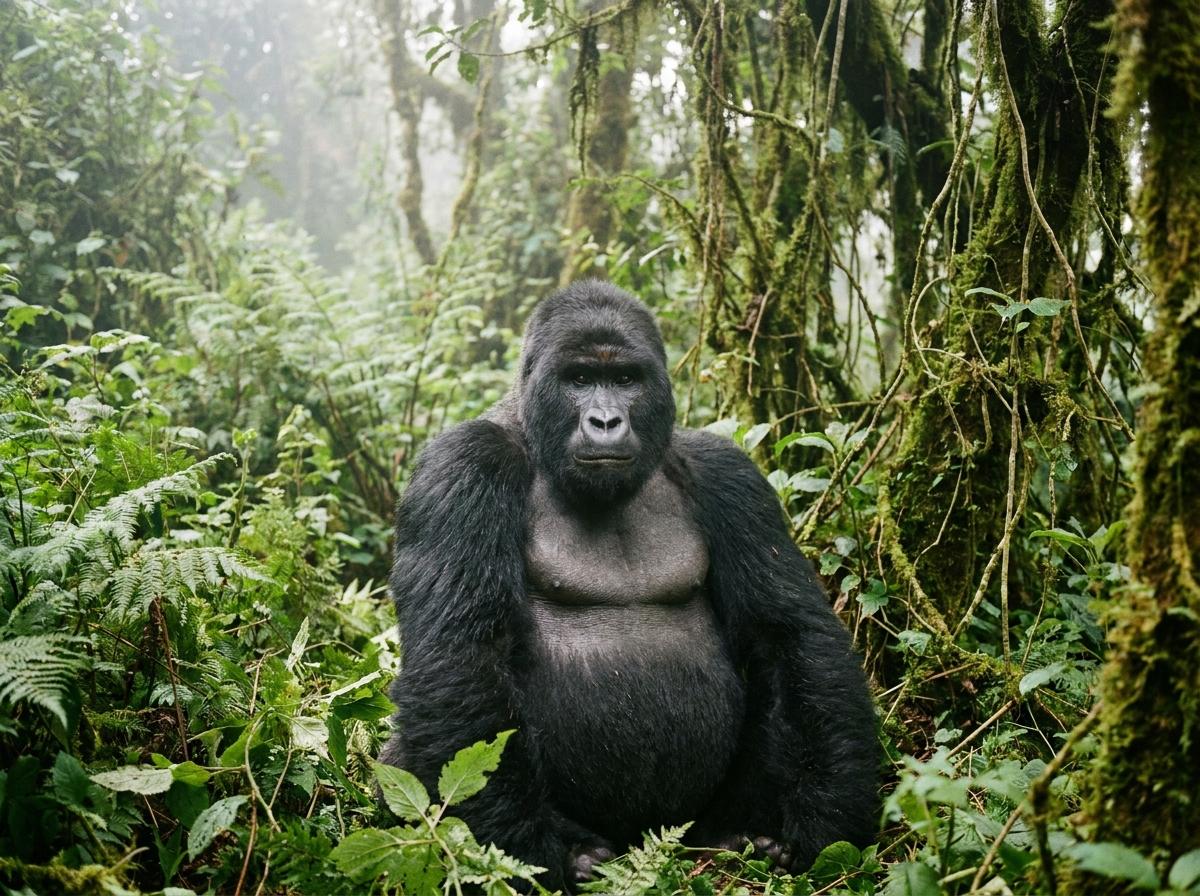
The eastern lowland gorilla, also called Grauer's gorilla (Gorilla beringei graueri), is the largest gorilla subspecies and is native to forests of the eastern Democratic Republic of the Congo. Despite its name, it also uses upland and montane forest, moving through a mosaic of fruiting trees, dense understory, swampy areas, and old secondary growth. Adult males develop the silverback coloration and lead social groups that may include females, juveniles, and younger males. Compared with mountain gorillas, Grauer's gorillas generally have shorter hair and a diet that relies more on fruit when forest conditions allow.
Human involvement with Grauer's gorillas is almost entirely conservation and sanctuary management, not private ownership. Populations have declined sharply where forest has been fragmented by mining, armed conflict, hunting, and roads that make remote areas easier to reach. Field teams use nest counts, camera surveys, genetic sampling, veterinary checks, and ranger patrols to track and protect groups. Rescued orphans require long-term specialist care with other gorillas, but release is difficult unless security, disease risk, and suitable habitat are addressed. Supporting local land rights and livelihoods is central to keeping remaining forest usable for gorillas.
Colors: Black, Brown, Cream, Gold, Gray, Leucistic, Melanistic, Mottled, Piebald, Red, Silver, Spotted, Tan, White, Wild Type