Miniature Donkey Registration: MDR Papers and the 36 Inch Rule
Author: Elliott Garber, DVM · Published
The Miniature Donkey Registry (MDR) uses a maximum height of 36 inches at the withers at three years. Check the parents’ MDR entries before filing. Keep the actual reading, date and registration together with Creatures for breeders.
Registration and size rules checked November 27, 2026.
| Registry | American Donkey and Mule Society (ADMS) |
|---|---|
| Maximum | 36 inches at the withers at three years |
| Pedigree | Verify both parents’ MDR status |
| Untraced or one registered parent | ADR book |
| MDR standard | 36 inches or under at three years. NMDA recommends at least 30 inches. |
|---|---|
| Oversize | Over 36 to 38 inches with qualifying miniature parents, breeding only, O prefix. |
| Membership for 2026 | US $35, Canada $45 and overseas $55. |
| Registration and transfer | Jack or jennet $20 under three or $30 over three. Gelding $8. Transfer $5 immature or $7 mature. |
Measure at the withers
The normal Miniature Donkey Registry (MDR) maximum is 36 inches at the withers at age three. The National Miniature Donkey Association standard recommends a minimum of 30 inches. That is a breed recommendation. The ADMS rules also make an Oversize exception for an animal with both parents registered as miniatures, over 36 and up to 38 inches. The O prefix shows the breeding-only registration. The form itself states 36 inches or under; confirm the exception with ADMS before filing an oversize animal.
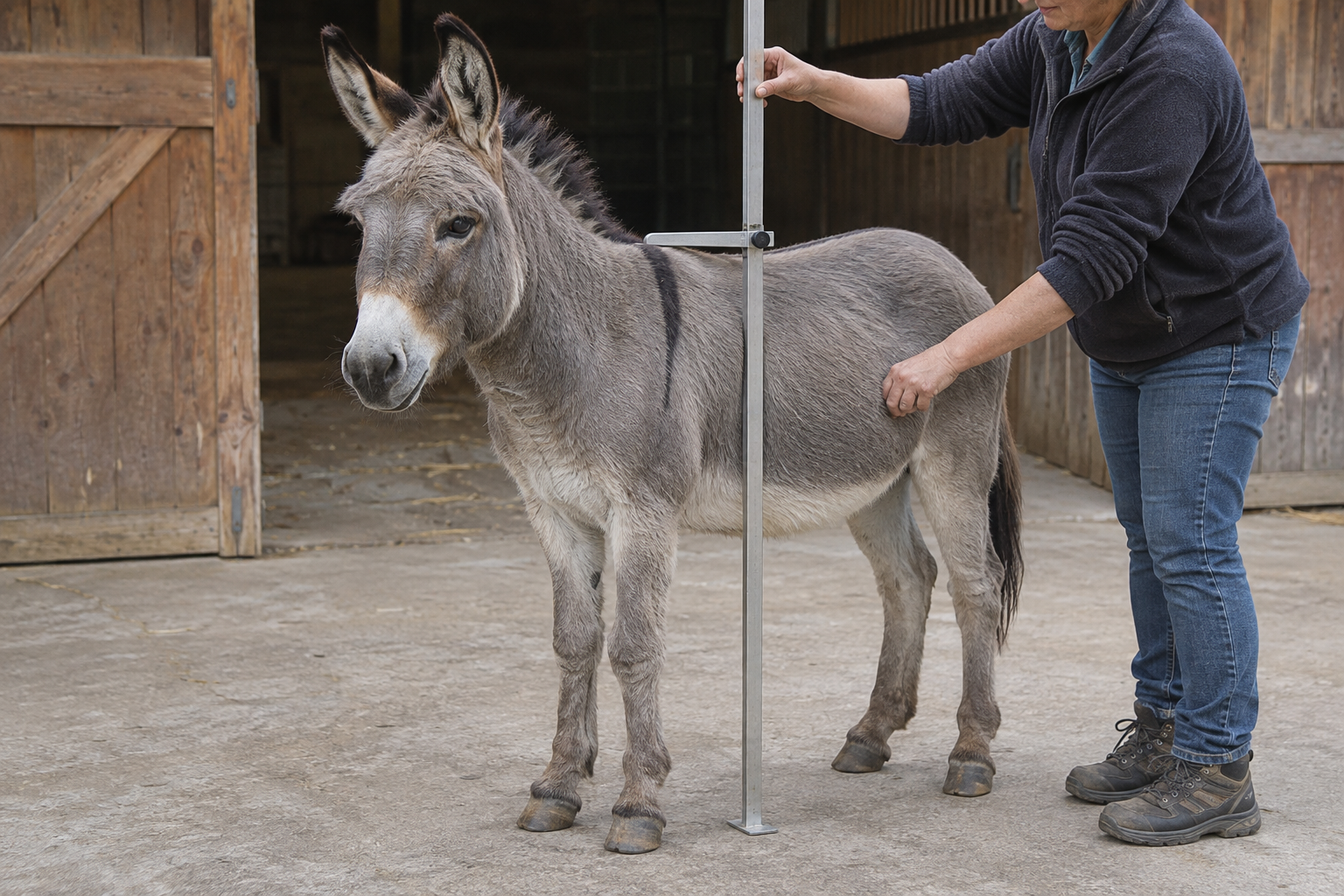
Use a rigid measuring stick and have an assistant hold the donkey still on a level surface. Measure from the ground to the highest point of the withers three times and use the average. The owner can take the reading without an inspector and record it in quarter inches; ADMS does not list a reading more precise than one-eighth inch. The third birthday governs the mature height update. After it, send the original certificate, mature height, fresh left and right photos and $4 for a new certificate.
Check both parents in the MDR
The ADMS checklist asks for the jack owner’s signed breeding certificate. Without a certificate of service, ADMS lists the jack as unverified. Written proof can correct that entry for $7 plus $2 to reissue the certificate. A mini without stud-report verification goes in ADR. Include a photo of each side and a permanent ID. A microchip, lip tattoo, freeze brand or DNA on file is acceptable. A mini without ID goes to ADR. Form 58A permits no more than a quarter-inch overbite or underbite, and excludes monorchid and cryptorchid males. Check those details before paying a registration fee.
ADMS membership is required. Its 2026 checklist lists US membership at $35, Canada $45 and overseas $55. Registration is $20 for a jack or jennet under three, $30 over three and $8 for a gelding. A transfer needs the original certificate and cannot be done online. The $5 immature transfer gets a label; the $7 mature transfer gets a new certificate. Name changes are for animals under two. The form still displays some older prices. Use the dated checklist for charges and confirm the price when the form and checklist differ.
Untraced or partly registered minis go in ADR
MDR closed to untraced donkeys in January 2009. ADMS’s book rules send a donkey without both parents registered as Miniature Mediterranean Donkeys to the American Donkey Registry, or ADR. The applicable entry may read American Miniature Donkey or another regional miniature designation. For a jack or jennet on this route add the inspection form. A missing stud-report verification or permanent ID also leads to ADR.
ADMS does not call this hardship registration. The closed-book notice describes a possible path into MDR as under wording revision and review. Treat an ADR certificate as an ADR record until ADMS confirms a current MDR route and issues a different certificate.
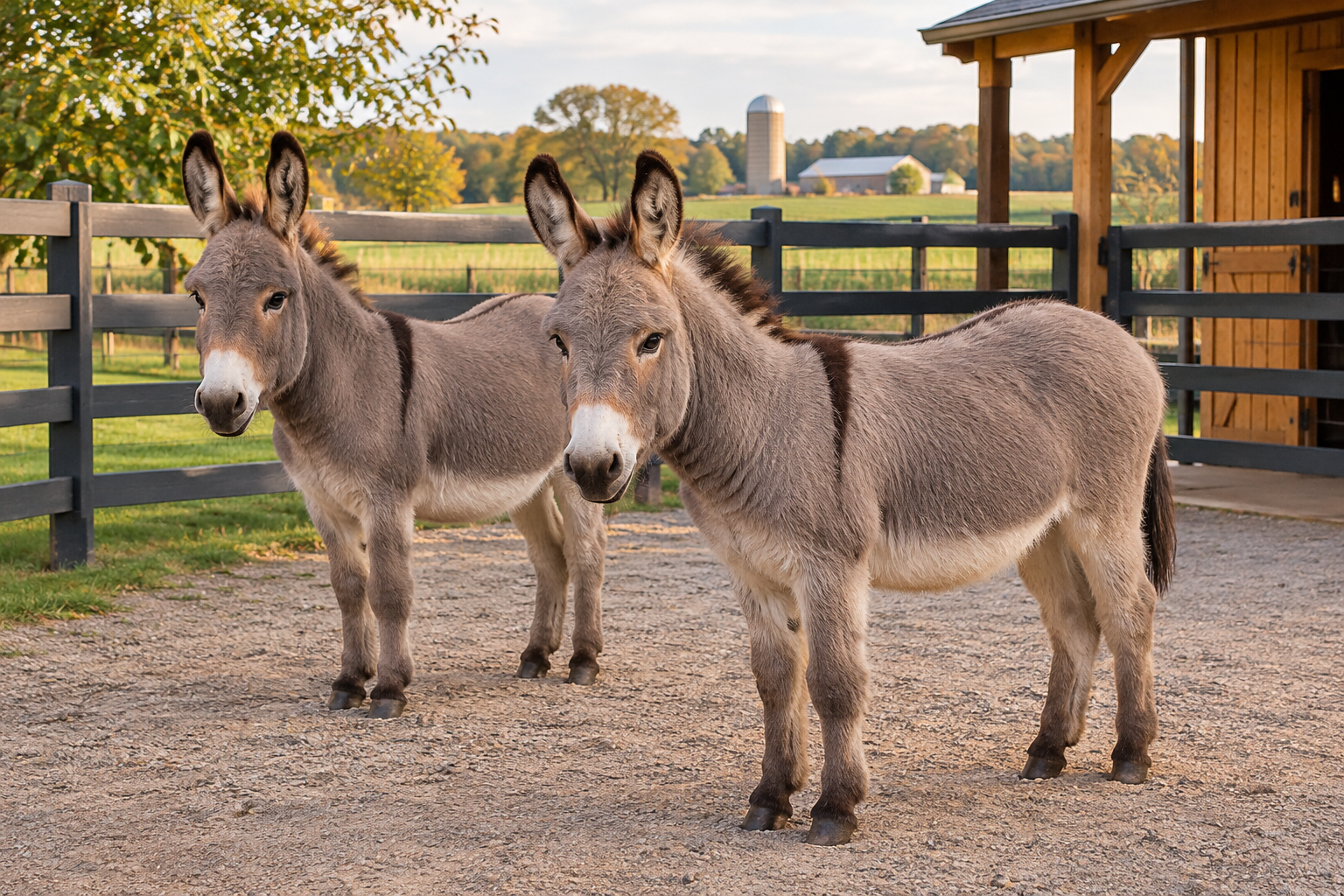
Keep the records on Creatures
Record Wither Height on the profile with the date, and add the issuing registry and original number. Keep the ID distinct from the registration number so a buyer can match both to the right donkey.
The care, growth and identity records guide explains where these records sit. Browse other donkey guides. See also Miniature Mediterranean donkeys and livestock records.
Registry directory: American Donkey and Mule Society.
Do this next on Creatures
- Add an animal from this group so its identification and records stay together. See the profile setup guide.
- Add a record from your paperwork. A free account saves it. See adding a record.
- Set up your breeder profile if you want a public farm listing. See getting listed in the breeder directory.
- Get a listing alert for this search.
- Browse listings and ask for the records that matter to your purchase.
- Find a breeder and discuss the paperwork before you put down a deposit.