Butter
Combination
Author: Elliott Garber, DVM · Published
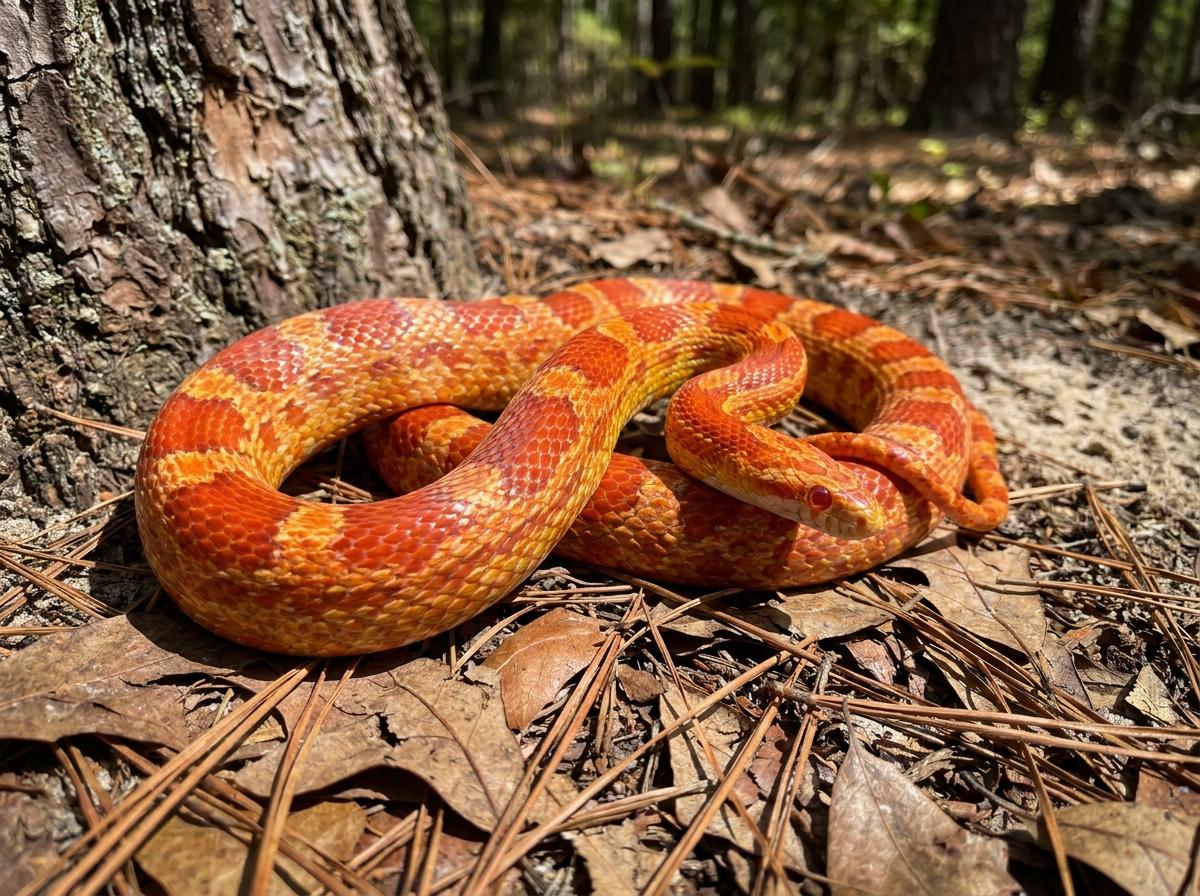
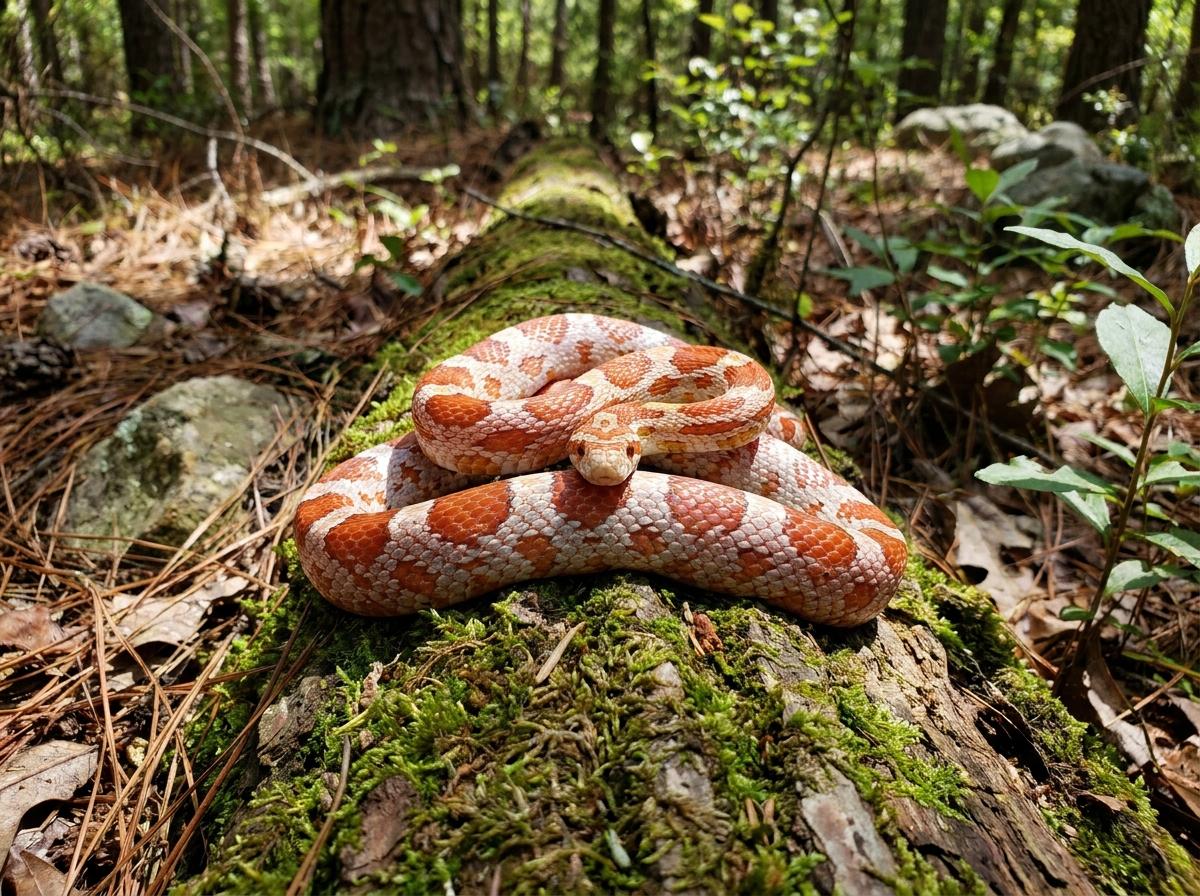
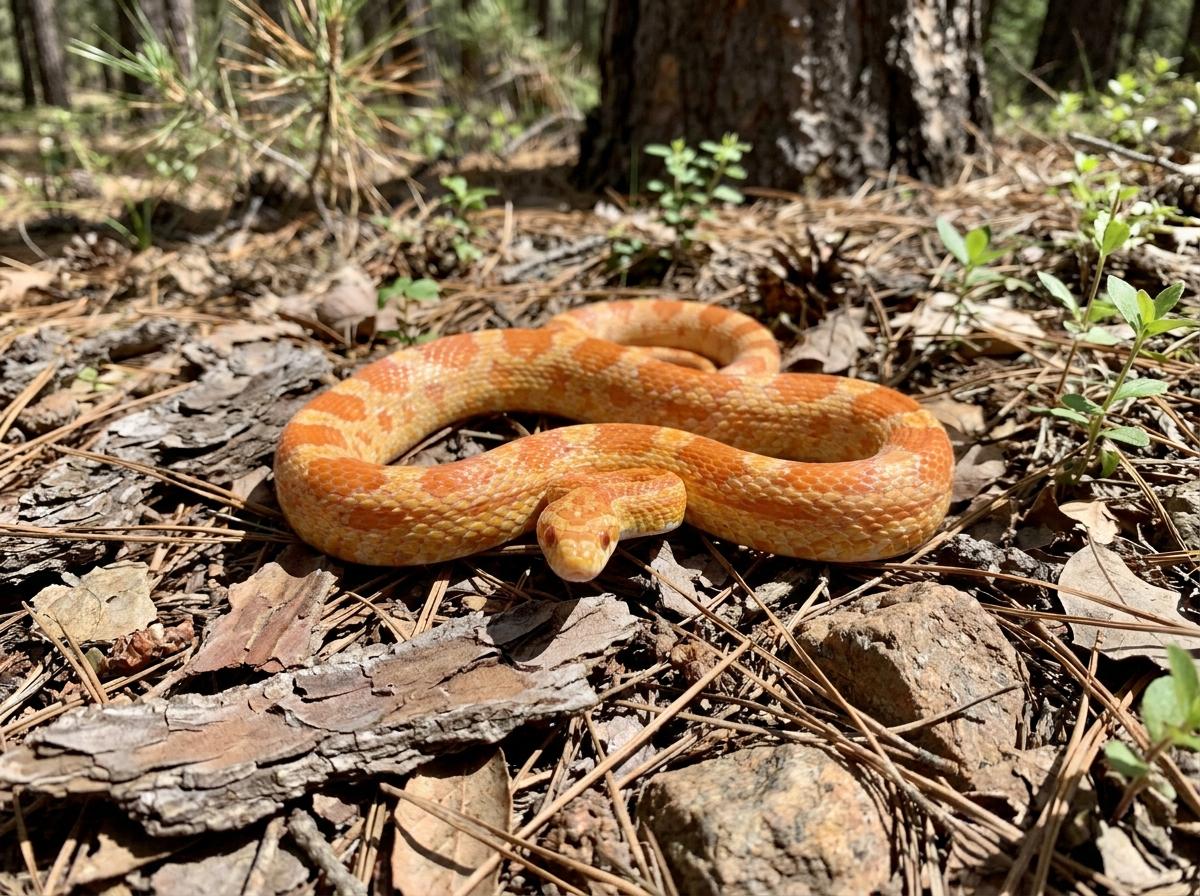
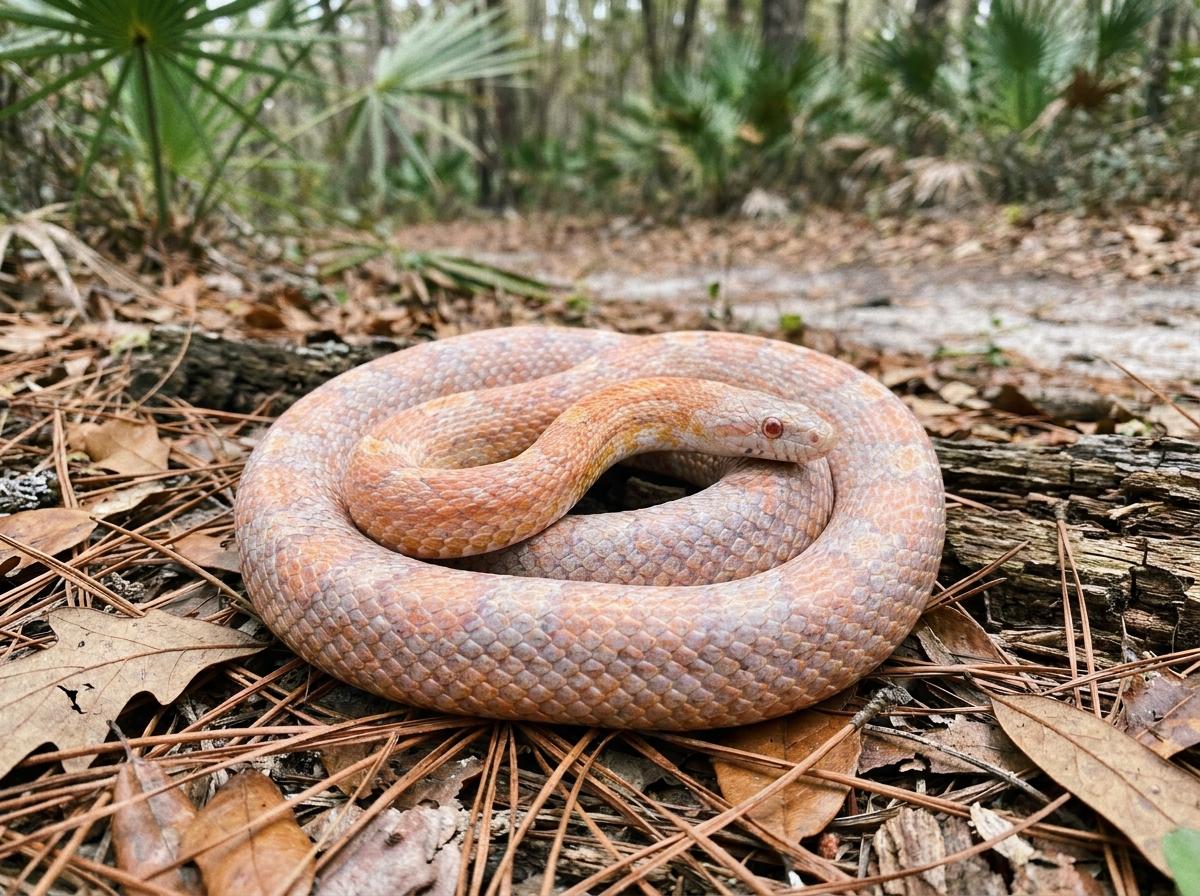
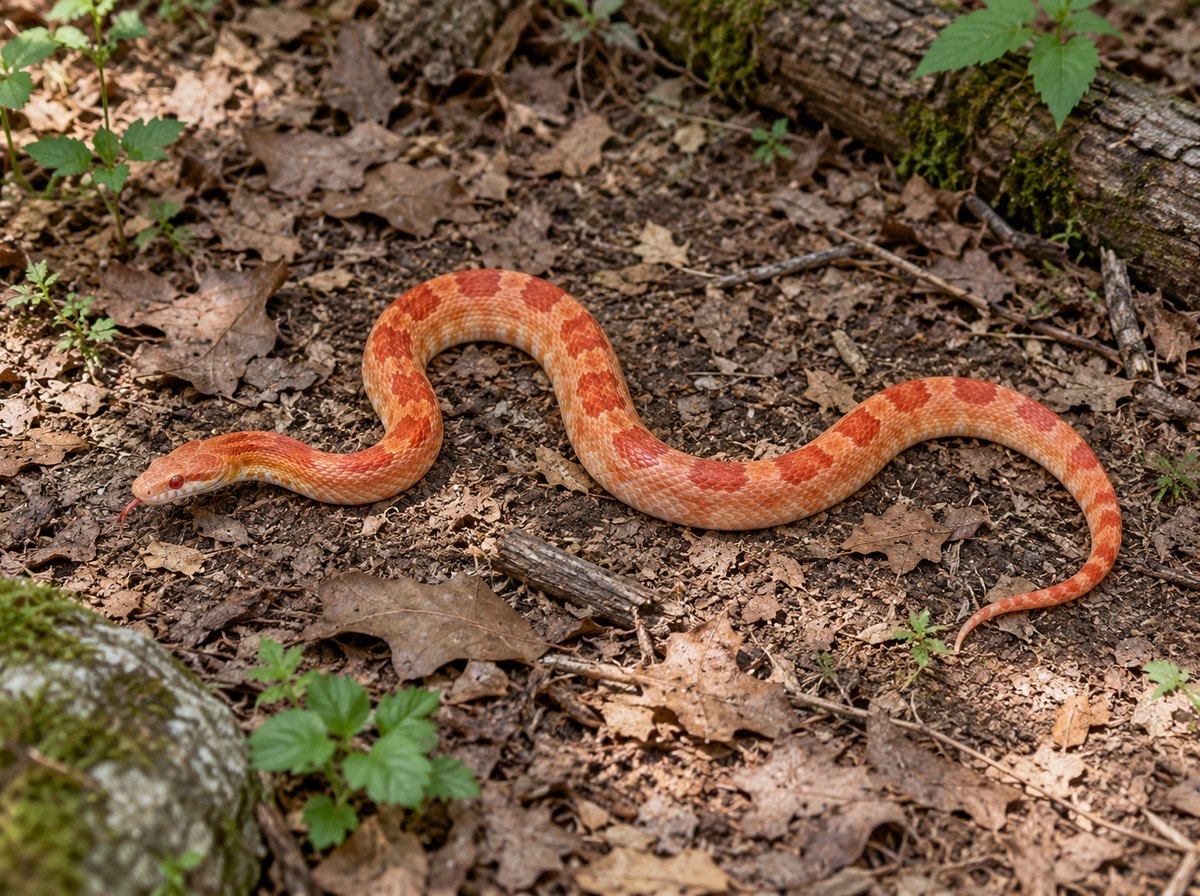
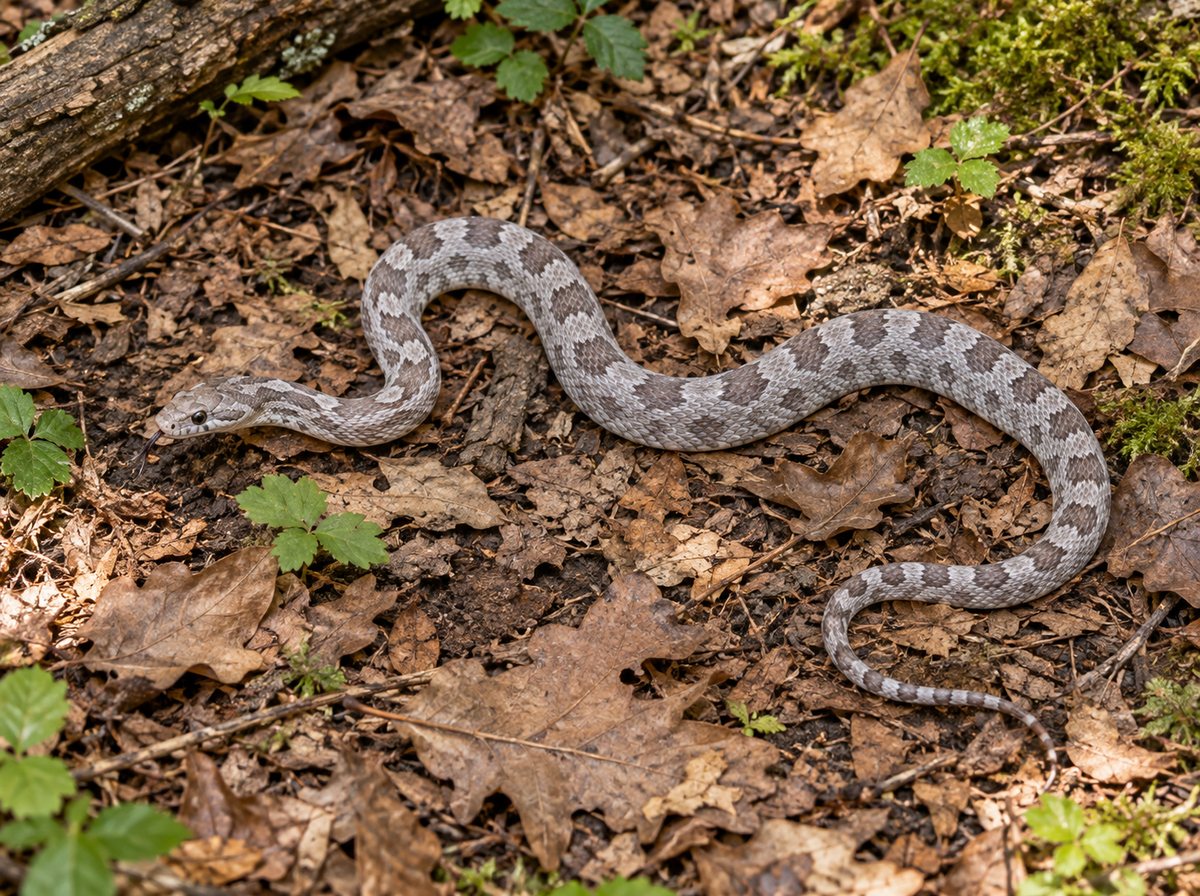
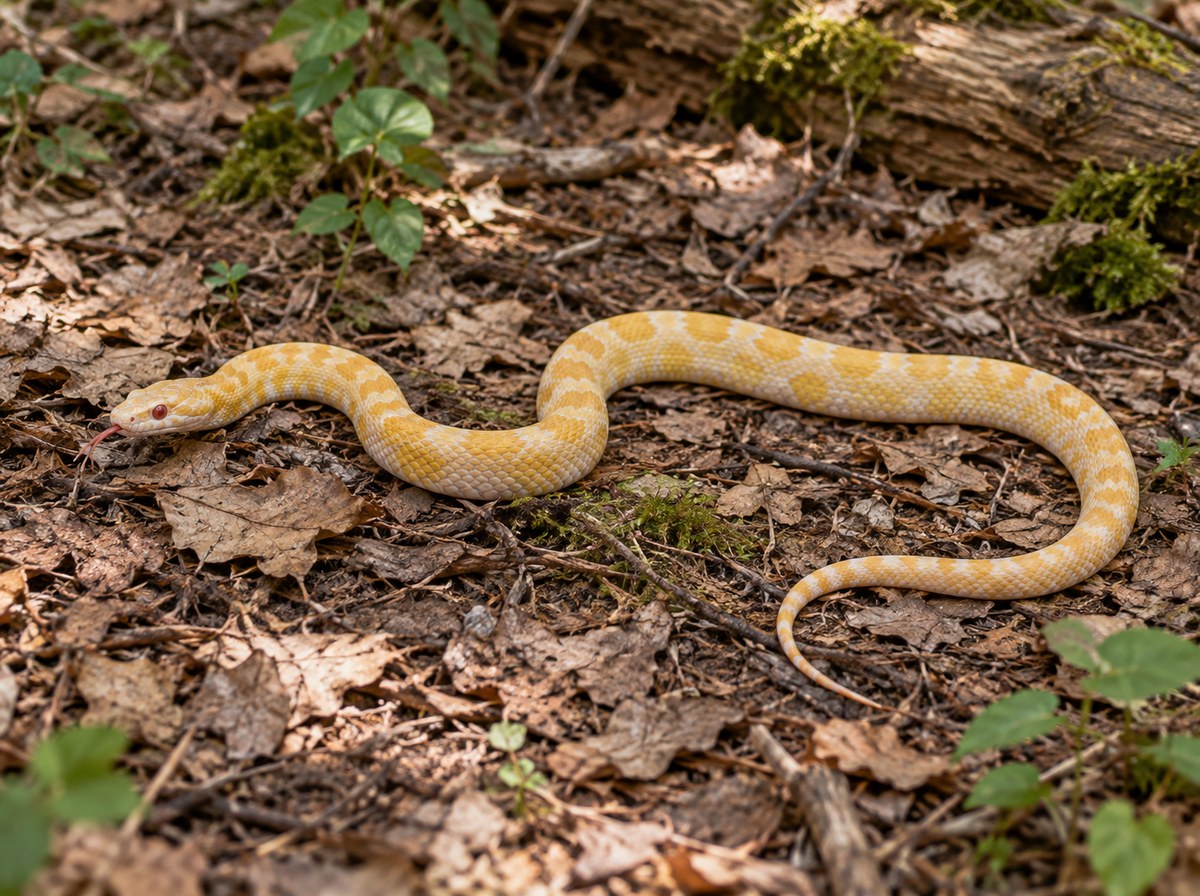
A butter corn snake is a corn snake (Pantherophis guttatus) that carries two copies of each of two recessive color genes: amelanistic, usually shortened to amel, which removes every trace of black pigment, and caramel, which pushes the species’ usual reds and oranges toward yellow. Put both in one snake and you get a two-tone yellow animal: a pale cream to light yellow background, deeper yellow saddles edged in white instead of black, a belly with no black checkerboard, and pink to red eyes. “Butter” is a hobby name for that gene combination. It is not a separate species, a locality or a single mutation, so a butter grows, eats and lives exactly like any other corn snake, and needs the same housing.
The genetics are where buyers get caught out, because both genes can hide in normal-looking snakes. Below you will find what each gene does, how to tell a butter from the morphs it gets confused with, what every common pairing produces (with the arithmetic shown), and what to ask a seller before you pay. Butter listings on Creatures are scarce right now, so the easiest way to hear about one is to set a free butter corn snake listing alert (no account needed to start). If you are planning a pairing or selling hatchlings, the free pedigree chart maker includes corn snakes and prints a three-generation chart you can hand to a buyer.

| What it is | A color morph of the corn snake that shows two recessive genes at once: amel and caramel |
|---|---|
| Look | Two-tone yellow: pale cream to light yellow ground, yellow saddles with pale edges, no black anywhere, pink to red eyes |
| Amel gene | Recessive; traced in 2015 to an inserted stretch of DNA in the OCA2 pigment gene |
| Caramel gene | Recessive in breeders’ records; the gene itself has not been identified in published research |
| Key odds | Butter x normal gives no butters, only double hets; double het x double het gives about 1 butter in 16 |
| Adult size | Around 150 cm (about 5 ft), males usually smaller (RSPCA) |
| Lifespan | Around 10 to 15 years (RSPCA); up to 23 years in human care (Smithsonian’s National Zoo) |
| Care | Standard corn snake care, with one difference: the RSPCA advises a lower UVB ceiling (UVI 0.7 at the basking spot) for albino morphs like this one |
Browse listings, public profiles, breeders, or add your animal.
What is a butter corn snake?
Corn snakes are the most commonly bred snake species in the pet trade, according to the Smithsonian’s National Zoo, and decades of captive breeding have turned up dozens of color and pattern genes. A butter is a combination morph: two of those genes stacked in one animal.
Both genes are recessive. The NIH’s National Human Genome Research Institute defines a recessive trait as one that shows only when both copies of the gene carry the change; a single copy has no visible effect. A snake with one hidden copy is called “het” in the hobby, short for heterozygous, meaning its two copies of that gene differ. So a butter needs two amel copies and two caramel copies, and a snake that carries one of each looks completely normal. That single fact explains most of this page: why butters can hatch from normal-looking parents, why a butter bred to a normal corn snake produces no butters at all, and why a seller’s “het” claim matters as much as the snake in front of you.
Amel: the gene that removes black
Amel corn snakes were the first color variant anyone noticed in the species. A 2015 study in Scientific Reports by researchers at the University of Geneva and Uppsala University sets out the history. Amelanistic corn snakes have been found in the wild in Florida, North Carolina and Tennessee, and in 1953 a single amel from North Carolina went into a small captive-breeding group, where crosses showed that the trait is controlled by one recessive gene. Amel is now the most common variant in captive-bred corn snakes worldwide, and the authors note that every amel is thought to carry the mutation of that one North Carolina founder. The amel half of every butter is thought to trace back to that single snake, which entered captive breeding more than seventy years ago.
The same study found the cause. An inserted stretch of DNA, an LTR-retrotransposon, sits inside the 11th intron of the OCA2 gene and badly truncates the protein the gene makes. OCA2 is the same gene whose disruption causes a form of albinism in people and mice. The visible result, in the paper’s words, is a snake that lacks “all signs of melanin”: the black outlines around the saddles are replaced by white skin, there is no melanin in the iris, the eyes look pink, and the black checks on the belly are gone. That is why keepers and welfare groups call amel corn snakes albinos, and why a butter counts as an albino for care purposes.
Caramel: the gene that turns red toward yellow
Caramel is the newer and much less studied half. On its own, a caramel still makes melanin, so it keeps the dark pigment in its pattern and the black pupil of an ordinary corn snake.
Kathy and Bill Love, writing a corn snake morph feature for Reptiles magazine in 2010, describe the caramel gene as one that “intensifies yellow and reduces red,” and breeders’ records and the long-running hobby morph guides treat it as a single recessive gene. The pairings that produce butters behave the way that model predicts. What does not exist yet, as far as we could find, is a published study identifying the gene behind it. The Geneva group that found amel’s OCA2 mutation has since mapped several other corn snake genes, including the PMEL mutation behind the striped Terrazzo morph in 2024, but caramel is not among them. Treat “caramel is recessive” as well-tested breeder knowledge rather than settled molecular genetics.
“Butter” is a hobby name
No registry standardizes corn snake morph names, so “butter” means what keepers agree it means, and what they agree on is the genotype: amel plus caramel, both showing. The hobby’s morph references list it as exactly that pair of recessive genes. That makes it different from appearance names such as candy cane, a name breeders give to amels selected for red or orange saddles on a white ground. Two butters can differ in shade, because line breeding and other genes shift the final color, but a snake without both genes is not a butter however yellow it looks.
One naming trap: ball python keepers also use “butter” as a morph name, for a different gene in a different species. Nothing on this page applies to it; our blue-eyed leucistic ball python guide explains where that gene fits. Stacking an albino gene with a second color gene is a common recipe in other snakes too; the sunglow boa, for example, is albino plus hypo in a boa constrictor.
What a butter corn snake looks like
The easiest way to picture a butter is to start with a normal corn snake and subtract. The Smithsonian describes the wild type as a slender orange or brownish-yellow snake with large red blotches outlined in black down the back, and rows of alternating black and white marks on the belly, the checkerboard that may have given the species its name. Amel takes away every black element of that picture, and caramel moves the reds and oranges toward yellow. What is left is a two-tone yellow corn snake.

A typical butter shows:
- Background: pale cream to light yellow.
- Saddles: deeper yellow to golden blotches down the back, in the same layout as any corn snake, with smaller blotches along the sides.
- Borders: pale or white where a normal corn snake has black outlines.
- Belly: pale, with no black checkerboard.
- Eyes: pink to red, with no black pupil. A black pupil means the snake makes melanin, so it cannot be a butter.
- Build: a corn snake’s slender body, slim head, round pupils and fine, weakly keeled scales, as the Florida Museum’s corn snake account describes them, with no heat-sensing pits. The museum’s copperhead account lists what the venomous look-alike has instead: a stout pit viper body, a vertical, cat-like pupil and a deep facial pit between nostril and eye.
Color changes with age. The Smithsonian notes that corn snake hatchlings lack the brighter color of adults, and keepers report that several amel-based morphs change as they mature (snows, for example, often develop some yellow on the neck and throat as adults). So a baby butter can look paler and less yellow than its parents, and its final shade is hard to call from a hatchling photo. Ask to see both parents and, if the breeder has them, older siblings from earlier clutches.
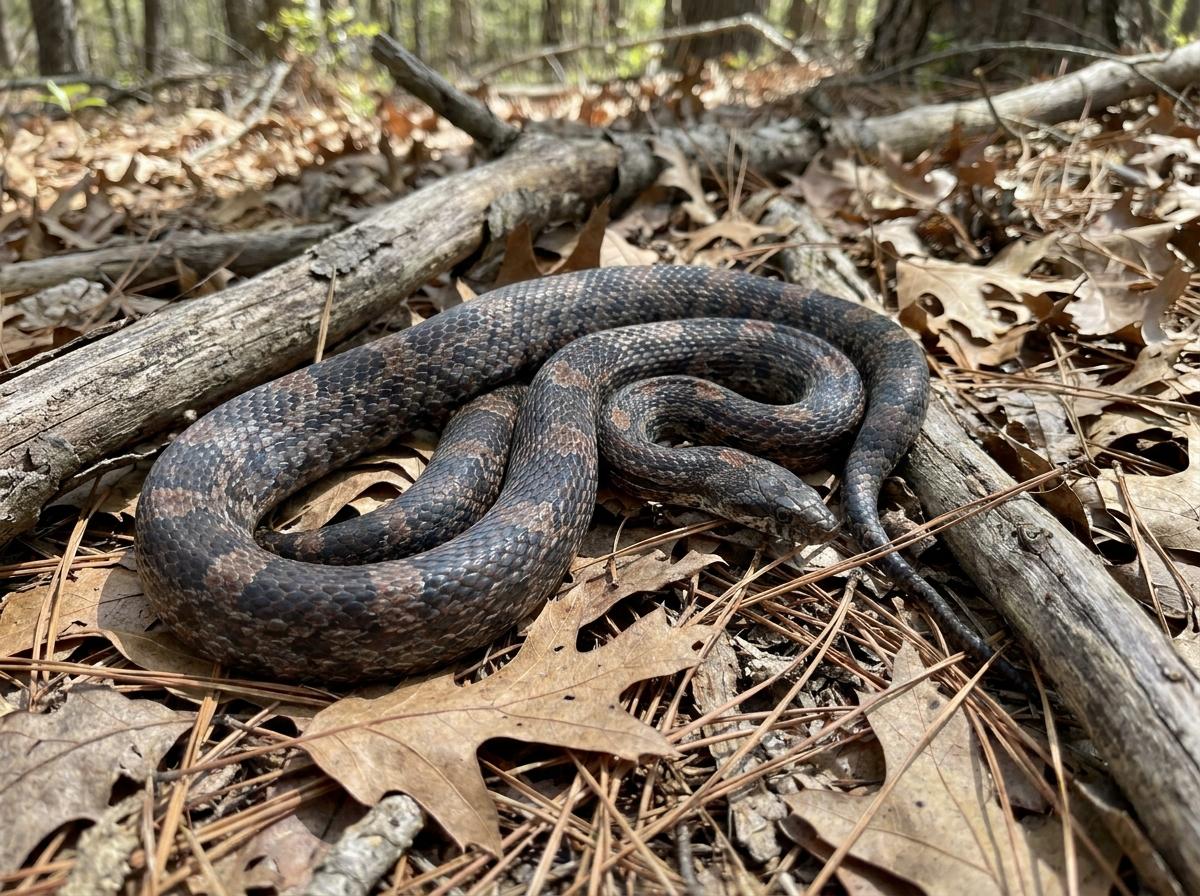
A lot of people searching for a butter are really asking about yellow snakes in general, including yellow and black ones. Any black on the snake rules out a butter, because amel removes all of it. A yellowish corn snake with black saddle borders or a checkered belly may be a caramel, a normal with warm yellow tones or another morph, and some yellow snakes are not corn snakes at all.
Butter or a look-alike?
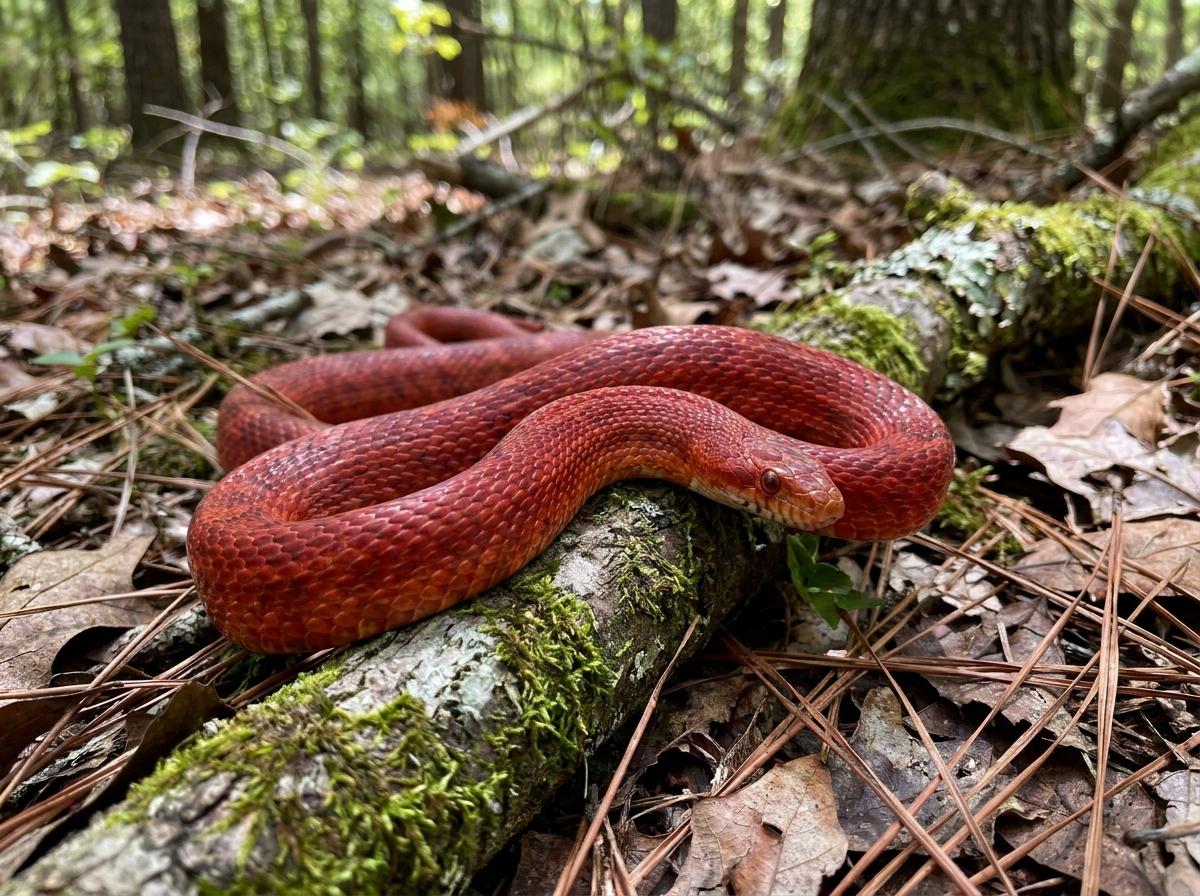
- Amel, candy cane and other amel lines. The same pink eyes and no black, but red, orange or pink saddles rather than yellow ones. If the saddles are red or orange, you are looking at an amel without caramel.
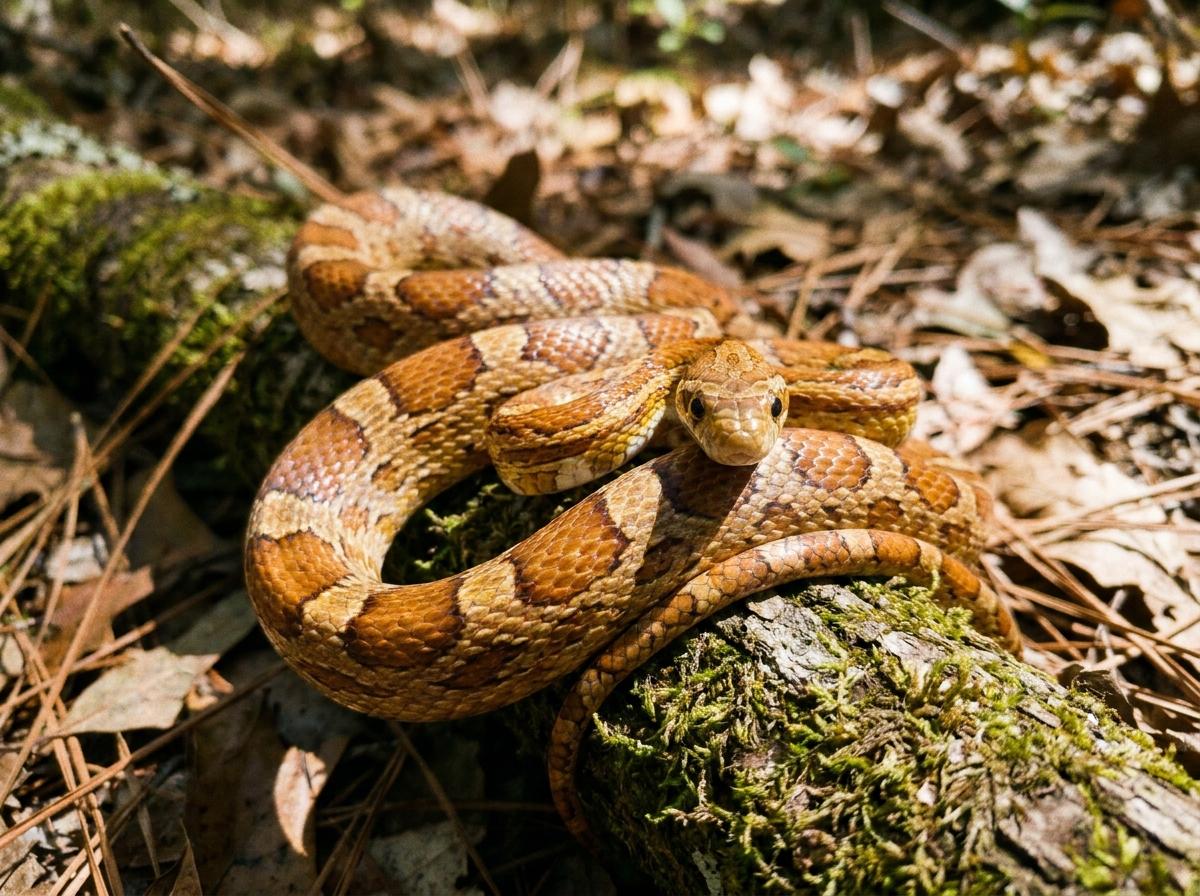
- Caramel. Yellow to brown tones, but with melanin: a black pupil and dark pigment in the pattern.
- Amber. The hobby name for hypo plus caramel. Hypo reduces black pigment rather than removing it (a 2026 Genetics study describes hypomelanistic corn snakes with a barely visible black outline around their blotches), so an amber still has melanin in its eyes, where a butter has none.
- Snow. Amel plus anerythristic, the gene that removes red pigment (our anery corn snake guide covers it). A 1989 Journal of Heredity review found that snakes carrying two copies of both lack black and red pigment but keep a distinct pattern, so snow corn snakes are white to pale pink with pink to red eyes, and keepers report that many adults gain some yellow on the neck and throat. A butter is yellow along its whole length, not just at the throat.
- Ultramel. Kathy and Bill Love describe ultra as a type of hypo that sits at the same gene as amel, and an ultramel as a snake with one ultra copy and one amel copy, often among the lightest corn snakes short of a true amel. That matters to butter buyers, because a parent sold as “het amel” from an ultra line may carry ultra instead.
- Pattern combinations. Butter can be combined with pattern genes such as motley or stripe. The colors stay butter; only the layout changes.
Butter genetics: what each pairing produces
The odds below are simple Mendelian arithmetic. They assume that amel and caramel are each a single recessive gene, that the two are inherited independently of each other, and that neither parent carries anything you have not been told about. They are averages over many clutches. Any one clutch can land well off them, and with clutches that the Smithsonian puts at 10 to 30 eggs in wild females, a 1 in 16 outcome can easily turn up twice in one clutch or not at all.
A note on the words: “visual” means the snake shows the trait, “100% het” means the parents prove it carries a hidden copy, and “possible het” percentages are probabilities, not facts.
- Butter x normal (carrying neither gene): no butters. Every baby looks normal and is 100% het for both amel and caramel, which the hobby calls a double het.
- Butter x butter: every baby is a butter.
- Butter x amel: every baby is an amel, 100% het caramel.
- Butter x caramel: every baby is a caramel, 100% het amel.
- Butter x amel het caramel: about half butters and half amels that are 100% het caramel.
- Butter x double het: about a quarter each of butters, amels het caramel, caramels het amel, and normal-looking double hets. Every baby is 100% het for whichever of the two genes it does not show.
- Amel het caramel x caramel het amel: the same four-way split as butter x double het, about a quarter of each.
- Double het x double het: about 1 in 16 butters, 3 in 16 amels, 3 in 16 caramels and 9 in 16 normal-looking babies. The amels are “66% possible het caramel,” the caramels “66% possible het amel,” and the normal-looking babies 66% possible het for each gene.
The “66% het butter” trap
That last line is where listings get slippery. Here is where the 66% comes from. At the amel gene, a double het x double het pairing gives three non-amel outcomes for every amel one, and two of those three carry a hidden amel copy: two out of three, which the hobby rounds to 66%. The same is true at the caramel gene. But a normal-looking baby needs to carry both to be a true double het, and the chance of that is two thirds times two thirds, which is 4 in 9, about 44%. The chance it carries neither is one third times one third, about 11%.
So a snake sold as “66% het butter” is not 66% likely to make butters. Read it as “66% possible het amel and 66% possible het caramel,” and ask the seller which they mean. The same arithmetic applies to “50% possible het” snakes, such as the babies of a double het bred to a normal: 50% for each gene works out to a 25% chance of carrying both.
A possible het is only proven by what it produces. Breed a possible double het to a butter: if it carries amel, about half the babies should show amel (pink eyes and no black, as amels or butters); if it carries caramel, about half should show caramel. If a clutch of ten from that test pairing has no amel-type babies at all, the chance of that happening when the parent really is het amel is one half multiplied by itself ten times, under 1 in 1,000, which is strong evidence that it is not.
Buying a butter corn snake
Butter pairs caramel with amel, the most common variant in captive corn snakes, and both genes sell at common-morph prices, so a butter is an established morph rather than a rarity. Its price tends to follow the things that move any corn snake’s price: sex, age, any extra genes, how well the snake is documented and who produced it. Our corn snake cost guide has current prices, including one dealer’s prices for amel and caramel babies, and what the enclosure, heating and first vet visit add, which is usually more than the snake.

Because both genes can be carried invisibly, the genetics claim on a listing is only as good as the records behind it. Here is what to ask for:
- Visual butter or het? A “het butter” is a normal-looking snake, not a pale one. If the photo shows black anywhere, it is not a visual butter.
- The parents, with photos and stated genetics. Two butter parents make only butters, which removes the guesswork. If the parents were double hets, ask how the breeder told the butters apart from the amels in the clutch, and compare the baby with the parents.
- Any ultra in the line. If a parent or grandparent is an ultra or ultramel, ask whether a “het amel” claim could be ultra instead.
- Possible-het percentages, gene by gene. “66% het amel, 66% het caramel” is a precise claim. “66% het butter” is not.
- Hatch date, sex and feeding record. The RSPCA’s feeding schedule starts hatchlings on one pinky mouse every five to six days. Ask how many meals the snake has taken, whether it eats frozen and thawed prey, and when it last ate.
- Health at handover. The RSPCA describes a healthy corn snake as one that flicks its tongue often, has clear, bright eyes and smooth skin without blisters. Small black specks on the snake or around the water bowl can mean mites. The Merck Veterinary Manual recommends quarantining any new reptile for 3 to 6 months away from others you keep.
- Who produced it. A snake resold several times can lose its paperwork along the way. Buying close to the breeder gives you the best chance of accurate genetics.
This is where written records earn their keep. On Creatures, every animal profile has a Pedigree tab where the sire and dam can be linked, including “reference” profiles for parents you do not own, as pedigree, family and lineage explains. Feeding, shed and weight records stay with the snake when it is transferred to its new owner, so a buyer inherits the history instead of a screenshot. A breeder who builds a three-generation chart in the free pedigree chart maker can print it for the buyer and attach it to the snake’s real profile later.
Housing, heat and feeding a butter
The morph changes pigment, not size, appetite or behavior, so a butter needs standard corn snake care. Our corn snake care guide goes through setup, heat, feeding, handling and shedding in detail; this section covers the essentials and the one place where a butter differs.

Size and enclosure. The RSPCA’s corn snake guidance says adults grow to around 150 cm, with males normally smaller, and asks for a vivarium that lets the snake stretch out fully: at least the snake’s own length long, and at least a third of its length wide and high. For a 150 cm snake that is 150 by 50 by 50 cm (roughly 5 by 1.6 by 1.6 ft). The enclosure should be secure against escape and made of a solid material that is easy to clean and holds heat. Merck’s husbandry chapter makes the same point about materials: wood, plastic and fiberglass enclosures are preferable to glass aquaria, where even a top made entirely of mesh can leave ventilation badly hampered. A hatchling can be stressed by a very large vivarium, so the RSPCA suggests a small one to start, moving up as the snake grows, or a larger one filled with plenty of small hiding places.
Heat. The RSPCA’s figures are a basking zone of 28 to 30 C (82 to 86 F) at the level where the snake sits, a cool end of 20 to 24 C (68 to 75 F), and a safe night drop to 16 to 20 C (61 to 68 F). Every heat source needs a thermostat, and heat lamps must be guarded against burns; a guard only does its job if it encloses the bulb and nothing in the enclosure lets the snake climb up against it. The Merck Veterinary Manual’s husbandry chapter agrees: heaters should be thermostat controlled, screened from the animal and placed toward one end, and “hot rocks” should be avoided because they often cause burns.
Light: the one butter-specific point. Sources disagree on whether corn snakes need UVB. Merck’s husbandry table lists the corn or rat snake as having no special lighting requirement, while still recommending broad-spectrum light for its likely health benefits. The RSPCA says corn snakes need a UVB gradient from UVI 1.0 at the basking spot down to zero in the shade, from a low-output 2 to 7 percent tube with a reflector, fitted in the roof over the warm end and running between a third and a half of the vivarium’s length, guarded like any lamp. Then it adds the line that matters here: some morphs, “like albinos,” need lower levels, with a maximum of UVI 0.7 at the basking spot. A butter carries two copies of amel, the corn snake’s albino gene, so if you fit UVB, set it up to that lower ceiling and check it with a UV index meter at the snake’s level rather than guessing.
Hides, climbing and substrate. Give at least two hides, one at each end, so the snake can choose its temperature without giving up feeling secure, plus branches or peg boards to climb. A third, humid hide with moistened moss helps with shedding. The RSPCA recommends organic soil or reptile soil and sand mixes, and says not to use sand alone; Merck advises against gravel and pebbles for ground-dwelling reptiles because they are hard to clean and often swallowed. Humidity should sit around 40 to 50 percent on a hygrometer.
Water. A dish of clean water at the cool end, large enough for the snake to bathe in, changed at least daily.
Feeding. Dead mice, sized so each is slightly wider than the widest part of the snake’s body: one pinky every five to six days for a hatchling, working up to one adult mouse every 7 to 14 days. Feed inside the vivarium with tongs, and wait at least 48 hours after a meal before handling (the RSPCA’s figure; Merck’s snake nutrition chapter says three days, so take the longer one if you are unsure).
Alone. Corn snakes lead solitary lives, and the RSPCA advises keeping them one to an enclosure, which also makes it easier to check each snake’s health.
Health, lifespan and records
We found no published evidence that the butter combination causes a health problem of its own. The problems that matter are the ones any corn snake can have, and the RSPCA’s list covers the usual ones: retained shed, especially eye caps; mites; mouth rot; abnormal droppings that can signal internal parasites; and bringing up a meal, which is why it says to wait before handling a snake that has just eaten. The RSPCA says eye caps left after a shed need removing promptly and that a reptile vet can show you how, and that repeated shedding trouble can usually be fixed by adjusting the vivarium. Anything beyond that is a vet decision, and it helps to find a reptile vet before you need one.
The RSPCA puts a corn snake’s lifespan at around 10 to 15 years, and the Smithsonian says corn snakes live up to 23 years in human care. Either way, a butter is a commitment of a decade or more.
Snakes are quiet about being unwell, so the useful signal is usually a trend. Merck’s husbandry chapter encourages owners to keep detailed records of husbandry changes, feeding, breeding, new arrivals and health problems, and the RSPCA asks for regular weighing to catch a snake that is becoming underweight or obese. On Creatures, reptile profiles include Feeding and Shed record types alongside weights and vet visits, and our ball python feeding and shed log guide shows a way of logging events without guessing at causes that works just as well for a corn snake.
Breeding butters
If you are setting up a butter project, the cleanest pairing is butter x butter: every baby is a butter, and nobody has to guess at hets. The next best is butter x a snake whose genetics are proven, such as an amel het caramel (half butters) or a proven double het (a quarter butters). Starting from two double hets works, but only about 1 in 16 babies will be a butter, and you will be left with a clutch of possible hets that someone has to label honestly.
The Smithsonian’s natural history figures give a sense of the timeline: corn snakes reach maturity at about 18 to 36 months, wild females lay clutches of 10 to 30 eggs, and the eggs take about 60 to 65 days at around 82 F to hatch. Captive breeding plans, including whether and when a particular female should be bred, are worth talking through with a reptile vet.
What separates a trusted butter breeder from the rest is the paperwork. Record each pairing, label every hatchling with exactly what it is (“visual butter,” “amel 100% het caramel,” “normal 66% possible het amel and 66% possible het caramel”), and link every baby to its sire and dam so the claim travels with the snake. A Creatures profile for each breeder snake, with its offspring linked on the Pedigree tab, does that without a spreadsheet, and the corn snake name generator helps when a clutch needs names fast.
Is a butter corn snake right for you?
- You want a corn snake first. The color is the bonus; the animal is a corn snake that grows to around 150 cm, lives 10 to 15 years or more and has all the usual needs.
- You can give it a secure, thermostat-controlled vivarium of at least its own length, with hides at both ends.
- You are comfortable feeding frozen and thawed mice for the rest of its life.
- You will check the genetics claim and keep the records that go with it, especially if you might breed.
- You have a reptile vet within reach, and your landlord and local rules allow a pet snake. Rules on keeping reptiles vary by state, city and county, so check with your state wildlife agency and local ordinances before you buy.
Frequently asked questions
Is a butter corn snake an albino?
Yes, in the sense that matters for care. A butter carries two copies of amel, the corn snake’s albino gene, so it makes no melanin. That is why the RSPCA’s lower UVB ceiling for albino corn snakes applies to it.
What is the difference between a butter and a caramel corn snake?
A caramel has the caramel gene but still makes melanin, so it shows dark pigment in its pattern and black pupils. A butter is a caramel that is also amel: no black at all, a pale belly and pink to red eyes.
What is the difference between a butter and an amel?
Both lack black and have pink to red eyes. An amel without caramel has red, orange or pink saddles; a butter’s are yellow.
Can two normal-looking corn snakes produce a butter?
Yes, if both are double hets. About 1 in 16 of their babies should be butters on average, and a clutch may have none.
What does “het butter” mean?
A normal-looking snake that carries one hidden copy of amel and one of caramel. If the label is “66% het butter,” it is a possible het, and the real chance it carries both genes is about 44%, not 66%.
Do butter corn snakes change color as they grow?
Corn snake hatchlings are generally less brightly colored than adults, according to the Smithsonian, so a young butter can look paler than it will as an adult. Judge by the parents as well as the baby.
How big do butter corn snakes get?
The same as any corn snake: around 150 cm (about 5 ft) per the RSPCA, with males usually smaller. The Smithsonian gives a range of 61 to 182 cm for the species.
Is a butter ball python the same thing?
No. It is a different gene in a different species that happens to share the name.
Do this next on Creatures
Whether you are still researching, waiting for the right snake or already keeping a butter, Creatures keeps the listings, breeders and records in one place.
Get listing alerts. Butter listings are scarce, so set a free butter corn snake listing alert and we will email you about new matching listings. No account needed to start. See saving searches and using your watchlist.
Browse and compare. Check butter corn snake listings on the marketplace, keep an eye on the Creatures breeder directory as trusted corn snake breeders join it, and read the corn snake species page and our corn snake cost guide before you commit.
Add your snake. Already have a butter? Create a free profile for your butter corn snake, no account needed to start, and link its sire and dam on the Pedigree tab so its genetics claim stays attached to it. The walkthrough is in adding an animal to Creatures, and your animal’s profile page explains each tab.
Keep the records. Add feeding, shed and weight records so a problem shows up as a trend. The record sheet opens for any visitor, and a free account saves what you enter. See adding a record, and set feeding days as repeating reminders with reminders and upcoming care.
Breed corn snakes? The directory has no corn snake breeders listed yet. Create your breeding operation’s profile, no account needed to start, then get listed in the breeder directory so buyers looking for documented butters can find you.
Free tools. Print a three-generation chart with the pedigree chart maker and find a name with the corn snake name generator.