Anerythristic
Gene
Author: Elliott Garber, DVM · Updated
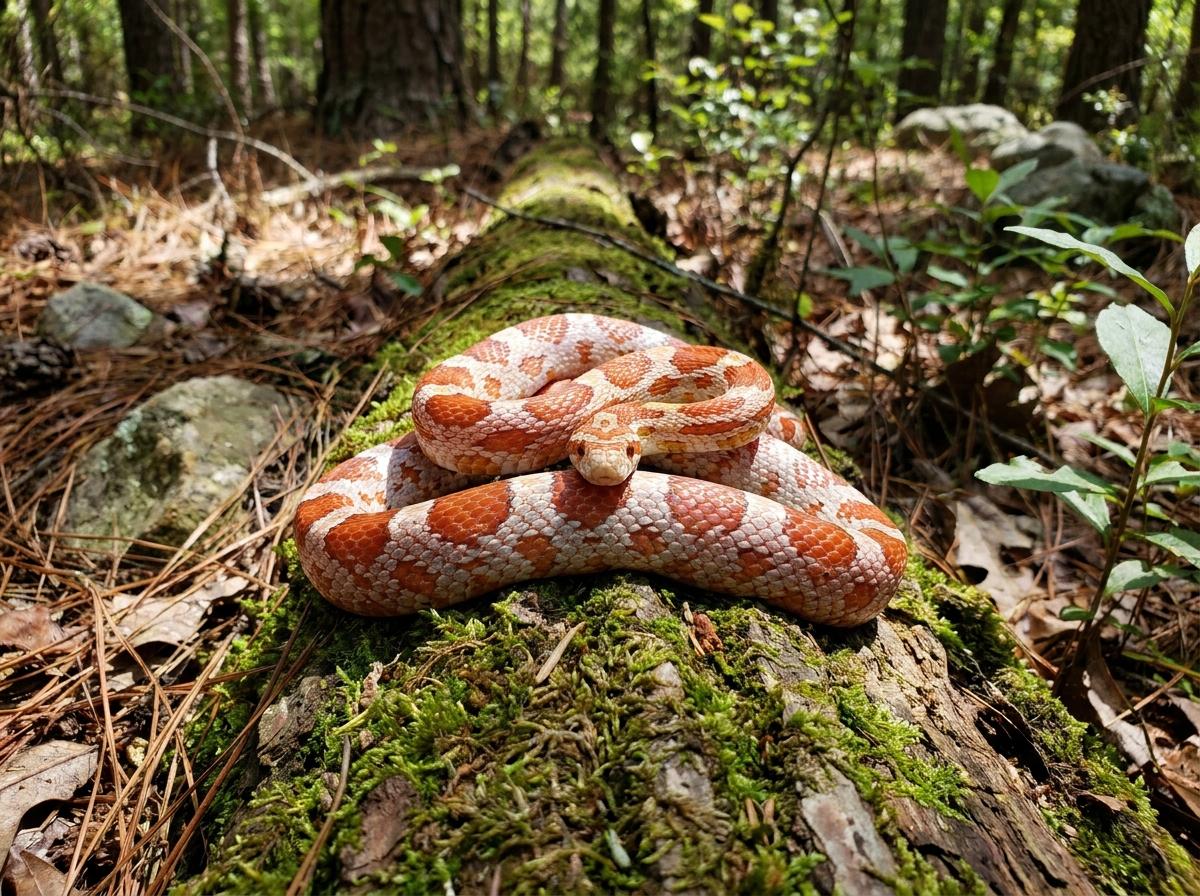
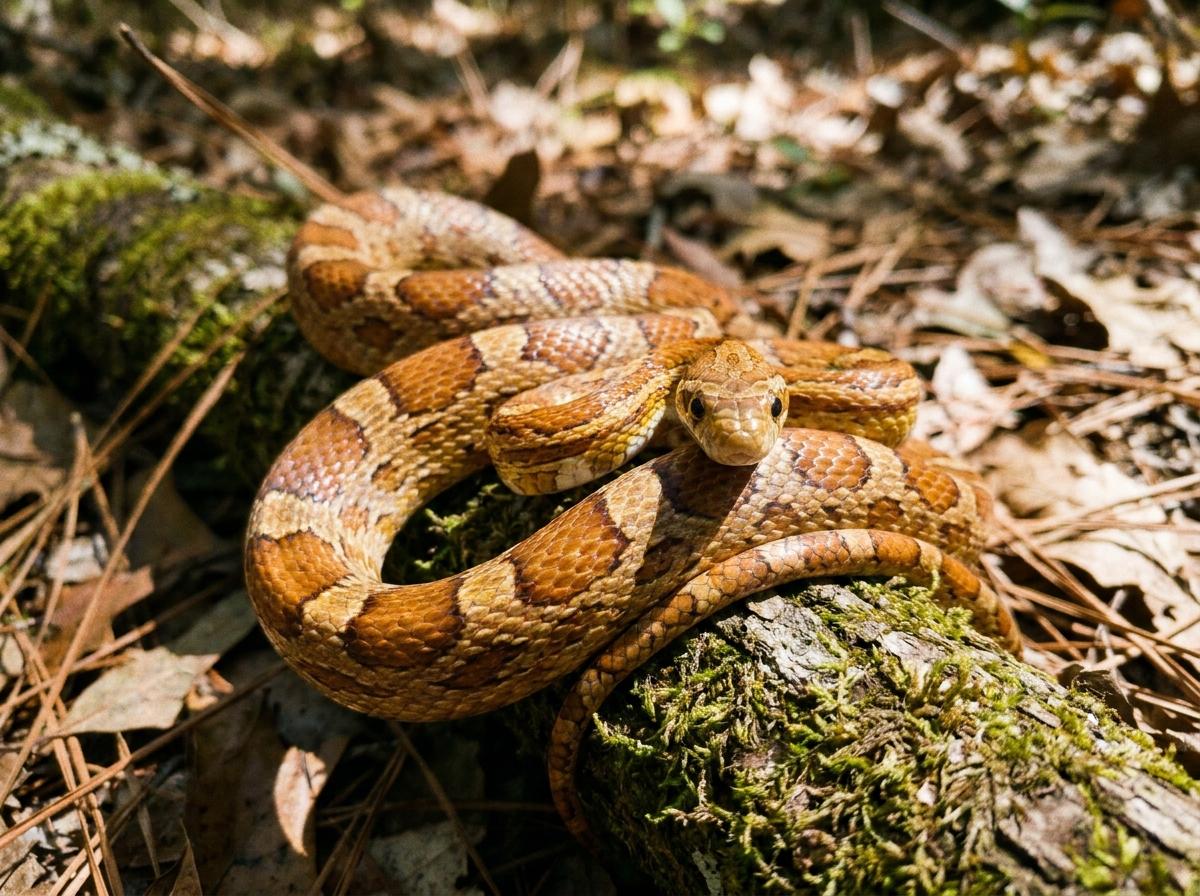
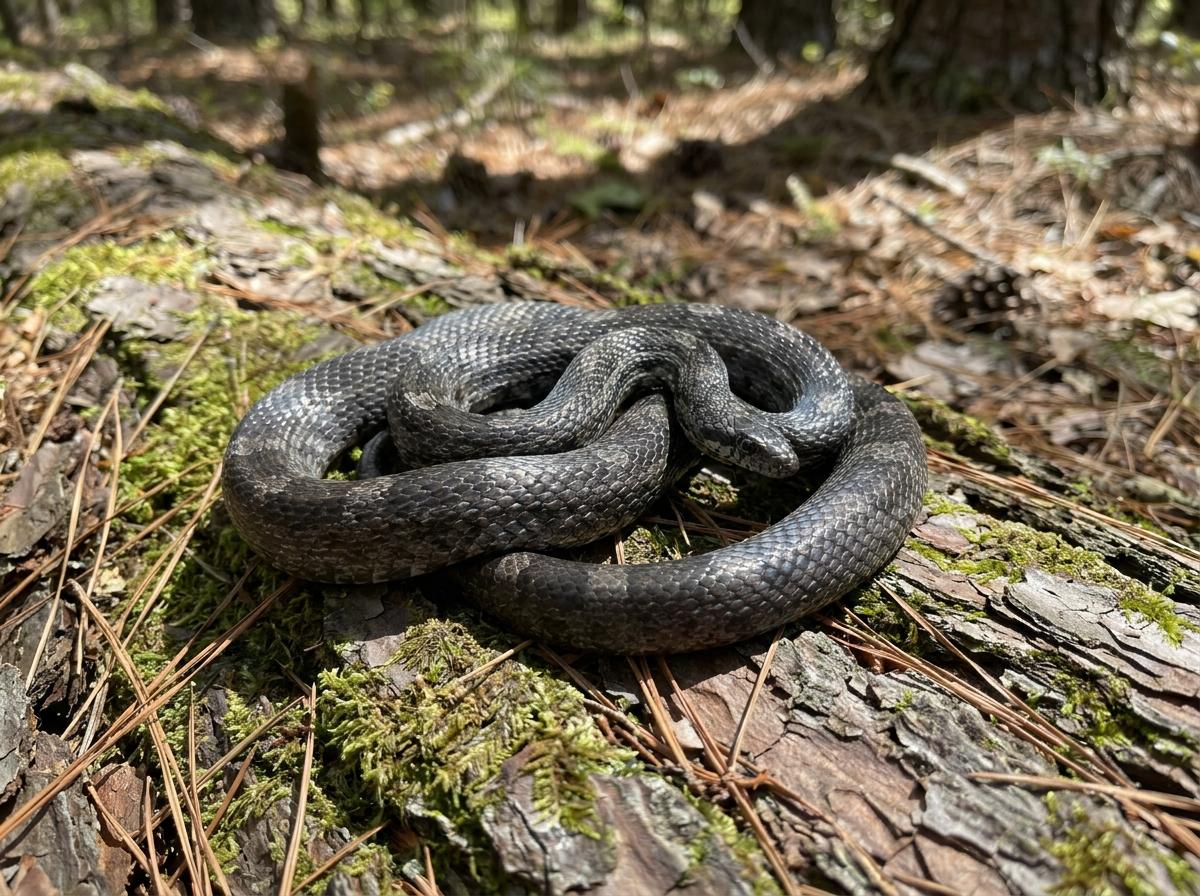
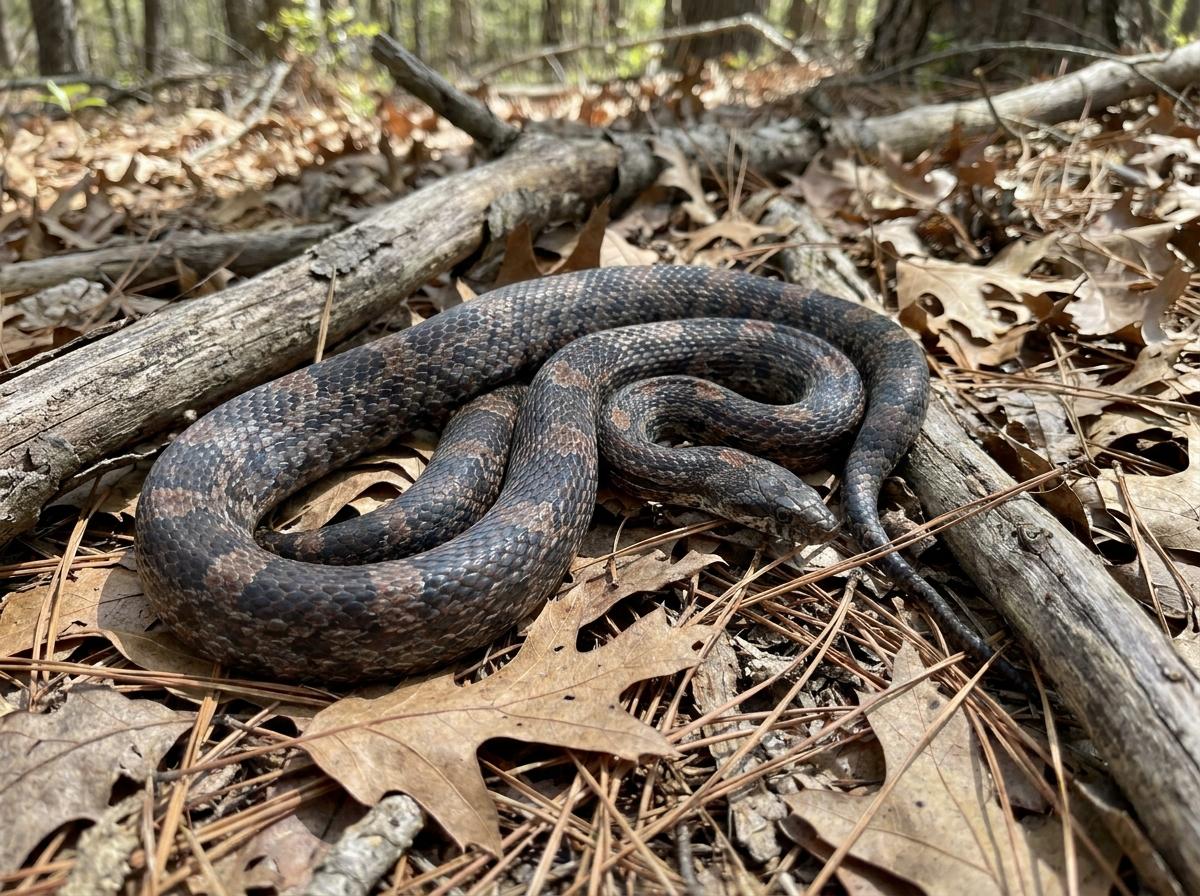
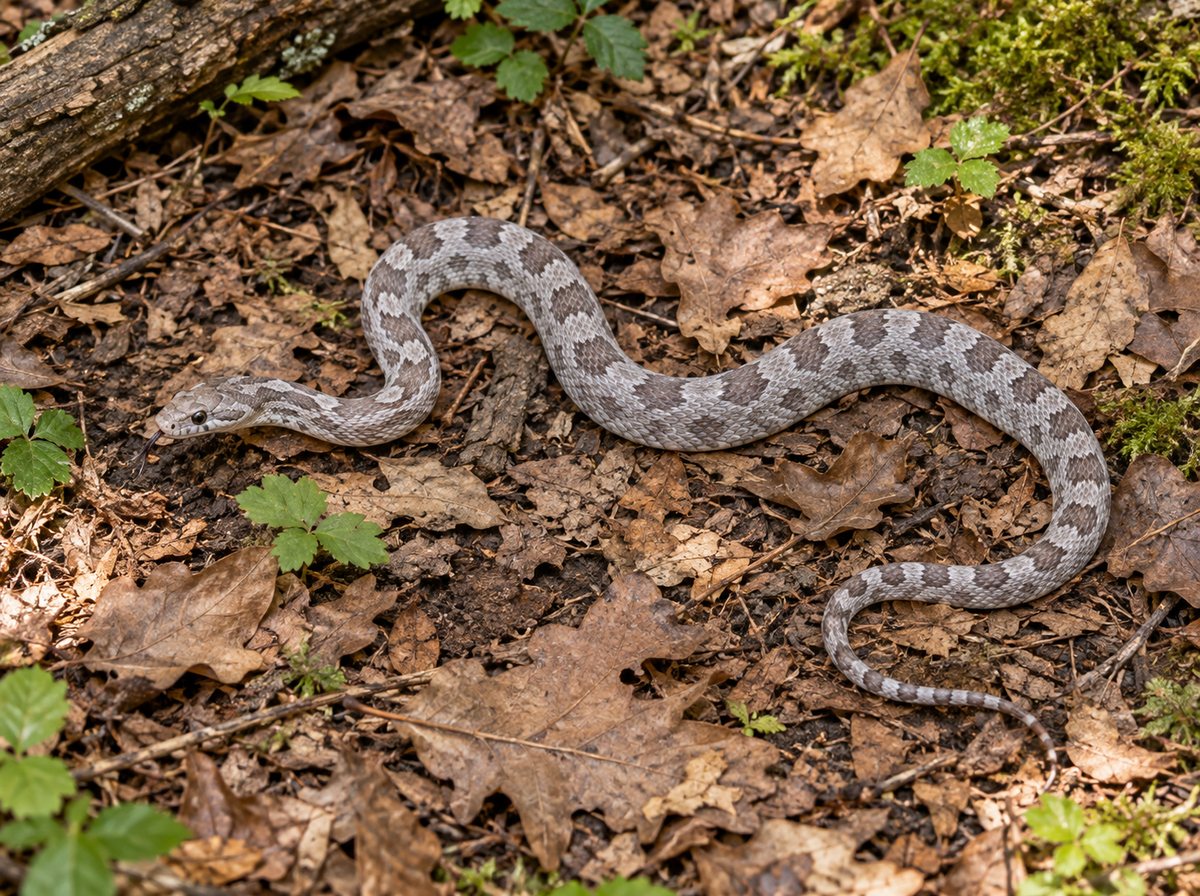
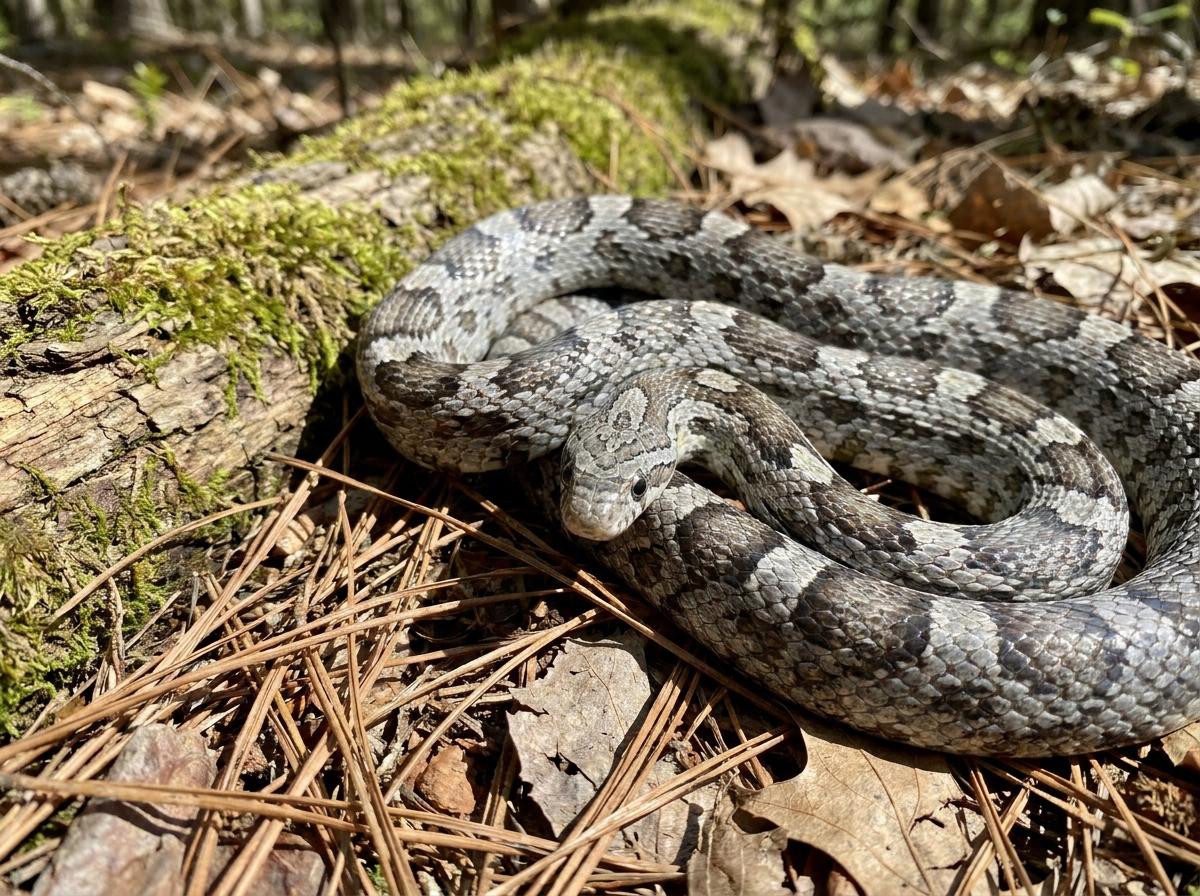
An anery corn snake is an ordinary corn snake that carries two copies of anerythrism, a recessive mutation that removes red pigment. Take away the red and orange of a wild corn snake and what is left is a snake in gray, black, silver, and white: gray to black blotches edged in black on a pale gray ground, the species’ black and white checkered belly, and dark eyes, because the gene leaves black pigment alone. Many adults also pick up a wash of yellow on the chin and neck. “Anery” is the hobby’s short name for anerythristic, and it is a color morph, not a separate species, so an anery grows, behaves, and lives like any other corn snake.
This guide covers what the gene does (and what it does not), how to tell an anery from the other gray corn snakes it gets confused with, what the hobby means by “anery A”, the pairing odds breeders work from, and what to check before you buy. Care is the same as for any corn snake, so the care section here is the short version of our full corn snake care guide. No anery corn snakes are listed on Creatures right now, so if you are shopping, set a free anery listing alert and Creatures will email you about new matching listings. Planning a pairing? The free pedigree chart maker includes corn snakes and works without an account.

| What it is | A color morph of the corn snake (Pantherophis guttatus), not a separate species |
|---|---|
| Gene | Anerythrism, an autosomal recessive: two copies show, one copy is a hidden “het” (Bechtel and Bechtel, 1989) |
| Look | No red or orange; gray to black blotches edged in black on a pale gray ground, black and white checkered belly; many adults gain some yellow on the chin and neck |
| Eyes | Dark, because black pigment is untouched; pink or red eyes mean an amel-based snake such as a snow |
| Classic combinations | Snow (amel plus anery), ghost (hypo plus anery), granite (anery plus diffused) |
| Look-alikes | Charcoal and cinder, which breeders treat as separate recessive genes that only breeding records or a test pairing can tell apart; lavender (a recessive LYST mutation), which shows a pinkish ground and a gray iris |
| Size and lifespan | Around 150 cm (about 5 ft) per the RSPCA, males usually smaller; wild record 188 cm (74 in); about 10 to 15 years per the RSPCA, longer in some collections |
| Care | Same as any corn snake: a secure vivarium at least as long as the snake, a thermostat on every heat source, a hide at each end |
Browse listings, public profiles, breeders, or add your animal.
What “anery” means, genetically
Anerythristic means “without red.” The clearest account of the gene comes from a 1989 review in the Journal of Heredity by H. B. and E. Bechtel, Color Mutations in the Corn Snake, which pulled together captive breeding data for the species’ two classic color mutations, albinism and anerythrism. Their findings, in plain terms:
- Anerythrism is autosomal recessive. A snake needs two copies to show it. The NIH’s National Human Genome Research Institute defines a recessive trait the same way: both copies of the gene must carry the change, and one copy has no visible effect. A snake with one copy looks normal and is called “het anery” (heterozygous).
- Snakes with two copies have no red pigment. That is the defining trait. Many adult aneries still show some yellow, and sources disagree on why: some describe the gene as removing yellow too and credit the adult yellow to carotenoids in the diet.
- Individual color still varies a lot. The Bechtels stressed marked individual variation within each mutation, so two aneries can look quite different.
- Albinism and anerythrism are inherited independently. A snake with two copies of both lacks black and red but keeps a distinct pattern. That double recessive is what the hobby sells as a snow.
- Both mutations had turned up in widely separated parts of the wild range, so anery is a natural variant, not something created in captivity.
- There is probably more than one anery gene. The authors concluded that other, non-allelic forms of anerythrism likely exist in corn snakes. Breeders now work with at least two other gray-making recessives that they treat as separate genes.
Anery A, charcoal, and cinder
When a breeder says “anery”, they almost always mean the original, common anerythristic gene, which the hobby also calls anery A or “type A” to keep it apart from later finds. The two gray morphs it is most often confused with are charcoal, which some sellers label “anery B”, and cinder. Breeders treat both as separate recessive genes, not versions of anery A. That matters in practice: an anery A bred to a charcoal gives normal-looking babies that each carry one copy of both genes, because neither parent can give the other’s gene (assuming neither carries the other’s gene hidden as a het). If a listing just says “anery”, it is fair to ask which one.
The gene behind anery A has not, as far as we could find, been identified in published research. A University of Geneva group has been working through the corn snake’s color genes one at a time: amel traced to the OCA2 gene in a 2015 Scientific Reports study, lavender to LYST in a 2020 PNAS paper, and the motley and stripe patterns to CLCN2 in a 2025 Genome Biology paper. Anery is not on that list yet, so everything known about its inheritance comes from breeding records, which is how most snake morph genetics have been worked out.
Anery is not unique to corn snakes. Anery boa constrictors are also red-free, but that is a different gene in a different species, and nothing about one predicts the other. The same goes for other pale snakes such as the blue-eyed leucistic ball python, whose look comes from entirely unrelated genes.
Pairing odds
These are simple Mendelian odds for anery A, assuming both parents’ anery comes from the same gene. They are averages across many clutches; any one clutch can land well off them.
- Anery x normal (no anery gene): no aneries. Every baby is normal-looking and 100% het anery.
- Anery x het anery: about half anery, half normal-looking 100% hets.
- Het anery x het anery: about one in four anery. The normal-looking siblings are sold as “66% possible het”, because two out of three of them are expected to carry the gene and nobody can tell which by looking.
- Anery x anery: every baby is anery.
- Anery x amel: every baby is normal-looking and carries one copy of each gene (a “double het”).
- Double het x double het: on average 1 in 16 snow, 3 in 16 anery, 3 in 16 amel, and 9 in 16 normal-looking. That is simple Punnett math for two recessives inherited independently.
- Snow x snow: every baby is a snow.
- Snow x anery: every baby is anery, and every one is 100% het amel.
What an anery corn snake looks like
Start with the wild corn snake’s pattern. The Florida Museum of Natural History describes adults with black-bordered blotches down the back, a spear-shaped marking on the head and neck, a belly that is usually a black and white checkerboard, weakly keeled scales, and round pupils. Remove the red and orange from that and you have an anery.

A typical anery shows:
- Ground color: pale gray, silver, or grayish tan, never orange.
- Blotches: mid gray to charcoal or brownish gray, each outlined in black, in a row of large blotches down the back with smaller ones along the sides. The contrast between blotch and ground is often strongest in young snakes.
- Head: the corn snake’s spear-point marking in gray and black, running from between the eyes back onto the neck.
- Belly: the black and white checkers are still there, because the gene does not touch black pigment. This is a quick way to separate an anery from an amel-based snake, which loses the black checkers.
- Eyes: dark. The PNAS lavender study describes the wild type’s iris as orange to red; an anery loses the red but keeps its melanin, so the eye reads dark rather than pink or red. Pink or red eyes mean amelanism, so a pale snake with red eyes is a snow or another amel combination, not a plain anery.
- Yellow: many adults develop a yellow or mustard wash on the chin, lips, neck, and lower sides. Keepers report everything from almost none to obvious yellow, so its presence or absence proves nothing on its own.
Color changes with age. Keepers commonly describe anery hatchlings as starkly black and pale gray, with yellow and softer browns arriving as the snake grows, so ask to see the parents and, if possible, older siblings. Any snake also looks dull, with cloudy blue-gray eyes, in the days before a shed, so judge color on a snake that has just shed.
Anery or a look-alike?
Several corn snake morphs are gray, and a photo is not enough to separate them. Here is how the common ones differ:
- Charcoal: a separate recessive gene that also removes red. Hobby descriptions often say charcoals show less yellow than aneries, but the overlap is wide and descriptions of their contrast disagree.
- Cinder: another separate recessive that gives a gray snake. Again, not anery A.
- Lavender: the PNAS team describes lavenders as having gray blotches on a pink background instead of orange, a gray iris instead of the wild type’s orange to red, and belly checkers that look more faded. A pinkish ground is the giveaway.
- Caramel: reduces red too, but in Kathy and Bill Love’s description for Reptiles magazine it also intensifies yellow, so caramels lean yellow and brown rather than gray. Caramel plus amel is the butter corn snake.
- Snow: amel plus anery, so no black and no red, though the Bechtels note the pattern is still distinct. Snows are mostly white to pale pink, often with some yellow, and have pink to red eyes.
- Ghost: hypo plus anery. Hypo reduces black pigment without removing it, so a ghost is a softer, paler, more pastel gray than a plain anery. The Loves note that a ghost built on the strawberry (also called salmon) hypo gene lets more red show through than a typical ghost.
- Granite and pewter: breeders sell anery plus diffused as granite, and the Loves describe pewter as diffused plus charcoal. Both carry diffused, which blurs the pattern on the lower sides.
Because anery A, charcoal, and cinder can all produce a gray snake, the only reliable proof is breeding. Pair the unknown snake with a proven anery A, or with a snow, which carries anery A. Any anery babies show your snake carries anery A. A decent-sized clutch of only normal-looking babies points to a different gene. Good breeders track this on paper so their buyers do not have to.
Size, lifespan, and temperament
The morph changes pigment, not size or behavior. The RSPCA’s corn snake guidance says corn snakes can grow to around 150 cm, with males usually smaller. For wild snakes, the Florida Museum puts most adults at about 76 to 122 cm (30 to 48 in), with a record of 188 cm (74 in). Bowling Green State University’s herpetarium gives an average size of 2.5 to 5 feet.
For lifespan, the RSPCA says around 10 to 15 years, while BGSU’s corn snake record gives an average of 21 years. Either way, buying one is a commitment of a decade or more.
Temperament is a big part of why corn snakes are recommended to beginners. BGSU’s record calls the corn snake docile and a good beginner snake, and the RSPCA calls them quite placid and says they can get used to regular handling. A frightened corn snake may draw its neck into an S shape, and the Florida Museum notes that wild ones may vibrate the tail tip when cornered. Both are signals to leave the snake alone for now.
Caring for an anery corn snake
Anery changes color, not care. Everything in the corn snake care guide applies, and the short version, with the RSPCA’s numbers, is below.

Enclosure size. The RSPCA says a corn snake needs a vivarium it can fully stretch out in, at least as long as the snake and at least a third of its length wide and high: 150 by 50 by 50 cm for a 150 cm snake. A 2021 review in Animals (Warwick and colleagues) found that recommendations for enclosures shorter than the snake rested on decades-old rules of thumb, not evidence. One sensible exception: the RSPCA notes a hatchling can be stressed in a very large space, so either start it smaller and move up as it grows, or give a big vivarium plenty of small hiding places.
Security. The enclosure must be secure, and corn snakes climb well. Lock sliding doors, clip mesh lids at every corner, and check gaps around cables and vents. A hatchling fits through very small gaps.
Heat. Put a heat source at one end and leave the other end cool. The RSPCA’s targets are a basking zone of 28 to 30 C (82 to 86 F), measured just above the substrate where the snake sits, and a cool end of 20 to 24 C (68 to 75 F), with a night drop to 16 to 20 C (61 to 68 F) at normal room temperatures. Every heat source needs a thermostat, and heat lamps must be guarded against burns and shattered bulbs. The Merck Veterinary Manual’s reptile husbandry chapter adds that heaters should be screened from the animal and that hot rocks frequently cause burns in larger reptiles and should be avoided.
Humidity. The RSPCA targets about 40 to 50 percent, measured with a hygrometer. Merck’s table gives a wider 30 to 70 percent and notes the need is much higher during a shed.
Hides and furniture. At least two hides, one at each end, so the snake never has to choose between the right temperature and feeling secure. A third hide with damp moss helps sheds. Add branches or other climbing furniture.
Substrate. The RSPCA recommends organic soil or reptile soil and sand mixes, not sand alone. Merck advises against gravel and pebbles for ground-dwelling reptiles because they are hard to clean and are often swallowed.
Water. A dish of clean water at the cool end, big enough for the snake to bathe in, changed at least daily.
Lighting. Sources differ. Merck’s table lists no special lighting requirement for corn snakes but still recommends broad-spectrum lighting for its likely health benefits, while the RSPCA recommends a low-output UVB tube over the warm end. If you do fit UVB, the RSPCA’s lower ceiling (a UV index of 0.7 at the basking spot) is written for albino morphs; amel-based snakes such as snows fall under it, but a plain anery keeps its melanin.
Feeding. Dead mice, sized to the snake. The RSPCA starts hatchlings on one pinky every five to six days and works up to one adult mouse every 7 to 14 days for adults, with prey slightly wider than the widest part of the snake’s body. Do not handle after a meal: the RSPCA says wait 48 hours, and Merck’s snake nutrition chapter says 3 days, to reduce the chance of regurgitation. Take the longer figure if unsure.
Company. One snake per enclosure. The RSPCA says corn snakes lead solitary lives and are easier to health-check alone, and Merck says most non-breeding pet snakes are best kept singly.
Health
We found no published evidence that the anery gene itself causes a health problem. Anery removes a pigment, and the studies of other corn snake color genes found nothing beyond color either: the PNAS team reports that lavenders feed, grow, and breed normally, and the Genome Biology team found that motley and stripe do not affect behavior or fertility. The health issues that matter for an anery are the ones any corn snake can have, and a reptile-experienced vet should make every medical call.
The RSPCA lists the problems to watch for: mites (small black specks on the snake or around the water bowl, or a snake that sits in its water for unusually long periods), mouth rot, abnormal droppings that can signal internal parasites, and incomplete sheds, including retained eye caps, which a reptile vet can show you how to remove safely. Snakes shed in one complete piece, so a shed that comes off in bits is a sign to check humidity. Merck recommends quarantining any new reptile for 3 to 6 months away from the rest of a collection, and tells owners to keep detailed records of husbandry changes, health issues, and treatments. Wash your hands before and after handling a snake or its equipment, the RSPCA adds, because reptiles can carry salmonella.
Find a vet before you need one. Our guide to finding a reptile vet covers what to ask. Then keep a log: the RSPCA asks for regular weighing, and a snake that has stopped eating in winter is a very different case if its weight is steady than if it is falling. On Creatures, reptile profiles include Feeding and Shed record types alongside weights and vet visits, so the trend is there when your vet asks.
Buying an anery corn snake
Anery has been in captive breeding for decades, so a plain anery is not a novelty morph. What you pay depends more on everything stacked on top of it: extra genes it carries or shows, whether the het claims are proven, sex, size, and the breeder’s records. Our corn snake cost guide covers purchase prices and setup costs. Expect the enclosure, thermostat, heating, and first vet visit to be a large part of the first-year budget, whatever the snake costs.

Creatures has no anery listings at the moment, and the breeder directory is still thin for corn snakes, so a listing alert is the easiest way to hear when one appears. Wherever you buy, the genetics on a listing are only as good as the records behind them. Ask for:
- Which anery. Anery A, or charcoal or cinder sold under the anery name? If you plan to breed, this decides what the snake can be paired with.
- How it was proven. A visual anery should come from parents whose genetics explain it, for example two aneries, an anery and a het, or two hets.
- Het claims, stated precisely. “100% het” means the parents guarantee it, for example any normal-looking baby with an anery parent. “66% possible het” and “50% possible het” are probabilities, not facts, until the snake produces the gene.
- Anything else it carries. Het amel, het hypo, or other genes change what it can produce and what it is worth.
- Hatch date, feeding record, and sheds. A young corn snake should be eating dead prey reliably before it goes home. Ask how many meals it has taken, what it eats, and how its last shed went.
- Parents’ photos. They show what your snake is likely to turn into, including how much yellow it may develop.
- Health and quarantine practice. Ask about mite control and how new animals are quarantined.
A healthy young anery should be alert, feeding consistently, and shedding in complete pieces, with clear eyes after the shed and a clean vent.
This is where written records pay off. A breeder who keeps each snake’s sire, dam, clutch, and genetics on a profile can hand those records over with the animal. On Creatures, every animal profile has a Pedigree tab where the sire and dam can be linked, including “reference” profiles for parents you do not own, and records stay with the snake when ownership is transferred to the buyer. The pedigree, family, and lineage guide shows how the tab works, and transferring an animal to its new owner covers the handover.
Breeding with anery
Anery is a building block. Many anery projects aim at combinations: snows with amel, ghosts with hypo, granites with diffused, and many more multi-gene corns. The pairing odds above are the arithmetic, and the two habits that make a project trustworthy are simple.
Label offspring honestly. A normal-looking baby from an anery parent is 100% het anery. A normal-looking baby from two hets is a 66% possible het, and should be sold as one. Over a few generations, unproven “hets” sold as proven ones are how lines get muddled, and buyers pay for genes that are not there.
Keep the records with the snakes. Note each pairing, clutch, and hatch, and which babies went where. Short of a test pairing, a pedigree that names the anery line is the only way a future buyer can know whether their gray snake is anery A or something that only looks like it. The free pedigree chart maker builds a printable three-generation chart for a corn snake without an account, and the same lineage can live on the snakes’ profiles.
Before you sell, check the rules where you live. Corn snakes are native to the southeastern United States, and some states regulate collecting, keeping, breeding, or selling native snakes, or require a permit to sell reptiles. Check with your state wildlife agency and local ordinances, and keep any permit paperwork with your records. Outside the US, national and local rules vary.
Frequently asked questions
Is anery the same as anerythristic?
Yes. Anery is the hobby’s short name for an anerythristic corn snake, and in practice it usually means the original anery A gene.
Do anery corn snakes turn yellow?
Many do, a little. Many adults develop a yellow or mustard wash on the chin, neck, and lower sides, while some stay almost pure gray. Sources disagree on where the yellow comes from; some credit carotenoids in the diet.
What is the difference between anery and charcoal?
Breeders treat them as separate recessive genes that both make a gray corn snake. Charcoal is sometimes sold as “anery B” and is often described as showing less yellow, but the only reliable way to tell them apart is breeding records or a test pairing. Breeders report that an anery A bred to a charcoal gives normal-looking babies.
Is a snow corn snake an anery?
A snow carries two copies of anery and two copies of amel. Amel removes the black, so a snow has pink to red eyes and a mostly white body whose pattern shows in pale tones rather than gray and black, unlike a plain anery.
How big do anery corn snakes get?
The same as any corn snake: around 150 cm (about 5 ft) per the RSPCA, with males usually smaller, and a record of 188 cm (74 in) per the Florida Museum. Plan the enclosure for an adult at least as long as the snake.
Do anery corn snakes have health problems?
We found no published evidence of a health problem caused by the anery gene. Care for one as for any corn snake and watch for the problems all corn snakes share, such as mites, bad sheds, and mouth rot.
Is an anery corn snake related to an anery boa?
No. Both lack red pigment, but they are different genes in different species.
Do this next on Creatures
Whether you are still shopping, already keeping an anery, or breeding them, Creatures keeps the alerts, profiles, pedigrees, and records in one place.
Get listing alerts. No aneries are listed today. Set a free anery corn snake listing alert and we will email you about new matching listings. No account needed to start. See saving searches and using your watchlist.
Add your snake. Already have one? Create a free profile for your anery corn snake, no account needed to start, and link its sire and dam on the Pedigree tab. The walkthrough is in adding an animal to Creatures, and your animal’s profile page explains each tab.
Keep the records. Add a feeding, shed, weight, or vet record so changes show up as a trend. The record sheet opens for any visitor, and a free account saves what you enter. See adding a record and health and medical records, and set feeding days as repeating reminders with reminders and upcoming care.
Browse and compare. Check anery corn snake listings on the marketplace (none live today) and the Creatures breeder directory, which is still thin for corn snakes. Then read the snow and charcoal pages, or start from the corn snake species page.
Breed corn snakes? Create your breeding operation’s profile, no account needed to start, then get listed in the breeder directory so buyers looking for documented anery lines can find you. Working with a partner? Add your team to the same profile.
Free tools. Map a pairing with the pedigree chart maker, or find a name with the corn snake name generator.