



Amel
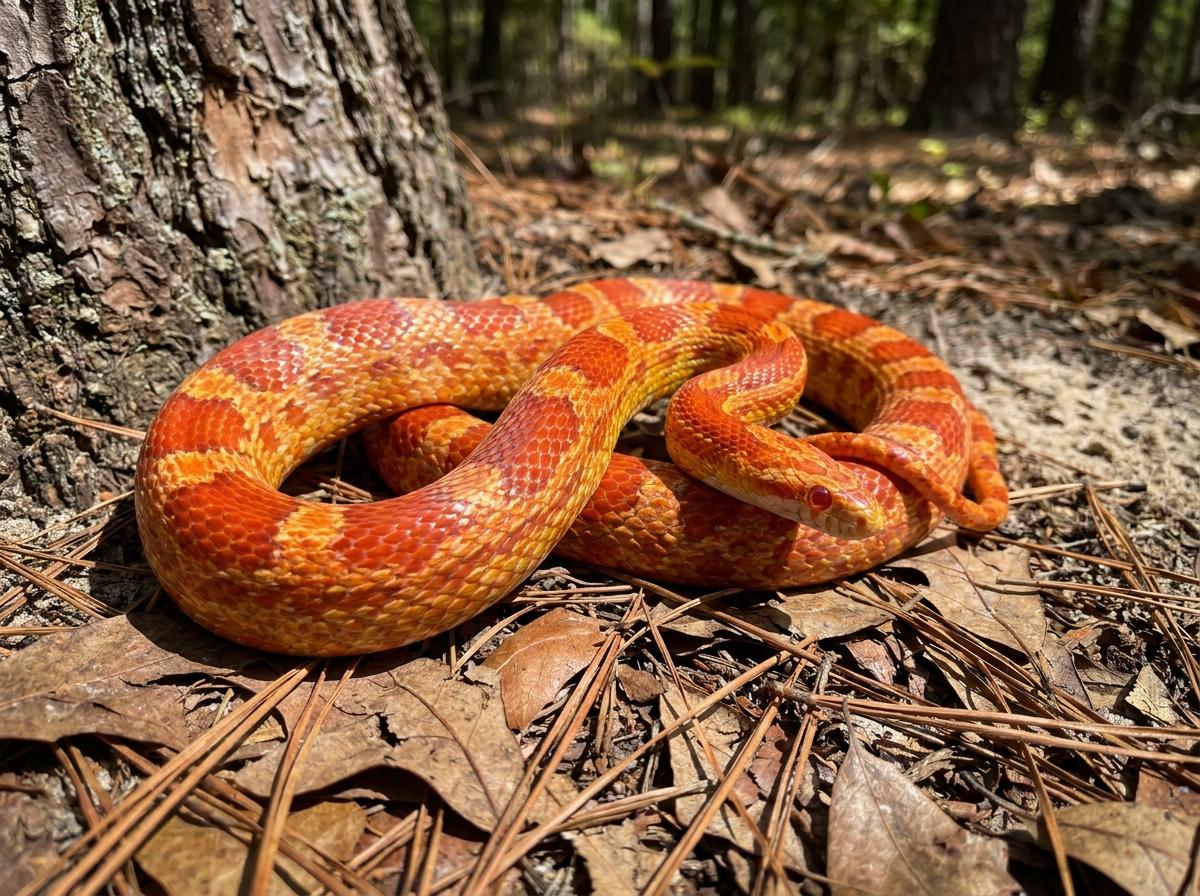
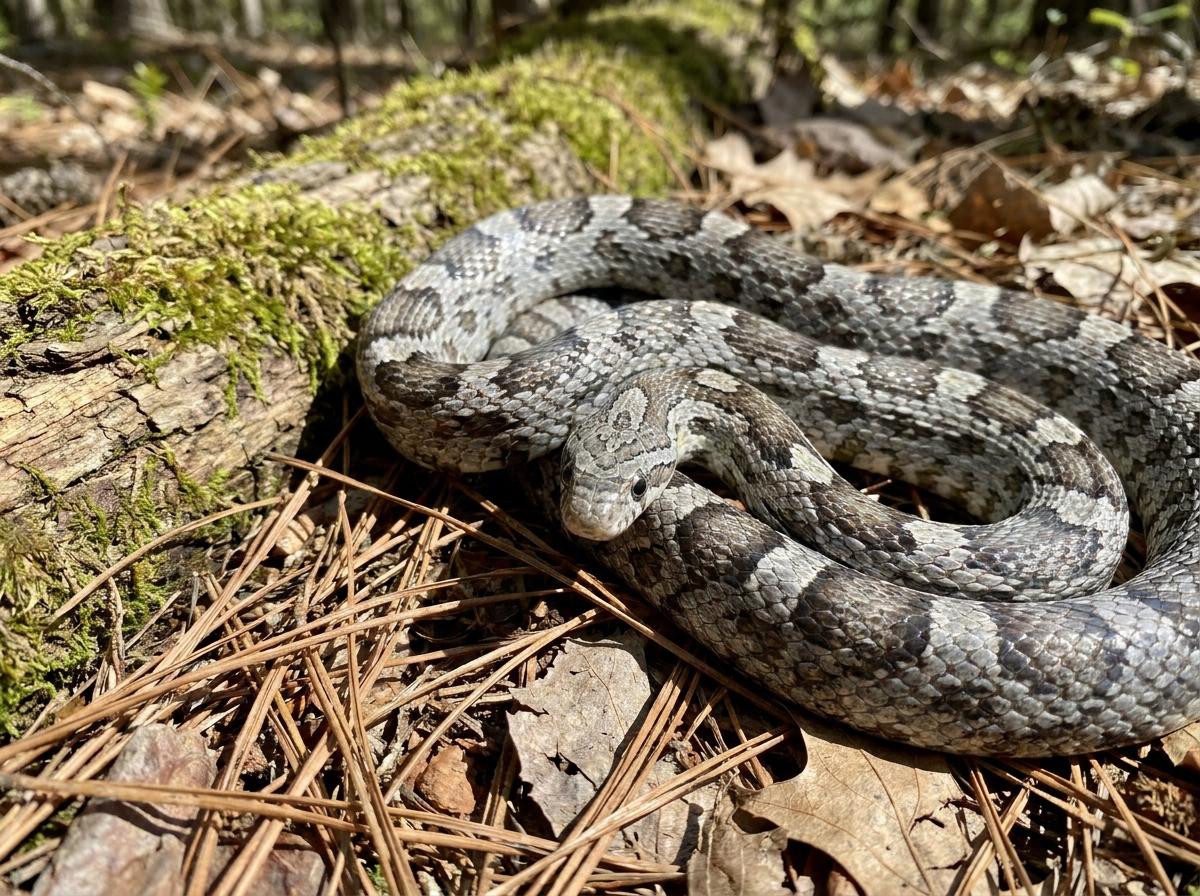
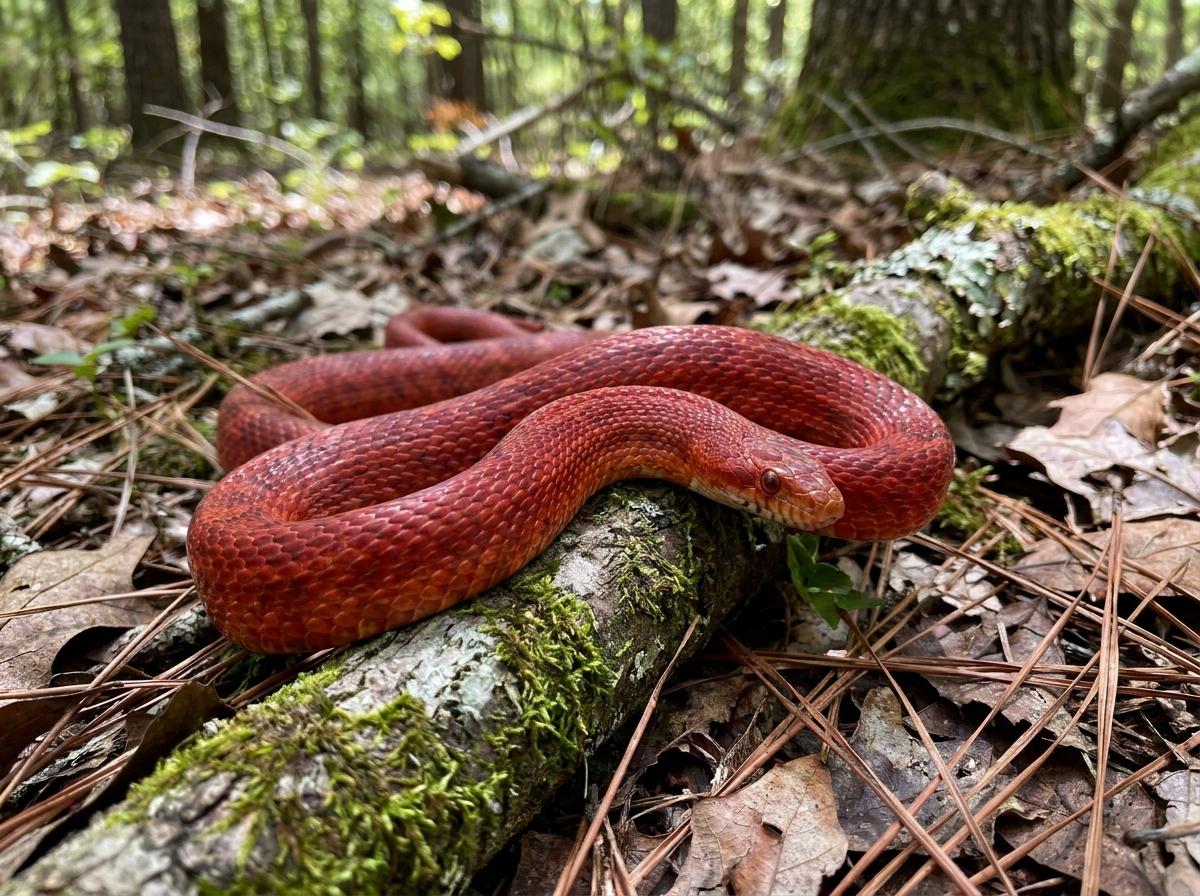
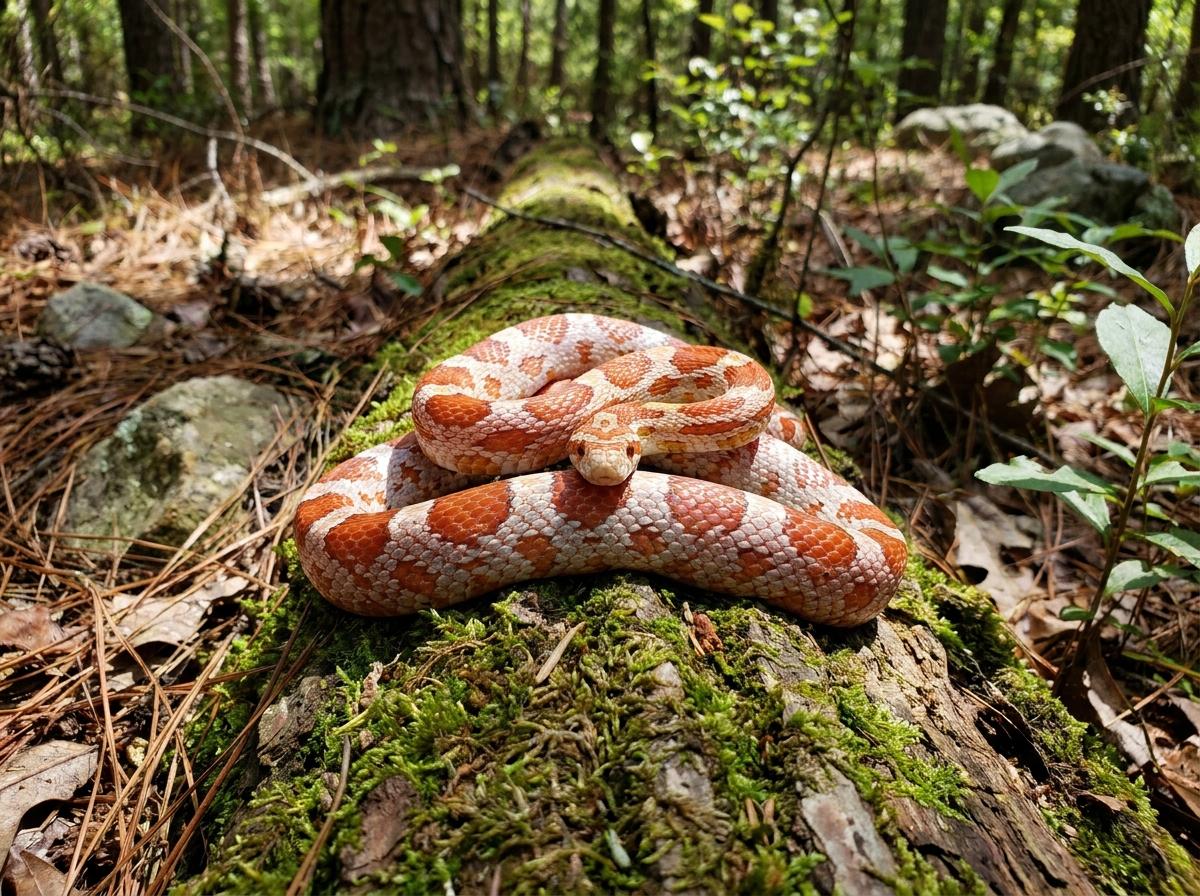
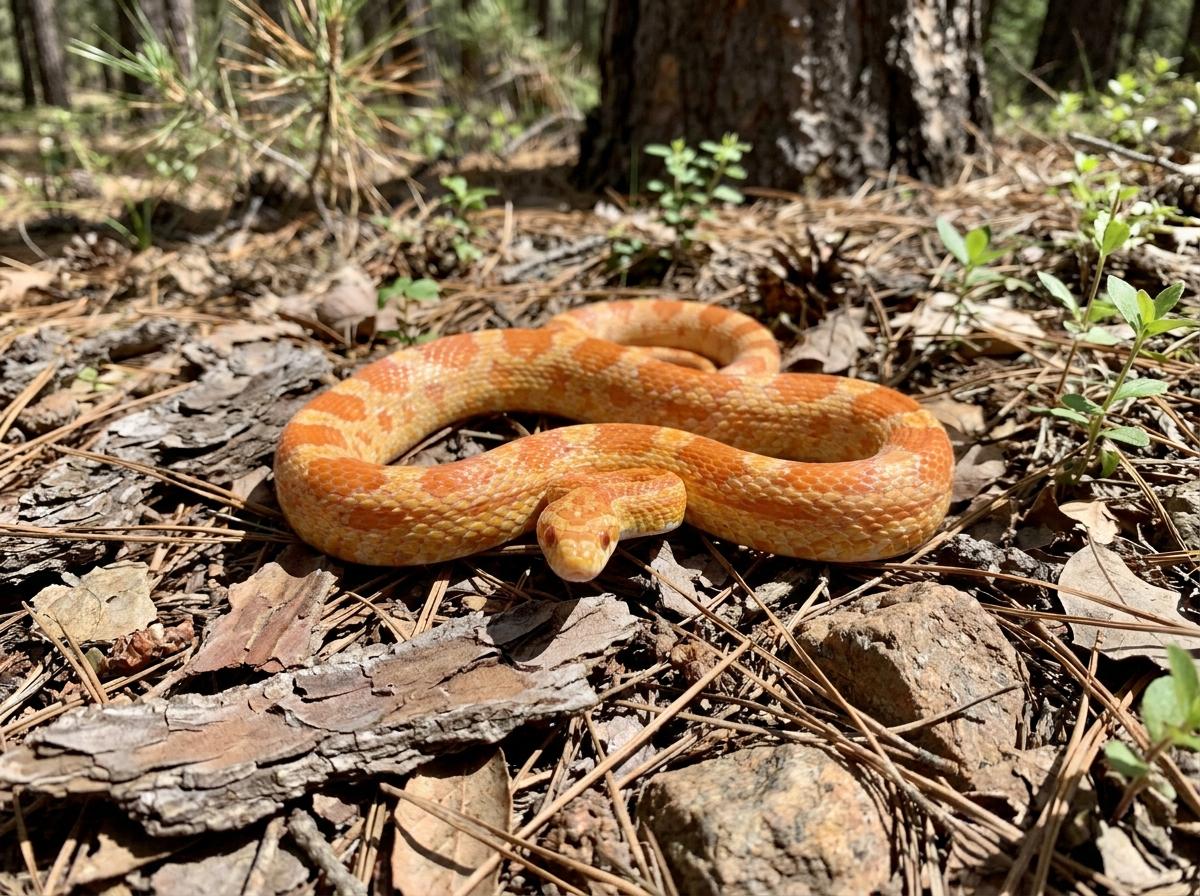
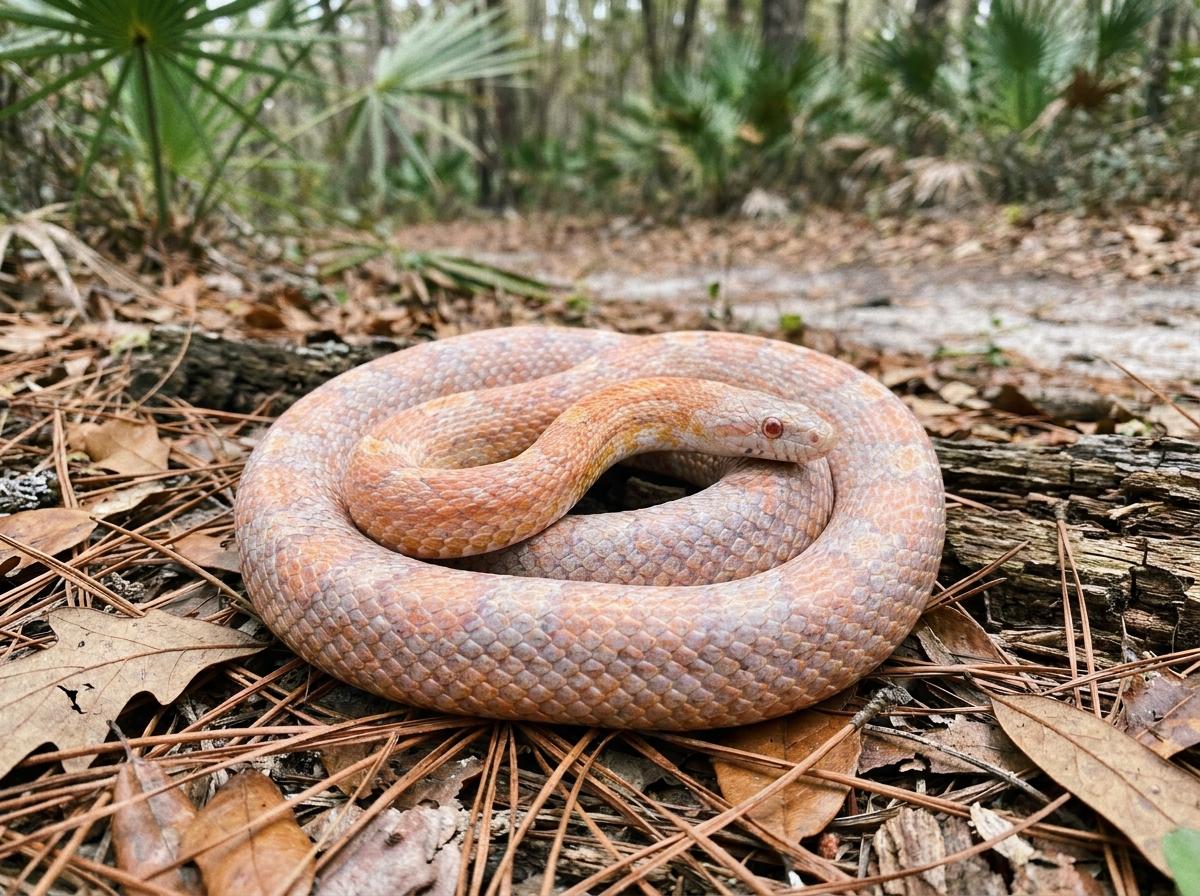
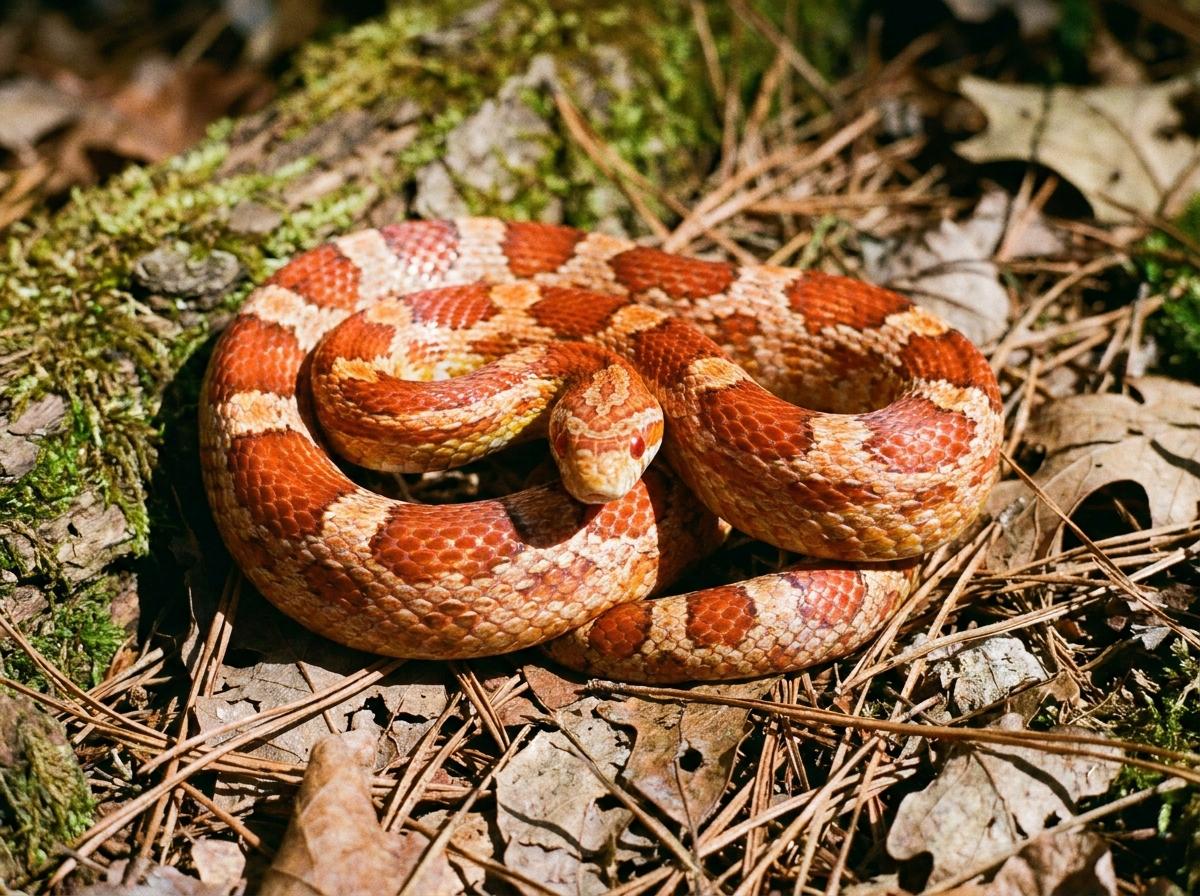
Amel is the common shorthand for an amelanistic corn snake, a recessive color morph of Pantherophis guttatus that lacks black pigment. Instead of the wild-type gray, tan, and black-edged pattern, an amel shows red or orange saddles on an orange, yellow, or cream ground color, with red pupils and pale belly checkers. It is one of the oldest and most frequently used corn snake mutations, so it appears both as a simple single-gene morph and as a building block in many designer combinations. The label is often more precise than albino because it describes the missing melanin rather than implying a colorless snake.
An amel corn snake is managed like any other captive corn. Its enclosure needs secure ventilation and a temperature gradient for digestion, while moderate humidity and a clean substrate help normal shedding. Most feed readily on frozen-thawed mice once settled, but new arrivals still need quiet time before regular handling. For breeding, amel is recessive; visual offspring require the gene from both parents. When buying, ask whether the snake is a plain amel or also carries genes such as caramel, anery, or diffused, since those can change adult color and future clutch outcomes.
Colors: Albino, Amel, Amelanistic, Anery, Anerythristic, Bloodred, Butter, Candy Cane, Caramel, Charcoal, Cinder, Creamsicle, Dilute, Fire, Ghost, Granite, Hypo, Lava, Lavender, Masque, Miami Phase, Motley, Normal, Okeetee, Opal, Palmetto, Pewter, Plasma, Reverse Okeetee, Scaleless, Snow, Stripe, Sunglow, Sunkissed, Tessera, Ultramel, Wild Type