

Chinstrap Penguin
Pygoscelis antarcticus
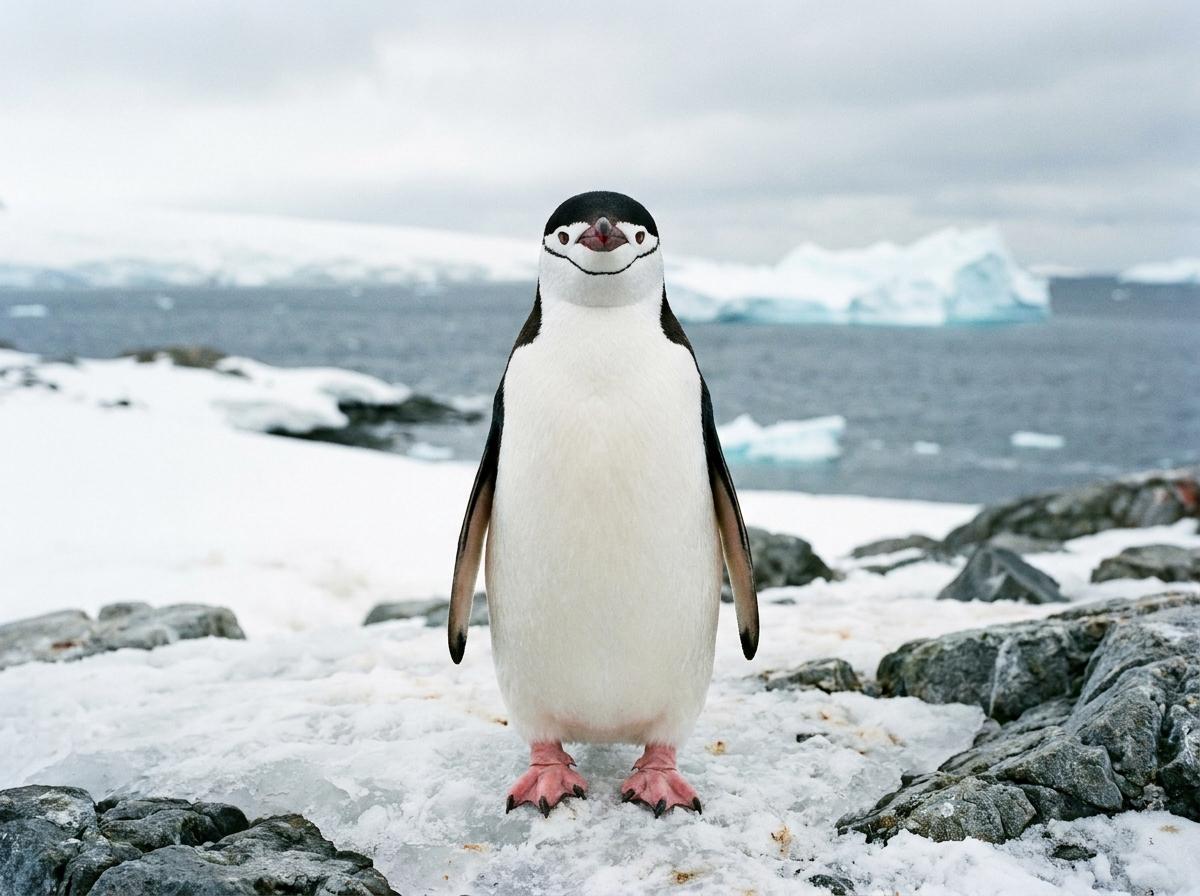
The chinstrap penguin, Pygoscelis antarcticus, is a medium-sized penguin of the Antarctic Peninsula and nearby sub-Antarctic islands. Its name comes from the narrow black band running under the white face, as if the bird is wearing a helmet strap. Chinstraps nest in dense, noisy colonies on ice-free rocky slopes and beaches, where pairs raise chicks during the short southern summer. At sea they are agile swimmers that feed largely on Antarctic krill, with fish and other small marine prey taken when available.
There is no normal private-ownership context for chinstrap penguins; they are managed by professional aquariums, polar research programs, and conservation agencies. Captive care requires chilled marine water, excellent filtration, controlled lighting, nesting substrate, and staff trained in penguin social behavior and foot health. In the wild, monitoring focuses on colony counts, diet shifts, krill availability, disturbance from tourism, and the effects of changing sea ice. Biosecurity at landing sites is important because penguin colonies concentrate thousands of birds in a small area, making disease and invasive species prevention part of routine stewardship.
Colors: Black, Black and White, Brown, Gray, Orange, White, Wild Type, Yellow Accent