

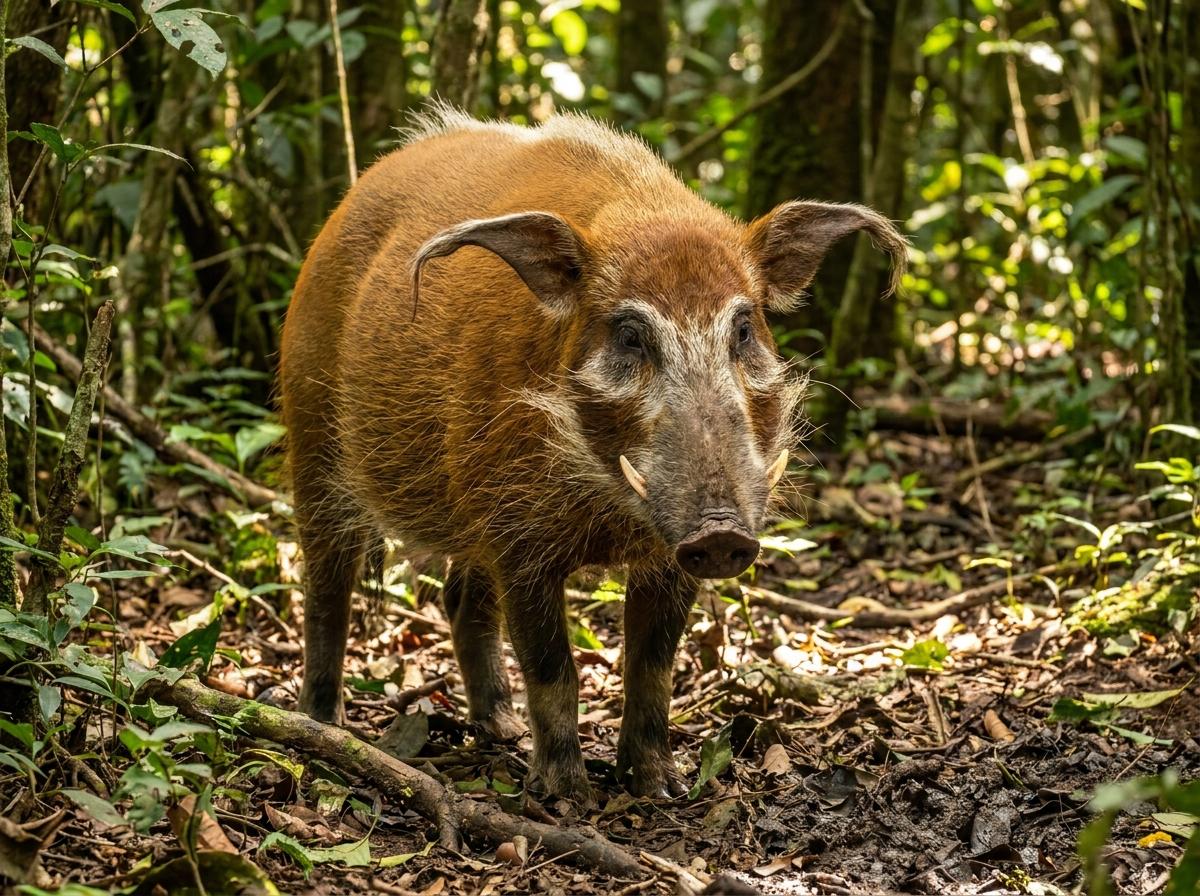
Bushpig
Potamochoerus larvatus
The bushpig (Potamochoerus larvatus) is a wild pig of sub-Saharan Africa and nearby islands, usually associated with forest edges, dense thickets, wetlands, plantations, and agricultural margins. It has a bristly coat, strong snout, sharp tusks, and a compact body built for rooting through soil and cover. Bushpigs are mostly nocturnal and omnivorous, feeding on roots, fruits, crops, fungi, invertebrates, carrion, and small animals. They are related to red river hogs but are generally darker and less brightly marked.
People manage bushpigs as wildlife, zoo animals, game-ranch species, and crop-conflict animals, not as domestic pigs. Secure fencing and protected keeper access matter because adults are strong, fast, and defensive when cornered. Captive habitats need rooting areas, shade, wallows or damp ground, and diets that avoid excessive starch while allowing natural foraging. In farming regions, management may include crop protection, disease surveillance, and regulated hunting where legal. As with other wild suids, biosecurity matters because parasites and infectious diseases can move between wild and domestic pigs.
Colors: Black, Brown, Cream, Gray, Red, Red and Black, Spotted, Striped, Tan, White, Wild Type