


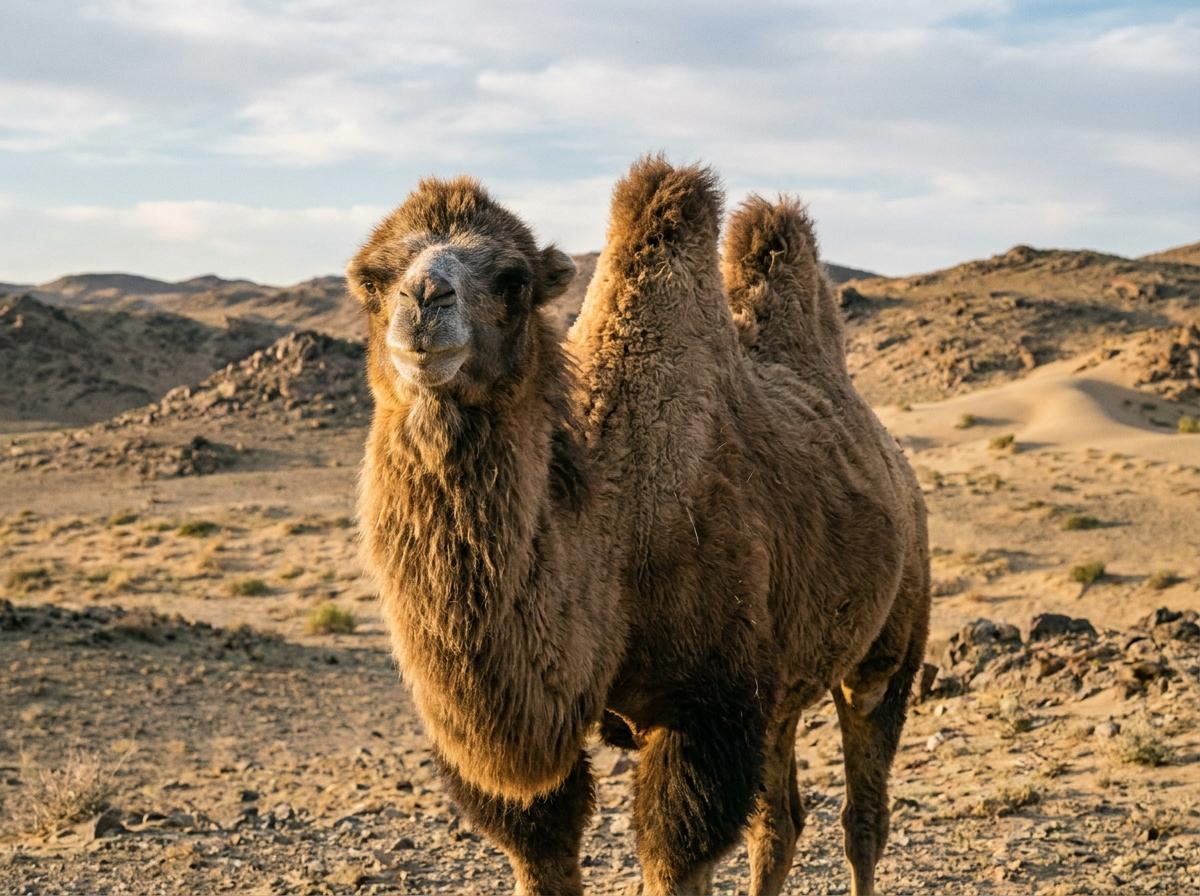
Bactrian Camel
Camelus bactrianus
The Bactrian camel (Camelus bactrianus) is the domestic two-humped camel of Central Asia, distinct from the critically endangered wild camel, Camelus ferus. It is adapted to cold deserts, high plains, and seasonal extremes, with a shaggy winter coat, broad padded feet, and humps that store fat rather than water. For centuries Bactrian camels have supplied transport, milk, meat, wool, hides, and draft power along trade routes and pastoral landscapes.
On farms, ranches, and in zoos, Bactrian camels need strong fencing, room to move, and social housing with other camels when possible. They browse as well as graze, do best on controlled forage rather than rich feed, and benefit from salt and mineral access. Foot condition, parasites, dental wear, and coat shedding all require routine husbandry. They tolerate cold well, but hot humid climates call for shade, ventilation, and reliable water. Calm training makes veterinary care, loading, shearing, and breeding management much safer.