


Author: Elliott Garber, DVM · Updated
The First Question Every Aspiring Cattle Owner Asks
“How many cows can I run on my land?” It is the most common question from people considering cattle ownership, and the answer is almost never what they expect. Depending on where you live, the answer ranges from one cow on two acres in the lush Southeast to one cow on over a hundred acres in the arid West. There is no single number that works everywhere.
The concept that governs this answer is called stocking rate: the number of animals your land can support without degrading the pasture over time. Getting it right is one of the most important management decisions in cattle production. Overstock your land and you will destroy your pastures, run up feed bills, and lose money. Understock it and you are leaving grass (and revenue) on the table.
This guide covers how stocking rates work, how to calculate one for your specific property, the real costs of running cattle on limited acreage, and how to evaluate whether your land can support the herd you are planning. Whether you are buying your first five acres or evaluating a larger ranch purchase, understanding the relationship between land and livestock is where profitable cattle ownership begins.
Understanding Stocking Rate
What It Actually Means
Stocking rate is the number of animals on a given area of land over a specific time period. It is typically expressed as acres per animal unit (AU), where one animal unit equals a 1,000-pound cow with a calf at her side. A stocking rate of “5 acres per AU” means you need five acres of pasture for every cow-calf pair.
As you plan your herd size, consider using Creatures to manage your operation. You can create a free Creatures account to get started.
The USDA Natural Resources Conservation Service (NRCS) publishes stocking rate guidelines for every soil type and forage region in the country, but those guidelines are starting points. Your actual stocking rate depends on rainfall, soil quality, forage species, management intensity, and the time of year.
Why It Varies So Dramatically
Stocking rates across the United States range from roughly 1 cow per 2 acres in the best improved pastures of the Southeast to 1 cow per 150 acres or more in the desert rangelands of Utah and Nevada. This variation is driven primarily by rainfall and its effect on forage production.
Rainfall drives everything. A pasture in Alabama receiving 55 inches of rain annually can produce 8,000 to 10,000 pounds of forage per acre. A rangeland in Wyoming receiving 10 inches produces 500 to 1,000 pounds. The math is straightforward: a 1,000-pound cow consuming roughly 26 pounds of forage per day needs about 9,500 pounds during a 365-day grazing season. If your land produces 9,500 pounds per acre, you need about one acre per cow (minus a utilization factor). If it produces 1,000 pounds per acre, you need closer to 15 acres, and you will still need to supplement with hay during dormant months.
Regional stocking rate ranges from NRCS and university extension data:
- Southeast (Alabama, Georgia, Florida): 1 cow per 2 to 4 acres on improved pasture (bermudagrass, bahiagrass)
- Upper Midwest (Iowa, Missouri, Illinois): 1 cow per 2 to 4 acres on cool-season grass
- Central Plains (Kansas, Oklahoma, Texas): 1 cow per 5 to 15 acres depending on rainfall gradient from east to west
- Mountain West (Montana, Wyoming, Colorado): 1 cow per 15 to 40 acres on native range
- Arid West (Nevada, Utah, New Mexico): 1 cow per 40 to 150+ acres on desert rangeland
The Hidden Variable: Modern Cow Size
One factor that many stocking rate guidelines do not adequately account for is the dramatic increase in average cow size over the past several decades. The standard animal unit definition of a 1,000-pound cow was established in the 1960s. Today, the average mature beef cow in the United States weighs closer to 1,350 to 1,400 pounds, according to USDA data.
A 1,400-pound cow consumes roughly 40 percent more forage than a 1,000-pound cow. If you are using stocking rate tables based on the 1,000-pound AU standard, you are effectively overstocked by that same 40 percent margin. This “stocking rate creep” is one of the most common reasons producers experience pasture degradation despite following published guidelines.
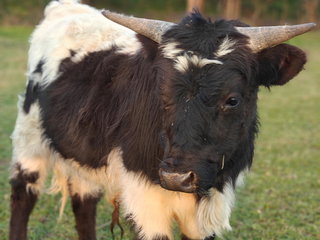
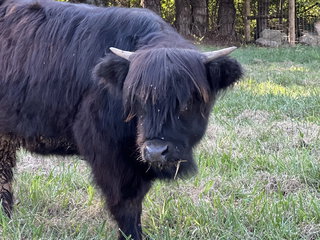
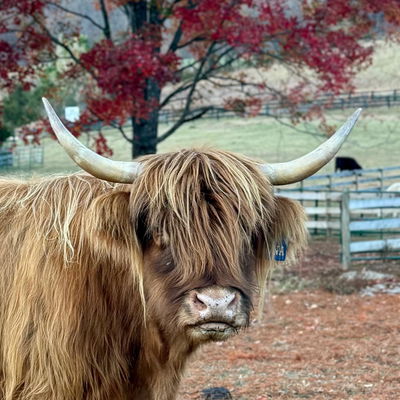
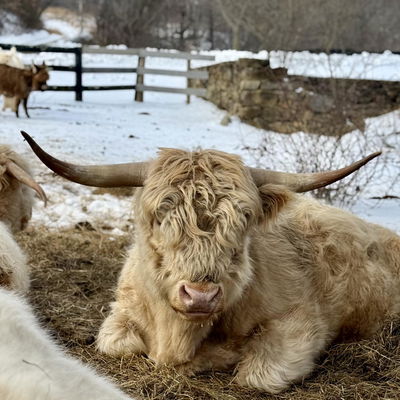
Smaller breeds like highland cattle, Dexters, and Lowlines offer an advantage here. Highland cows typically mature at 900 to 1,100 pounds, which means they are closer to the original AU definition and genuinely require less forage per head than larger commercial breeds.
Calculating Your Property’s Carrying Capacity
Step 1: Determine Your Usable Acreage
Not all of your property is grazable. Subtract wooded areas (unless they provide meaningful browse), ponds, buildings, roads, driveways, wetlands, and steep slopes over 30 percent grade. The remaining area is your effective grazing acreage.
On many small properties, the usable acreage is significantly less than the total. A 20-acre property with 5 acres of woods, a 1-acre pond, and 2 acres of buildings and yard leaves 12 usable grazing acres.
Step 2: Identify Your Forage Base
What is growing on your pastures determines how much forage they produce. Improved warm-season grasses (bermudagrass, bahiagrass) produce more tonnage per acre than native cool-season grasses in most climates. Legume mixes (clover, alfalfa) add both tonnage and nutritional quality.
If you do not know what is growing in your pastures, your local NRCS office or county extension agent can help you identify forage species and estimate production potential. This service is free through USDA.
Step 3: Apply the Utilization Factor
You cannot graze 100 percent of the forage your pasture produces. Harvesting too much weakens root systems, reduces regrowth, and degrades the stand over time. The general rule is to graze no more than 50 percent of the available forage (the “take half, leave half” principle). For sensitive or poorly established pastures, 40 percent utilization is safer.
If your pasture produces 6,000 pounds of forage per acre at peak growth, you have approximately 3,000 pounds of usable forage per acre after applying the 50 percent utilization factor.
Step 4: Match Forage Supply to Animal Demand
A 1,000-pound cow with a calf consumes approximately 26 to 30 pounds of forage per day (2.5 to 3 percent of body weight for the cow, plus calf consumption). Over a 365-day year, that is roughly 9,500 to 11,000 pounds of forage demand.
Once you’ve confirmed your land can support cattle, browse the Creatures marketplace to find animals suited to your property size.
Most regions do not have year-round grazing. Calculate your grazing season length (the number of days your pasture actively grows and provides adequate nutrition) separately from your hay-feeding season. In Virginia, for example, you might have 210 grazing days and 155 hay-feeding days. Your pasture only needs to supply forage during the grazing season; the rest comes from stored feed.
The math: (Usable forage per acre x number of acres) / (daily forage demand per cow x grazing days) = number of cows your pasture supports during the grazing season.
Step 5: Get a Free NRCS Evaluation
The NRCS offers free property evaluations for landowners. A soil conservationist will visit your property, assess soil types, current forage, and land capability, and provide a specific stocking rate recommendation. This is one of the most valuable free services available to livestock owners. Contact your local USDA Service Center to schedule an evaluation.
Small Acreage Realities
The 5-Acre Question
Can you keep cattle on 5 acres? In most regions, yes, but you need to understand the economics. On 5 acres of good improved pasture in the Southeast, you might carry 2 cow-calf pairs during the grazing season. In the Midwest on cool-season grass, 1 to 2 pairs. In the arid West, 5 acres will not support even one cow on pasture alone.
The real challenge on small acreage is not whether the land can physically hold cattle. It is whether you can afford to feed them when the pasture runs out. And on 5 acres, the pasture will run out.
The Hay Math
On limited acreage, you will almost certainly need to supplement with purchased hay. Here is the math that surprises most new cattle owners:
A 1,200-pound cow eats approximately 30 pounds of hay per day during the feeding season. In a region with a 150-day feeding season, that is 4,500 pounds (roughly 2.25 tons) of hay per cow. At $150 per ton for good grass hay (prices vary dramatically by region and year), that is $337.50 per cow just in winter hay. Add 60 days of poor grazing in mid-summer (common on small properties that get overgrazed), and your annual hay cost per cow can easily reach $500 or more.
For a 5-acre operation running 2 cows, you are looking at $700 to $1,000 per year in hay alone before considering mineral, veterinary, fencing, and other costs. This does not make cattle on small acreage impossible, but it does mean the operation is unlikely to generate net income from cattle sales alone. Most small-acreage cattle owners are managing their land, enjoying their animals, or raising a specific breed for reasons beyond pure profit.
When Buying Hay Gets Expensive
Hay prices are volatile. During the 2022 drought, hay prices in parts of the Southern Plains exceeded $300 per ton, more than doubling typical prices. Producers on small acreage who depend entirely on purchased hay have no buffer against price spikes. A bad hay year on 5 acres with 2 cows can turn a manageable hobby into a surprisingly expensive one.
Strategies to manage hay costs on small acreage: stockpile fescue in fall for extended grazing, plant winter annuals (cereal rye, annual ryegrass) for cool-season grazing, and establish a reliable hay supplier relationship before you need the hay.
Rotational Grazing: Getting More From Less
Why It Matters on Small Properties
Rotational grazing (dividing pasture into smaller paddocks and moving cattle through them on a schedule) is the single most effective way to increase carrying capacity on limited acreage. Research consistently shows that well-managed rotational grazing increases forage utilization by 25 to 40 percent compared to continuous grazing.
The principle is simple: cattle graze a paddock for a few days, then move to the next one while the grazed paddock recovers. This mimics the natural grazing pattern of wild herds and prevents the selective overgrazing that destroys the best forage species first.
Practical Implementation
You do not need elaborate permanent fencing. Portable electric fence (polywire and step-in posts) can divide a pasture into paddocks in minutes for under $300 in materials. A basic 4-paddock rotation on 10 acres can increase effective carrying capacity by one additional cow-calf pair over continuous grazing.
The key is rest period. Paddocks need 21 to 45 days of rest depending on the season and forage species before being grazed again. During fast spring growth, rotation can be quicker. During summer slumps or fall dormancy, paddocks need longer recovery.
The Water Challenge
Every paddock needs water access. On larger properties, this might mean multiple water sources. On small properties, a central water point that cattle can access from each paddock (using lane access or a water point at the intersection of paddock fences) solves the problem efficiently.
Evaluating Land Before You Buy
What to Look For
If you are purchasing property with the intention of running cattle, evaluate the land’s livestock potential before closing:
- Soil quality: Request a USDA Web Soil Survey report for the property. Soil type determines forage production potential. Deep, well-drained loams support more forage than shallow, rocky, or waterlogged soils.
- Existing fencing: Fencing is one of the largest upfront costs for a cattle operation. Five-strand barbed wire runs $8,000 to $12,000 per mile to install. Evaluate what exists and what you will need to build or repair.
- Water sources: Reliable water is non-negotiable. Ponds, streams, wells, or municipal water access. A mature cow drinks 10 to 20 gallons per day, more in summer heat.
- Forage base: Is the land currently in pasture, or will you need to clear, grade, and seed? Establishing pasture from scratch costs $200 to $500 per acre and takes one to two growing seasons before it can be grazed.
- Working facilities: You will need some way to safely handle cattle: a corral, chute, or at minimum a sturdy pen where you can contain animals for veterinary work, loading, and sorting.
- Hay storage: If you will be feeding hay, you need covered or elevated storage. Hay stored on the ground without cover loses 25 to 35 percent of its nutritional value to spoilage.
Zoning and Land Use
Before purchasing property for cattle, verify that local zoning allows livestock. Agricultural zoning typically permits cattle, but residential, suburban, and some rural-residential zones may restrict livestock entirely or impose limits on animal numbers, require setbacks from property lines, or have minimum acreage requirements.
HOA covenants can also restrict livestock even on agriculturally zoned land. Read all deed restrictions and HOA rules carefully before purchasing.
The Economics at Different Scales
5 to 10 Acres
At this scale, cattle are primarily a lifestyle choice, not a business. You can run 1 to 4 cows depending on your region and forage quality. Revenue from calf sales will likely not cover all operating costs. The primary economic benefits come from agricultural tax exemptions (where available) and land management.
Best suited for: smaller breeds (highland cattle, Dexters, Lowlines), a small number of registered breeding stock where individual animal value is high, or a few animals kept for personal use.
20 to 50 Acres
This is where a small cow-calf operation can start to make economic sense, particularly with good management. A 40-acre property in the Southeast might carry 10 to 15 cows. With a good bull and strong genetics, selling 10 to 15 calves per year at current market prices generates meaningful revenue.
At this scale, rotational grazing becomes essential for maximizing production. Invest in fencing and water infrastructure before adding more animals.
50 to 200 Acres
A legitimate small commercial or seedstock operation. Carrying capacity ranges from 15 to 80 cows depending on region. At this scale, the economics of cattle production become more favorable because fixed costs (fencing, equipment, facilities) are spread across more animals.
Operations this size often specialize: purebred seedstock sales, grass-finished beef direct to consumer, or commercial cow-calf production. Each model has different economic profiles and land management implications.
200+ Acres
Full-scale commercial operations. At this point, stocking rate decisions are primarily agronomic and economic rather than constrained by total acreage. The challenges shift from “can my land support cattle” to “how do I optimize production per acre while maintaining the resource base for the long term.”
Common Mistakes
Overstocking
The most expensive mistake in cattle production. Overstocked pastures degrade within one to two years: desirable forage species are grazed out, weeds invade, soil compacts, and erosion begins. Recovering a degraded pasture takes three to five years and significant investment in reseeding and fertility. The temptation to add “just one more cow” is strong when prices are high, but the land always has the final say.
Ignoring the Hay Budget
New cattle owners on small acreage frequently underestimate how much hay they will need and how much it will cost. Calculate your full-year feed budget before buying cattle. If the numbers do not work, either reduce your planned herd size or invest in pasture improvement first.
Skipping the Soil Test
Forage production depends on soil fertility. A $15 soil test through your county extension office tells you exactly what your soil needs. Many pastures across the Southeast and Mid-Atlantic are critically low in phosphorus and pH, which limits forage growth regardless of rainfall. Correcting soil fertility is one of the highest-return investments in a cattle operation.
Buying Cattle Before Building Fence
Infrastructure first, cattle second. You need functional perimeter fencing, a water system, and basic handling facilities before a single animal arrives. Trying to contain cattle with inadequate fencing is dangerous, stressful, and a quick way to make enemies of your neighbors.
Frequently Asked Questions
How many cows can I have per acre?
It depends on your location, rainfall, forage type, and management. In the best conditions (improved pasture in the Southeast with rotational grazing), you might carry 1 cow per 1.5 to 2 acres. In average Midwest conditions, 1 cow per 3 to 4 acres. In the arid West, 1 cow per 15 to 100+ acres. Start with your local NRCS stocking rate recommendation and adjust based on actual pasture conditions.
Can I keep a cow on 1 acre?
Technically you can keep a cow on 1 acre, but you will be feeding hay nearly year-round. One acre cannot produce enough forage to sustain a cow for a full year in any U.S. region. You would essentially be running a drylot or small paddock operation, which requires daily hay and feed delivery. Check local zoning regulations, as many jurisdictions require minimum acreage per animal.
Is 10 acres enough for cattle?
In most regions with adequate rainfall, 10 acres can support 2 to 5 cow-calf pairs with good management. This is enough for a small breeding operation, particularly with higher-value registered stock. You will need supplemental hay for part of the year in most climates. Rotational grazing is strongly recommended at this scale to maximize forage utilization.
Do I need to own the land?
No. Many cattle producers lease pasture rather than owning it. Lease rates vary from $15 to $50 per acre per year for native range to $50 to $150 per acre for improved pasture, depending on region and market conditions. Leasing allows you to run more cattle than your owned land can support, but requires a solid lease agreement covering maintenance responsibilities, stocking rates, and liability.
What is the minimum acreage for a cattle operation?
There is no legal minimum at the federal level. State and local zoning laws may impose minimum acreage requirements, typically 2 to 5 acres for livestock in rural-residential zones. From a practical standpoint, 10 to 20 acres is the minimum for a small operation that can generate any revenue beyond covering basic costs, assuming a productive region with good forage.
Next Steps
- Browse the Creatures Marketplace to explore breeds suited to your acreage and region, from compact highland cattle to other breeds that thrive on smaller properties.
- Connect with breeders in your area through the Creatures directory. Local breeders can advise on stocking rates and forage conditions specific to your region.
- Create profiles for your animals as you build your herd, documenting pedigree, health records, and performance data from the start.