

Updated
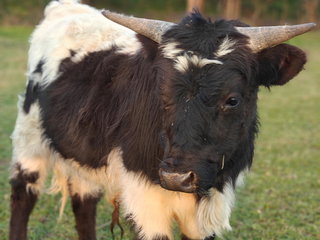
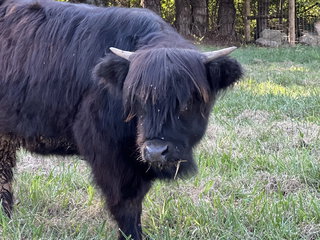
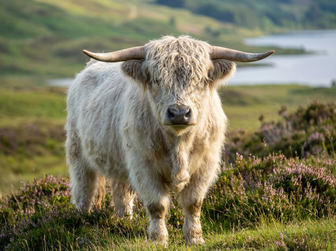
If you have fallen for Highland cattle, with their shaggy bangs, sweeping horns, and gentle eyes peeking through that iconic fringe, you are in good company. The breed has become one of the most recognizable on social media, and that popularity has pulled in everyone from seasoned ranchers to first-time homesteaders.
There is another shaggy, photogenic heritage breed that shares a lot of that appeal and may suit smaller properties better: the Valais Blacknose sheep. Here is an honest look at the breed, how it compares to Highland cattle, and what to think about before adding one to your land.
Two heritage breeds, one familiar story
The parallels between Highland cattle and Valais Blacknose sheep are easy to see. Both are old heritage breeds shaped by rugged mountain environments, the Scottish Highlands and the Swiss Alps. Both carry a strong European pedigree. And both have ridden a wave of popularity in recent years, helped along by social media’s appetite for fluffy, photogenic animals.
Both also tend to sell at high prices, though the figures here deserve some caution. Prices for novelty and heritage breeds vary widely and are often quoted from select auctions or breeder listings rather than any broad market average. Headline sale numbers for registered Highland cattle, for example, usually come from top national sales and do not represent what a typical animal changes hands for. The same is true for Valais Blacknose: purebred and high-percentage animals command the highest prices, lower-percentage animals are more accessible, and the spread is large. Treat any single price you see as a data point, not a benchmark, and expect demand for rare breeds to keep figures elevated.
If you already understand the Highland cattle market, the value placed on pedigree, the premium on registered animals, the weight given to show-quality genetics, you will find the Valais Blacknose market reads in a familiar way.
Same charm, smaller footprint
This is where the Valais Blacknose has a practical edge for many Highland enthusiasts: the breed is far more manageable on a small property. A mature Highland cow weighs roughly 900 to 1,300 pounds and stands around 52 inches at the shoulder. Even “mini” Highlands, which carry their own breeding debates, typically weigh 500 to 700 pounds.
Valais Blacknose sheep are a different scale. Ewes weigh about 154 to 198 pounds, and rams reach roughly 176 to 276 pounds. They stand about 28 to 33 inches at the shoulder. That means a small flock can live on acreage that might only support one or two Highland cattle, or join an existing herd without requiring more land.
For hobby farmers, homesteaders with modest acreage, or anyone drawn to the Highland look but limited by space, Valais Blacknose sheep offer a similar heritage-breed appeal in a more compact package.
Friendly by nature
Highland cattle are often described as docile and as gentle giants, and many are lovely animals when handled well. They are still cattle, though: large bovines with horns that can span up to roughly 48 inches. Even a calm Highland cow deserves respect and careful handling, especially around calves when maternal instincts run high.
Valais Blacknose sheep sit in a different category. Breeders commonly describe them with words usually reserved for companion animals, calling them puppy-like and cuddly. They tend to seek out human interaction, approaching people for scratches and attention rather than shying away, and they are widely regarded as calm, curious, and easy to tame.
None of this is a knock on Highland cattle, which have their own devoted following. But for families, agritourism operations, or anyone who wants hands-on interaction, the Valais Blacknose’s natural friendliness is a real draw.
The family-friendly factor
It is worth being honest about children and livestock. Highland cattle, gentle reputations aside, present real considerations on a family farm. Those sweeping horns, which serve genuine purposes including heat regulation and foraging, can be dangerous if an animal swings its head unexpectedly. A protective mother near her calf can turn defensive. Even well-trained, gentle Highlands are powerful animals that need careful supervision around children.
Valais Blacknose sheep are regularly described as a good fit for families with children. Their smaller size means less potential for injury if an animal startles, and their patient temperament tends to make them forgiving of the unpredictable movements and sounds children make. They do have spiral horns, but these are proportionally smaller and generally pose far less risk than cattle horns.
Breeders often mention the breed’s suitability for teaching children about livestock care, 4-H projects, and general agricultural responsibility. The lambs in particular have a way of making farm visits memorable for young visitors.
Beyond looks: the fiber advantage
Here is something Highland cattle cannot offer: Valais Blacknose sheep produce useful fiber. Sheared twice yearly, each sheep yields roughly 5 to 10 pounds of lustrous, fast-growing fleece valued by fiber artists.
The wool has distinct traits. Its high luster means it takes dye well, producing bright colors. The long staple length, up to about 12 inches of annual growth, makes it well suited to spinning. And it felts readily, sometimes nearly as quickly as fine Merino, which makes it good for felted garments, bags, rugs, and so-called “vegetarian sheepskins.”
The adult wool is on the coarser side, averaging around 38 microns, and is better suited to outerwear, bags, and home decor than next-to-skin garments. Lamb wool is noticeably softer. The rarer “Spitti” variation, a black fleece rather than white, is particularly sought after by crafters.
For Highland cattle owners already selling beef or running agritourism, adding sheep with a fiber component opens a new revenue stream and another reason for visitors to stop by.
The same appeal, a different package
If you have spent time with Highland cattle, you already know what draws people to heritage livestock: the connection to agricultural history, the striking appearance that stops visitors in their tracks, and the satisfaction of raising something rare. Valais Blacknose sheep offer much of the same.
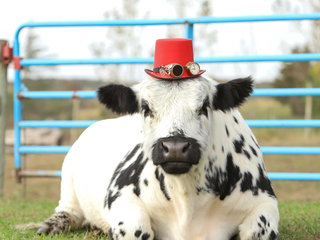
Their distinctive black masks, the black markings on their ankles and knees, and their curls of white spiral fleece make them easy to recognize and popular with the camera-wielding public. They turn up regularly in photos and publications drawn to their unusual look.
Like Highlands, they are hardy mountain animals adapted to challenging terrain and weather. They carry cultural heritage from their Swiss homeland, where the breed has been raised in the Valais region of the Alps for centuries. And they command the attention and prices that come with genuine rarity.
Understanding breed-up versus purebred
Because live Valais Blacknose sheep effectively cannot be imported into the United States, the breed is being established here through two pathways. Purebred animals carry 100% Valais Blacknose genetics, produced through embryo transfer using imported embryos, or through domestic natural breeding and IVF programs that pair purebred sires and dams already in the country.
The breed-up program takes a different route. Breeders use imported Valais Blacknose semen on domestic foundation ewes, often Scottish Blackface or a similar breed, then breed each generation back to purebred Valais genetics. The offspring are designated by their percentage: F1 (50%), F2 (75%), F3 (87.5%), F4 (93.75%), and F5 (about 96.88%). Each generation moves closer to purebred status, and the distinctive Valais markings and characteristics become more pronounced along the way.
Both pathways produce attractive animals, and pricing reflects the genetics. Purebred and high-percentage sheep sit at the top of the range, while lower-percentage animals offer a more accessible entry point for newcomers to the breed.
Is a Valais Blacknose right for you?
Valais Blacknose sheep are not a replacement for Highland cattle. Depending on your situation, they are more of a complement, an alternative, or a next step. They are worth considering if you love the Highland look but have limited acreage, if you want livestock your children can safely interact with and help care for, if you are interested in fiber arts, if you want animals visitors can pet and photograph, if agritourism is part of your farm’s plans, or if you simply want to diversify with another rare heritage breed.
As with Highland cattle, quality animals come from reputable breeders who can provide health records, pedigree documentation, and ongoing support. The breed is still being established in the United States through careful programs using imported embryos, imported semen, and domestic IVF, and that rarity is part of both its appeal and its cost.
Practical care is straightforward but real. The breed needs shearing twice yearly, regular hoof care, and the same basic management as any sheep. In hot climates they need shade and may need their fleece kept shorter to stay comfortable. They are, after all, alpine animals by origin.
From one heritage breed to another
The qualities that drew you to Highland cattle, the distinctive appearance, the heritage story, the gentle nature, and the sense of raising something special, all have an echo in the Valais Blacknose. Many farms keep both: Highland cattle in the pasture and Valais Blacknose sheep drawing visitors into the barn. It is a pairing that works for agritourism, for family farms, and for anyone who cannot resist a second shaggy obsession.
If you are weighing either breed, start by reading up on the animals and talking to people who keep them. On Creatures you can dig into the Highland cattle breed profile, browse listings, and connect with sellers who keep verified status on the platform.