

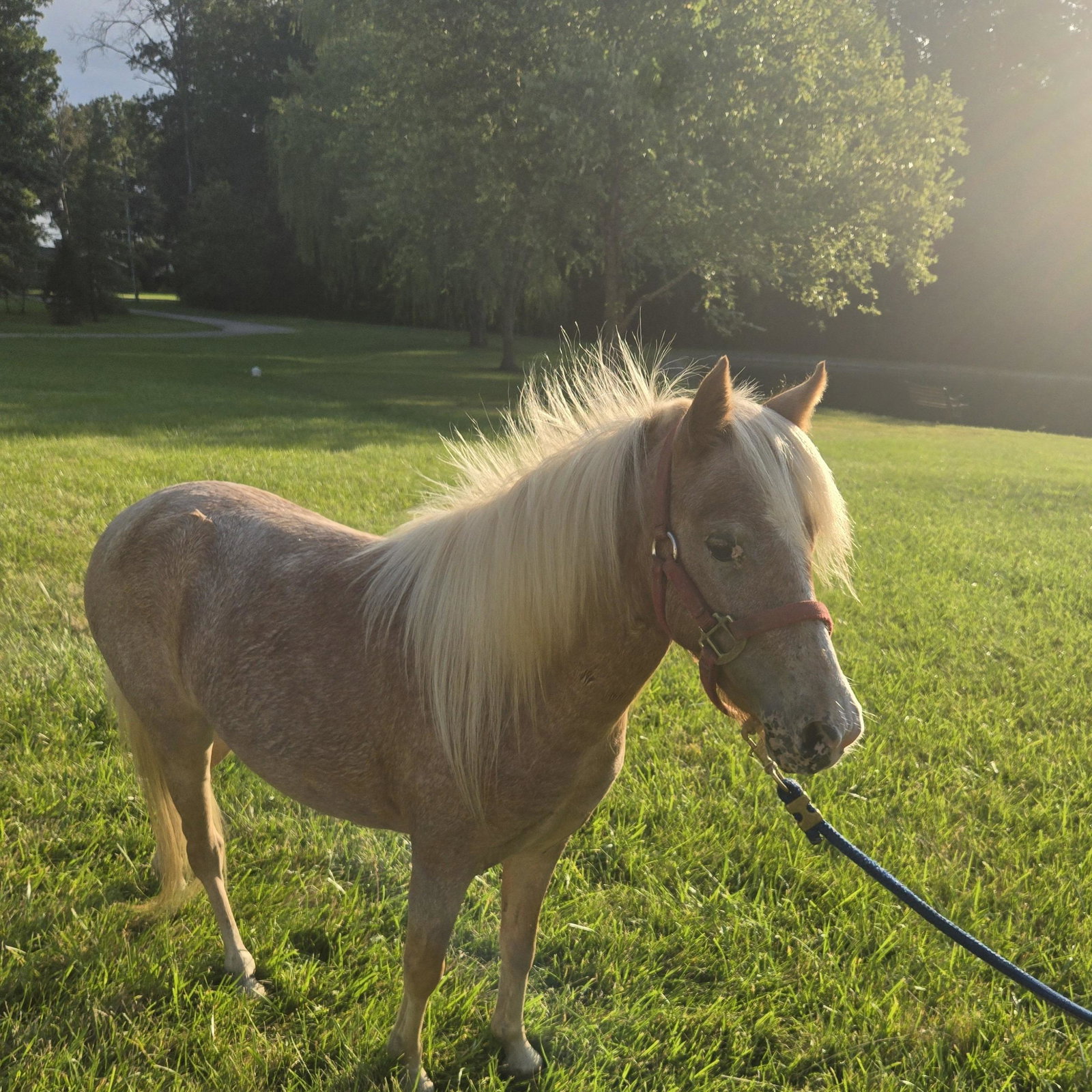
Opal
Miniature Horse · Horse
Female · 3 years
$2,850

Plan a pairing from DNA test results
Every pairing carries a color story. Add both parents’ lab results to discover the coats and patterns their foal could inherit, with important health risks and unanswered questions kept in view.
Each chance applies to one conception, and O/O Lethal White Overo always stays in the results. If a lab report cannot settle how variants are arranged, Creatures shows the possibilities separately instead of inventing one percentage.
Start with the lab report
Enter the results from both parents’ lab reports. Use the reports themselves rather than judging by appearance.
This calculator uses the coat-color tests listed below. It covers Extension, Agouti, Cream and Pearl, Champagne, Dun, Silver, Gray, Mushroom, Frame Overo, linked KIT white patterns, Leopard Complex with PATN1, Splashed White, and Brindle1. Health information comes from population research and cannot diagnose an individual horse.
Horse color genetics can be wonderfully surprising. Start with both parents' laboratory reports, and Creatures will show the colors and patterns their foal could inherit, along with health notes and any questions the reports leave open. This educational tool is not all equine genetics, does not diagnose a horse, and each picture is an example, not an exact forecast of one foal’s shade or markings.
From familiar base colors to dilutions and white patterns, the calculator follows the names used on published VGL and APHA panels. That naming helps you match a laboratory report and does not imply endorsement or a partnership.
You will always see what the calculator knows, what remains uncertain, and what the artwork cannot promise.
The calculator covers core coat-color tests, Champagne, Mushroom, selected KIT-region families, LP and PATN1, MITF and PAX3 Splashed White families, and sex-linked Brindle1. It uses published VGL and APHA panel names where they help you match a report. It is not all equine genetics and is not affiliated with or endorsed by either organization.
When both reports contain all the information the calculator needs, Creatures can show one set of odds for the supported results you entered. If the reports do not show which linked variants were inherited together, it shows the possibilities separately and explains what remains unknown.
The percentages shown always count every conception. For example, an O/O Frame Overo combination stays in the calculation, so Creatures never makes the chances for surviving foals look higher by quietly removing it.
No. The calculator helps you understand the DNA results you enter. It does not diagnose health conditions, confirm a laboratory result, or replace advice from the testing laboratory, a veterinarian, or another qualified professional.
The same color family can appear with different shades, marking boundaries, roaning density, seasonal coats, and development. Each picture is an example, not a portrait of one foal. Gray stages show visible progression rather than a precise age or timetable.
Read each possibility on its own and do not average them together. The testing laboratory may be able to clarify which variants sit together on the same chromosome. Use the calculator again if you receive better information, and confirm breeding or health decisions with the laboratory and veterinarian.