


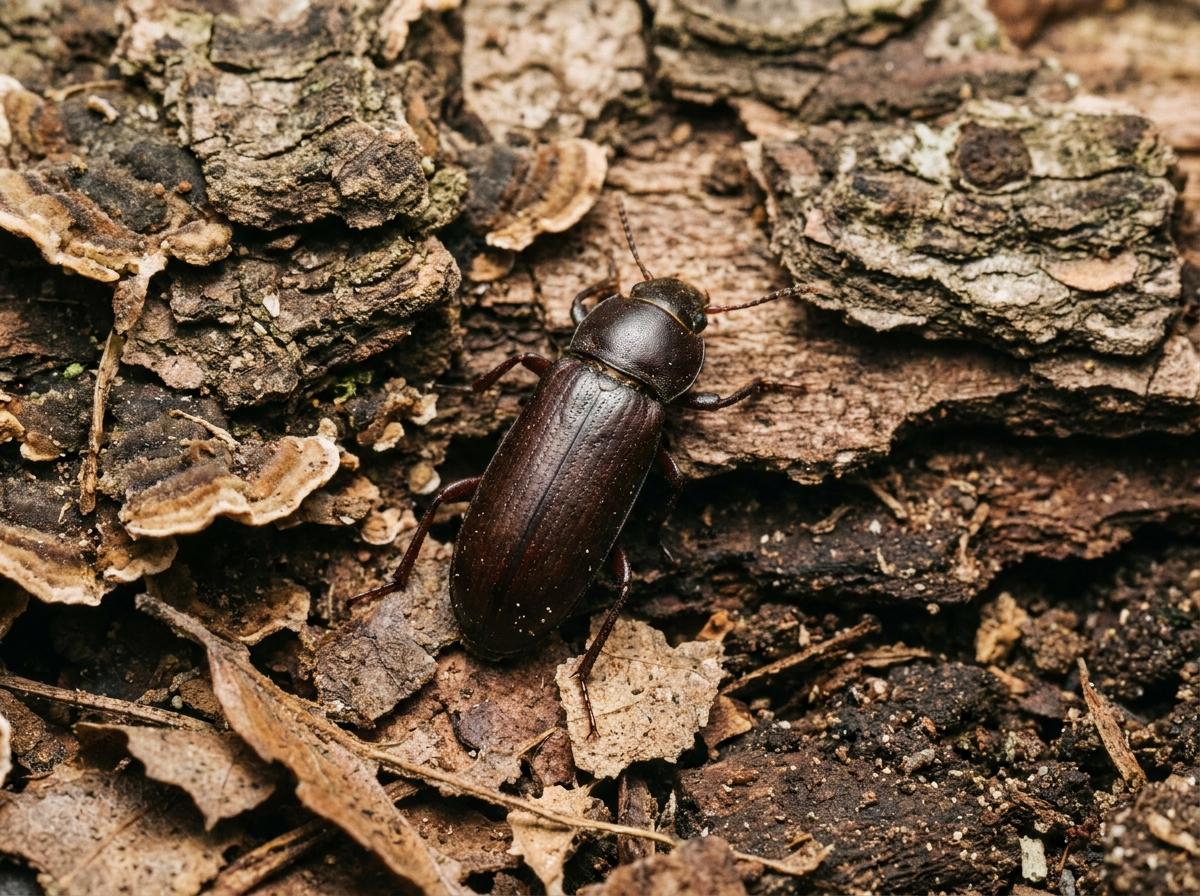
Yellow Mealworm
Tenebrio molitor
The yellow mealworm (Tenebrio molitor) is the larval stage of a darkling beetle, not a worm. It occurs around stored grain, bran, old bird nests, and other dry organic material, and its life cycle passes from tiny egg to golden-brown larva, pale pupa, and dark adult beetle. Because the larvae are easy to rear and contain useful protein and fat, they are widely produced as feeder insects for reptiles, amphibians, birds, fish, and small mammals, and they are also studied for animal-feed and edible-insect systems.
Small colonies are usually kept in shallow, ventilated bins with wheat bran, oats, or similar dry substrate and a moisture source such as carrot or potato slices. Warm temperatures speed growth, while refrigeration slows larvae before feeding; either way, damp bedding quickly invites mold, mites, and losses. Mealworms are calcium-poor and relatively fatty, so reptile keepers commonly gut-load them and dust them with supplements rather than using them as the only food. Tight lids, clean storage, and responsible disposal prevent escapees from becoming pantry pests.