

Yellow-Collared Macaw
Primolius auricollis
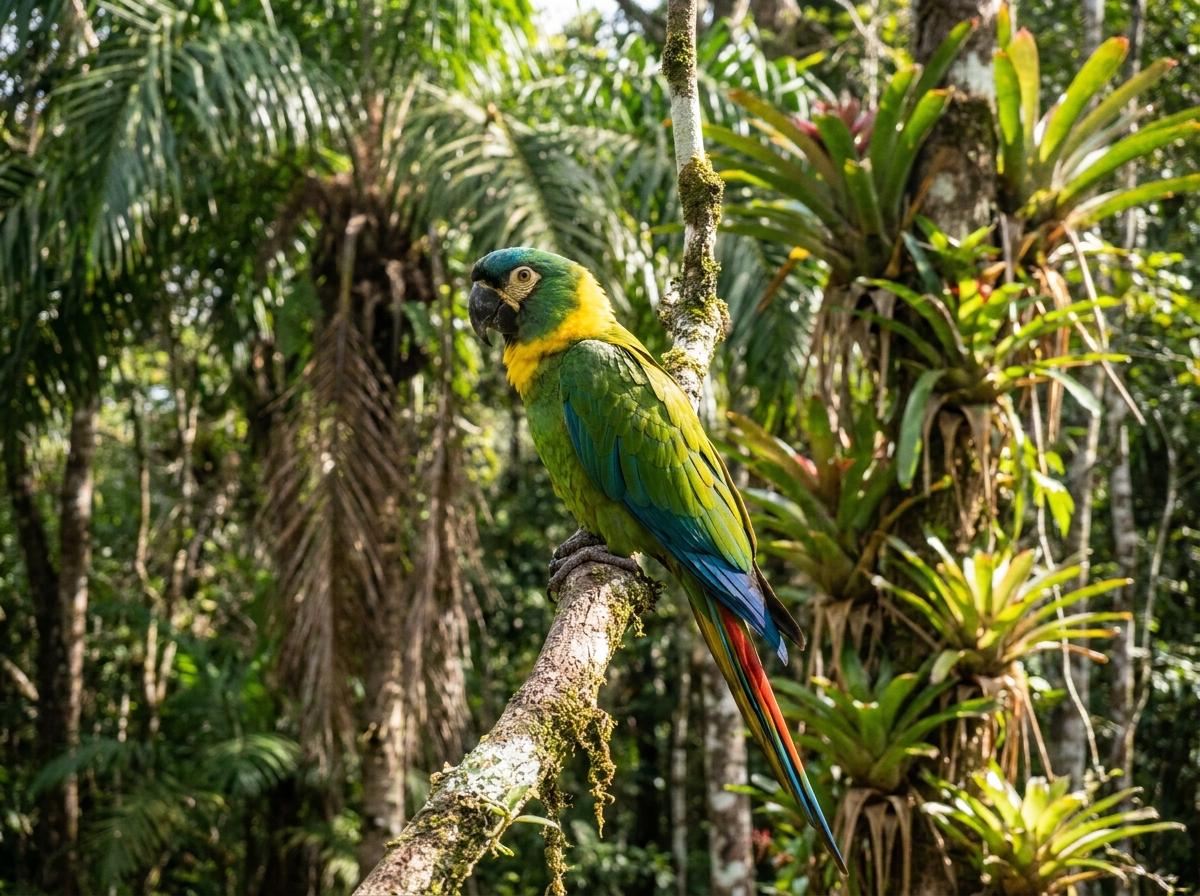
The yellow-collared macaw (Primolius auricollis), also called the golden-collared macaw, is a small macaw from central South America, including parts of Bolivia, Brazil, Paraguay, and northern Argentina. It is mostly green, with blue flight feathers, a dark forehead, and the narrow yellow band across the back of the neck that gives the species its name. In the wild it uses palm groves, dry forest, gallery woodland, and savanna edges, moving in pairs or small flocks to feed on fruits, seeds, nuts, and cultivated crops when available.
In aviculture, its small size can be misleading: this is still a loud, strong-beaked parrot that needs space and daily work. A roomy cage or aviary, chewable wood, foraging toys, bathing opportunities, and supervised time out of the enclosure help prevent frustration. Diet is best built around formulated pellets, vegetables, greens, some fruit, and measured nuts rather than a fatty seed mix. Breeding pairs need privacy, a sturdy nest box, and careful record keeping, and buyers should look for legally documented captive-bred birds because international parrot trade is regulated.