



Waxworm
Galleria mellonella
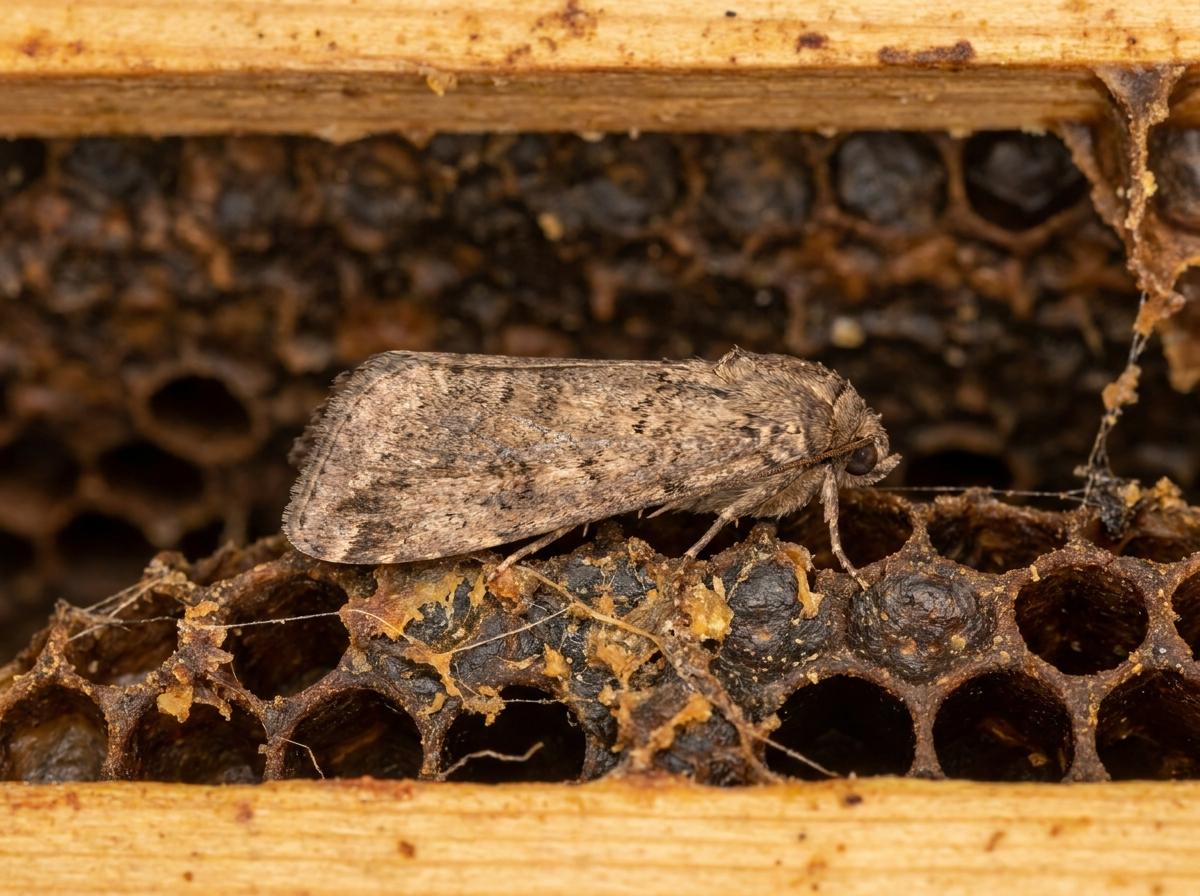
Waxworm most often refers to the larva of the greater wax moth (Galleria mellonella), a pale, soft caterpillar that develops inside honeybee comb. In apiaries it is a comb pest, feeding on wax, pollen residues, shed bee cocoons, and debris in weak colonies or stored equipment. The larvae are also familiar to reptile, amphibian, bird, fish, and invertebrate keepers as a feeder insect, and they are used in laboratories for studies of insect immunity, infection, and wax or plastic digestion.
Feeder waxworms are high in fat and relatively low in calcium, so keepers usually treat them as an occasional food rather than a staple. They are sold in tubs with bran-like bedding and are often kept cool, not frozen, to slow growth and delay pupation. People culturing them use warm, dark, well-ventilated containers and rich diets based on grain, honey, glycerin, and wax, but escapes can matter near beekeeping supplies. Apiarists reduce damage by storing dry comb properly, freezing infested frames, and keeping colonies strong.