


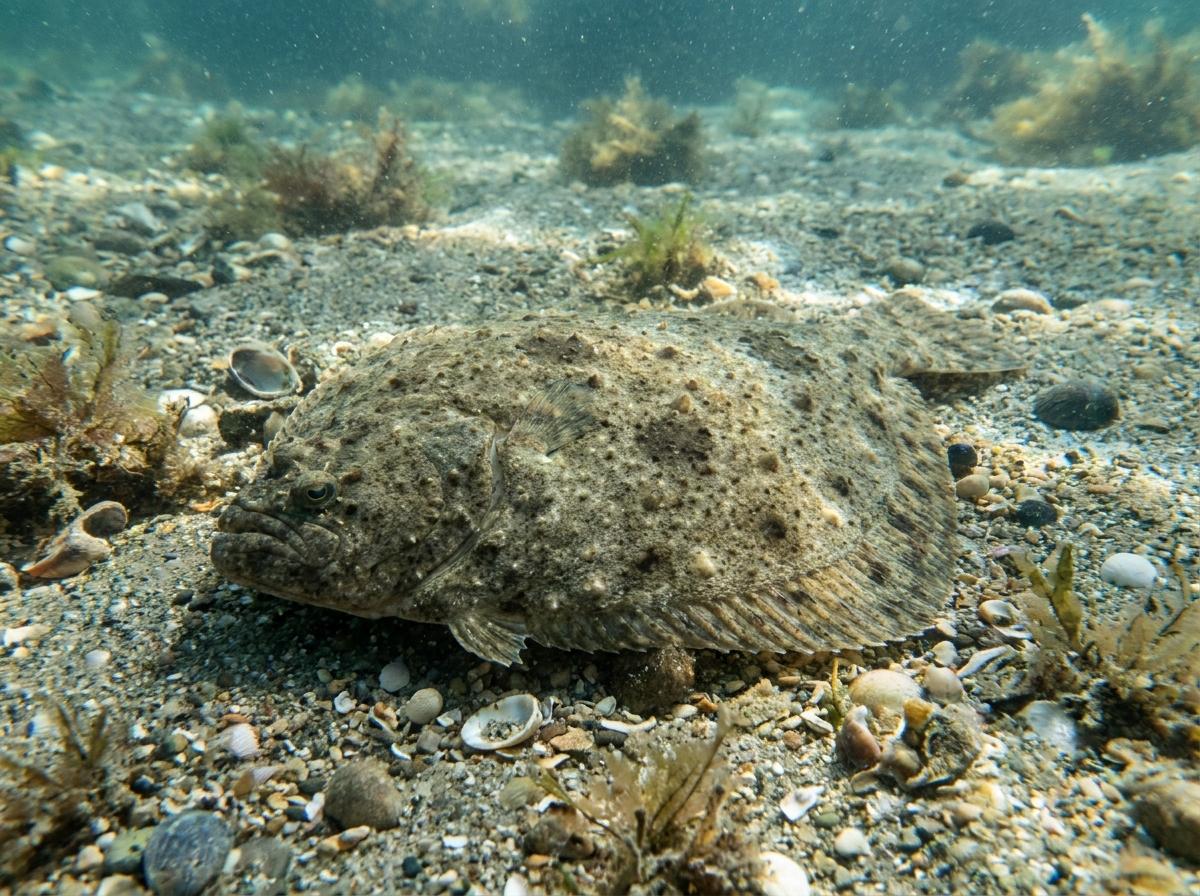
Turbot
Scophthalmus maximus
Turbot, Scophthalmus maximus, is a large marine flatfish native to the northeastern Atlantic and nearby European seas. It has a broad, almost diamond-shaped body, both eyes on the left side, a mottled upper surface, and small bony knobs scattered through the skin. Turbot settle on sandy or gravelly seabeds, where juveniles take small crustaceans and adults ambush fish and other bottom-dwelling prey. In seafood markets the name is sometimes confused with unrelated flatfish, so the scientific name or catch origin is useful when accuracy matters.
Human use of turbot is split between high-value wild fisheries and intensive marine aquaculture, especially in Europe and China. Hatcheries rear larvae on live feeds before weaning them to formulated diets, and grow-out systems need clean, cool, well-oxygenated seawater with careful control of stocking density. Public aquariums may keep turbot in chilled benthic displays, but it is not a practical home aquarium fish. For buyers and fisheries managers, size limits, traceability, and avoidance of depleted local stocks are more important than appearance, since fresh turbot is usually purchased for firm white flesh and mild flavor.