


Indian Rhinoceros
Rhinoceros unicornis
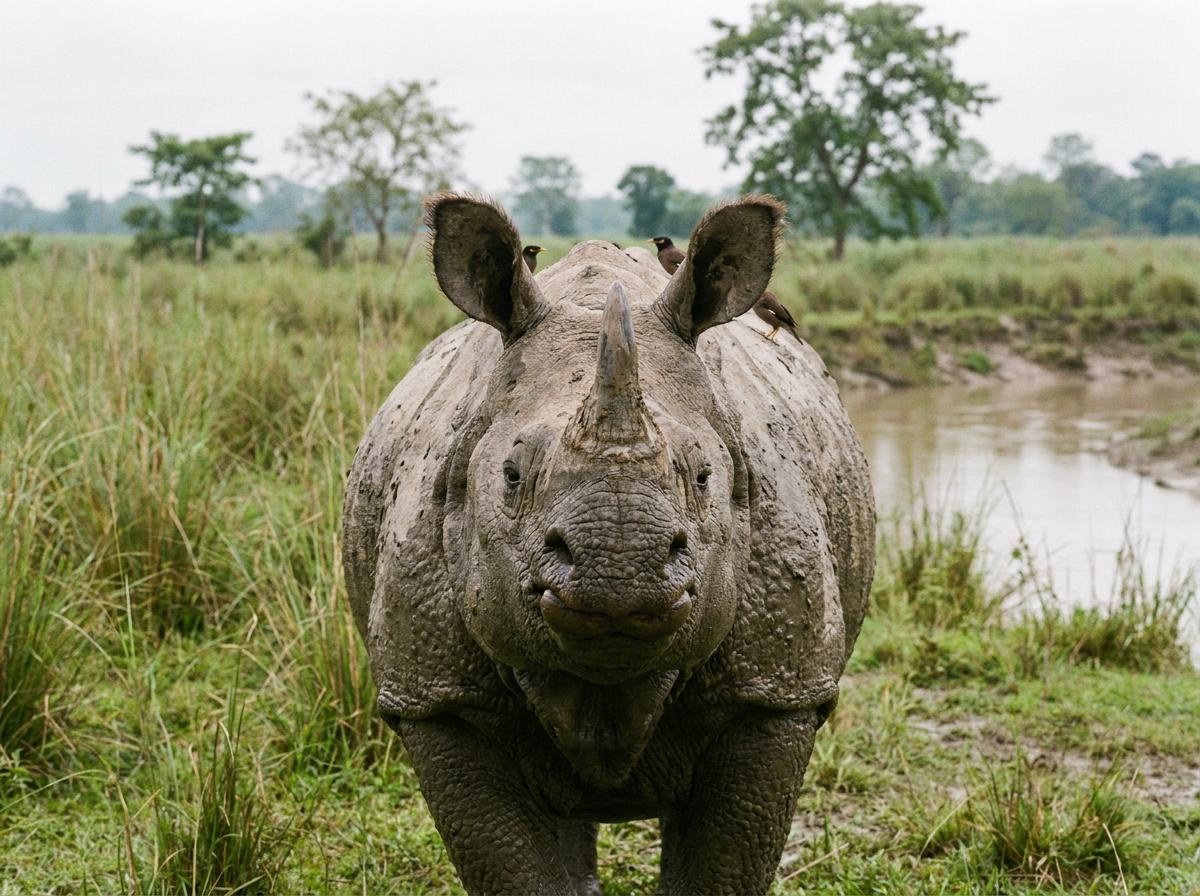
The Indian rhinoceros (Rhinoceros unicornis), also called the greater one-horned rhinoceros, is a huge grazer of the floodplain grasslands and wetlands of northern India and Nepal. Its single horn, folded gray-brown skin, prehensile upper lip, and fondness for wallows make it easy to distinguish from African rhinos and the smaller Javan rhinoceros. Adults are mostly solitary outside courtship and mother-calf pairs, but they share trails, dung middens, and favored feeding areas along rivers and tall grassland.
Modern human work with Indian rhinoceroses is almost entirely conservation, zoo, and protected-area management. Strongholds such as Kaziranga and Chitwan have shown that anti-poaching patrols, translocations, and habitat protection can rebuild numbers, although disease, floods, horn trafficking, and crowded reserves remain concerns. Accredited zoos manage them with reinforced barriers, pools or mud wallows, ample roughage, browse, and carefully planned introductions because adult animals are powerful and territorial. Field teams also use radio tracking, genetic records, and corridor planning to keep recovering populations connected rather than isolated.
Colors: Wild Type