

Hard Clam
Mercenaria mercenaria
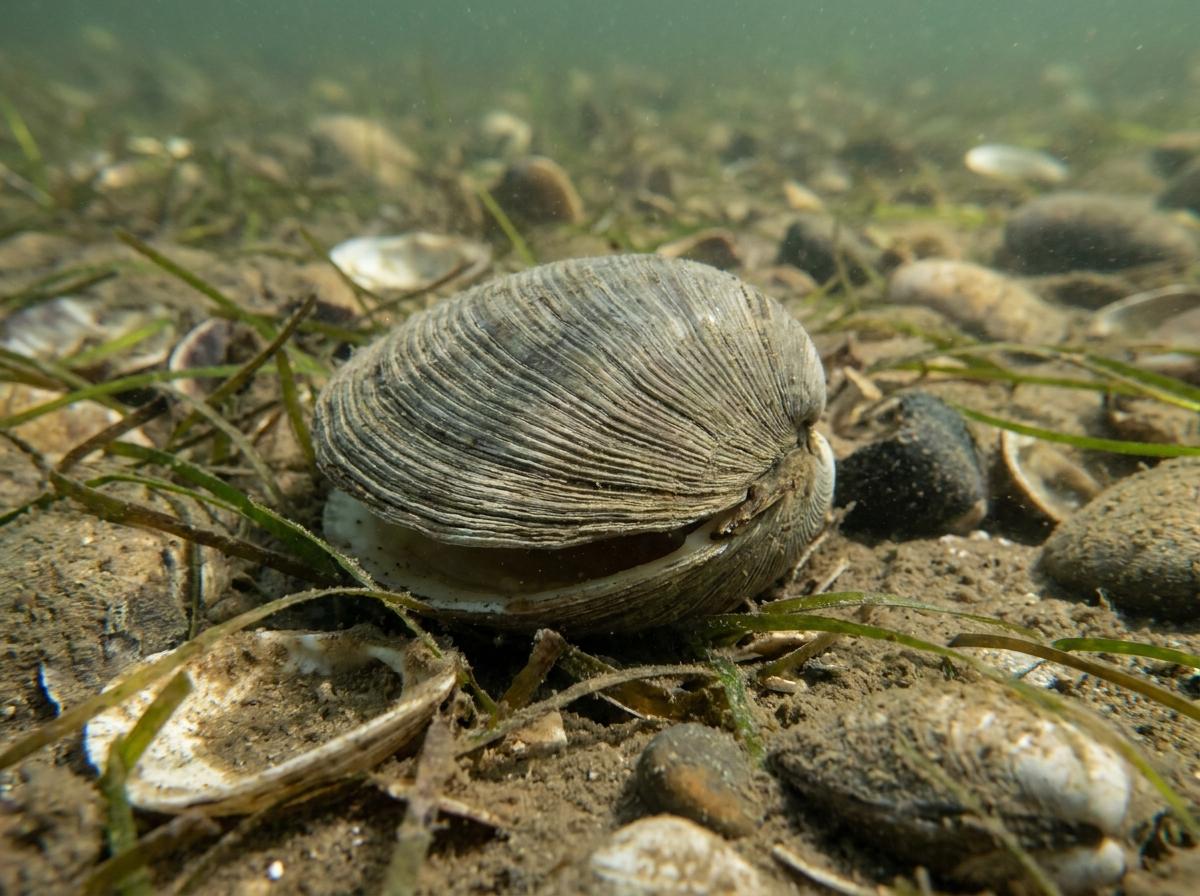
The hard clam, Mercenaria mercenaria, is a thick-shelled marine bivalve native to the western Atlantic coast of North America, where it lives buried in sand or muddy sand in bays, estuaries, and sheltered coastal waters. It is also called the northern quahog, quahog, littleneck, cherrystone, or chowder clam, although several of those names usually describe market size rather than separate species. Hard clams have paired shells with strong hinge teeth and short siphons that draw in seawater for filter feeding. Shell color is usually gray to off-white, sometimes with purple inside the hinge area.
People manage hard clams through wild harvest, hatchery production, and aquaculture leases that seed young clams into prepared bottom or nursery gear. Success depends on suitable salinity, clean water, stable sediment, predator control, and careful timing of harvest size. Public health rules are central because clams filter large volumes of water and can accumulate bacteria, viruses, toxins from harmful algal blooms, or chemical contaminants; harvest areas may close after pollution events or red tides. Restoration projects use hard clams and other shellfish to support working waterfronts and improve estuary habitat, but they are not simple home-aquarium animals. Keeping them alive requires mature marine systems with natural plankton or specialized feeding and appropriate permits in some areas.
Colors: Gray to Tan