


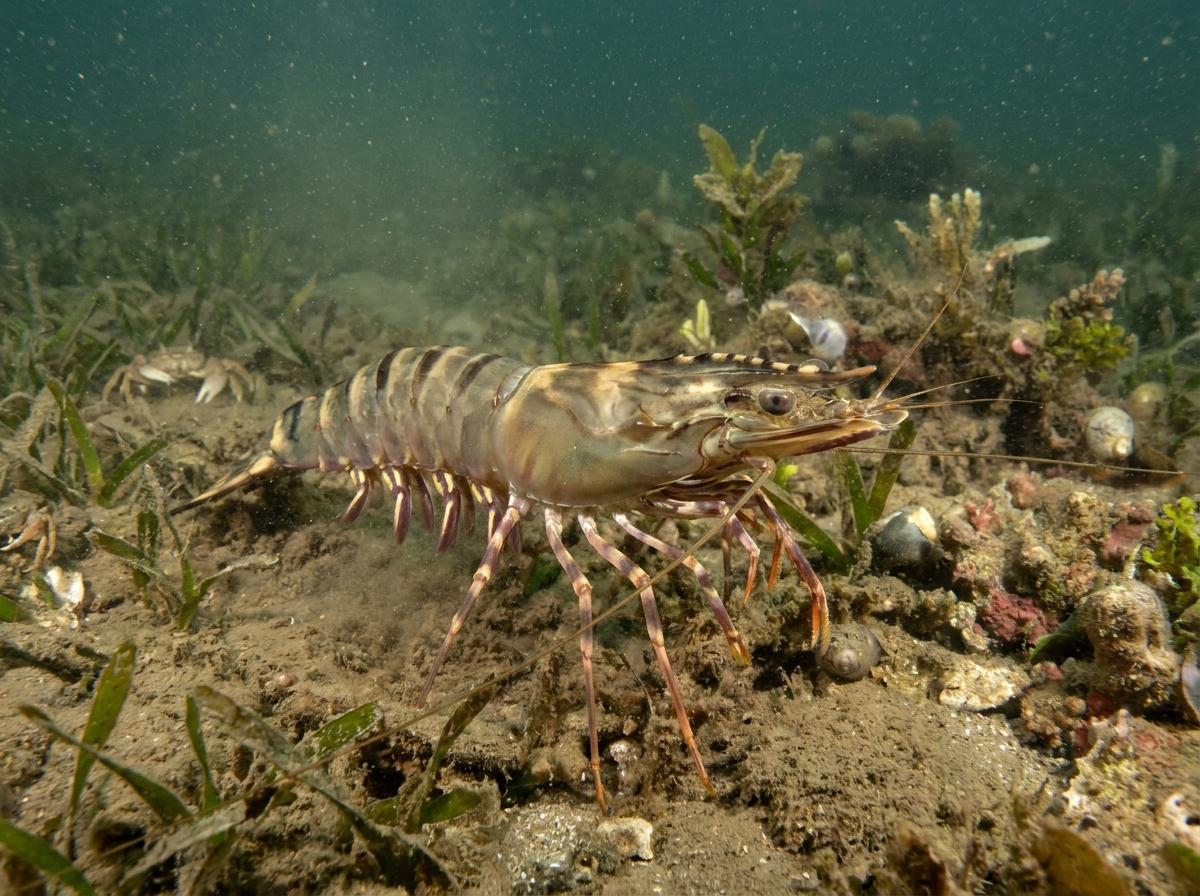
Giant Tiger Prawn
Penaeus monodon
The giant tiger prawn (Penaeus monodon), often called the black tiger shrimp, is a large marine and brackish-water prawn native to the Indo-Pacific. It is marked by dark bands across the shell and can grow much larger than many farmed shrimp species. Wild adults use coastal and offshore habitats, while young stages depend on estuaries, mangroves, and shallow nursery areas. Its size and growth have made it one of the important shrimp aquaculture species.
Farming giant tiger prawns requires close attention to water quality, salinity, stocking density, pond preparation, feed, and biosecurity. Hatcheries manage broodstock, larval stages, and post-larvae before ponds or tanks receive juveniles. Disease outbreaks can move quickly in intensive systems, so farmers monitor behavior, molts, survival, and signs of viral or bacterial problems. Mangrove conversion, effluent, escapes, and reliance on wild broodstock have been concerns in some regions. Better operations use traceable seed, responsible pond siting, and harvest handling that maintains quality without hiding production risks.