


Korean Bobtail Cat: What the Short-Tailed Korean Cat Really Is
Author: Elliott Garber, DVM
The Korean Bobtail is the name commonly given to the short-tailed cats of Korea’s free-roaming and household cat population, part of the wider group of naturally short-tailed cats found across East Asia. If you searched for it expecting a formal pedigree breed with a written standard, a registry, and a network of breeders, the honest answer up front is that no such thing exists. There is no Korean Bobtail recognized by the Cat Fanciers’ Association or the other major cat registries, and much of what circulates online about the breed’s precise “characteristics” is repeated from site to site without a real source behind it. What does exist is genuinely interesting: a landrace of Korean cats, some of which carry the same dominant short-tail trait seen in the Japanese Bobtail and in short-tailed cats across China. This page separates what is actually known from what has been invented, and it tells you what to expect if you meet or adopt one.
What people mean by “Korean Bobtail”
Korea, like Japan and much of coastal China, has long had a visible population of cats with short, stubby, or kinked tails living alongside people and roaming its towns and countryside. When someone says “Korean Bobtail,” they are almost always pointing at that population: ordinary Korean cats that happen to carry a short tail. The genetics company Wisdom Panel, describing the free-roaming Korean cat it calls the Korean street cat, notes that “some Korean street cats have short or kinked tails” and that experts believe Korean cats may have contributed to the development of the Japanese Bobtail. That is the sober version of the story.
The tidier version you will find on many pet-listing sites, complete with confident lines about an “ancient natural breed” that was “recognized by the Cat Fanciers’ Association in 1966” or “brought to Korea by Dutch sailors,” does not hold up. The Cat Fanciers’ Association currently recognizes 45 breeds, and the Korean Bobtail is not one of them. Those origin stories are not sourced to any registry, historical record, or study, and several of them contradict each other from one website to the next. When a “fact” about this cat has no source and changes depending on which page you read, treat it as decoration rather than information.
None of that makes these cats less real or less worth keeping. It just means you are looking at a regional type of cat, not a standardized pedigree, and the useful questions are about the tail, the health, and the temperament of the individual animal in front of you.
Where the short tail actually comes from
The most solid thing that can be said about the Korean Bobtail is genetic. Short and kinked tails in East Asian cats are not a fault or an injury in most cases. They come from a heritable trait that behaves as a dominant, meaning a cat needs only one copy to show a shortened tail.
The clearest study of this trait sequenced the genomes of Asian domestic cats and identified a missense mutation in a gene called HES7 that is strongly associated with the short, kinked tails of Asian cats, following a dominant pattern of inheritance (Xu and colleagues, 2016). Worth being precise here: that work sampled short-tailed feral cats from southern China and Japanese Bobtails, and it did not directly genotype Korean cats. So the accurate statement is that the Korean short tail is consistent with the same broad Asian short-tail trait, and that Korean cats plausibly share it, rather than that a study proved it in Korean cats specifically.
This genetic background matters for one practical reason: it is different from the mechanism behind the tailless Manx. In the Manx, taillessness comes from a separate dominant gene that also disturbs the development of the sacral and tail vertebrae. Kittens that inherit two copies of the Manx gene die before birth, which is why it is described as a lethal gene, and even single-copy Manx cats can suffer “Manx syndrome,” a cluster of spinal problems that can include spina bifida and loss of bladder or bowel control (as documented by the Universities Federation for Animal Welfare). By contrast, a study of Japanese Bobtail vertebral morphology found the short-tailed trait in that established breed did not carry the same skeletal harm (Pollard and colleagues, 2015). A Korean short-tailed cat is far closer to the Japanese Bobtail situation than to the Manx one. The tail is short and often kinked, but the cat is not tailless and does not typically show the Manx spinal syndrome.

Is it a recognized breed?
No, and this is the single most useful thing to understand before you go looking for one.
The Cat Fanciers’ Association recognizes 45 breeds and does not include a Korean Bobtail. The International Cat Association maintains its own breed list (a Korean-language translation of the American Bobtail standard exists in its document library, which is a different thing entirely and is sometimes misread as a “Korean” bobtail breed). General reference lists such as Wikipedia occasionally include “Korean Bobtail” as a natural short-tailed cat, but they do not attach it to a recognizing registry, and a reference list is not the same as a breed club with a standard, a stud book, and shows.
What that absence means in practice:
- There is no official standard describing how a Korean Bobtail “should” look, so any site giving you exact height, weight, eye color, and coat “breed specifications” is describing a general Korean cat, not enforcing a standard.
- There is no breed registry to issue pedigrees, so a cat sold to you as a papered Korean Bobtail is being sold on a document no recognized body backs.
- There is no established breeder network for the type in North America or Europe. Most cats you will meet under this name are ordinary Korean cats, frequently rescues rather than deliberately bred animals.
That is not a knock on the cats. Plenty of wonderful cats are not pedigreed. It simply changes where honesty should point you: toward the animal itself and, where relevant, toward Korean cat rescue and adoption, rather than toward a breeder hunt for papers that do not exist.
What these cats look like
Because there is no standard, appearance varies. Still, a few things are fair to say.
The defining feature is the tail. It is short, often only a few inches, and frequently kinked or curved rather than a smooth stub, and the shape tends to be individual, so no two tails look quite alike. Crucially the tail is present and visible. If you are used to the completely tailless “rumpy” Manx look, a Korean short-tailed cat is different: there is a real, if abbreviated, tail there.
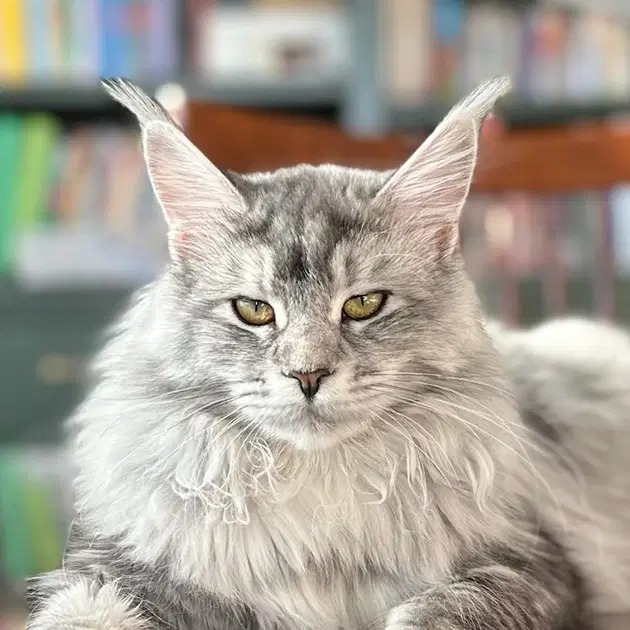
Beyond the tail, you are looking at a typical medium-sized domestic cat. Wisdom Panel describes Korean cats as medium in size at roughly 8 to 15 pounds. Coat length, color, and pattern run the full range you would expect from a landrace, from solid to tabby to bicolor and beyond, because nobody has bred them toward a fixed look. Be wary of any page that hands you a single confident description of “the” Korean Bobtail coat or body type. There is no standard, so there is no one correct look.
Temperament, including the “talkative” question
One of the search terms that leads people here is the idea of vocal cat breeds, and the Korean Bobtail is often described as an unusually chatty cat full of soft chirps and trills, along with words like affectionate, intelligent, and playful. Here honesty has to do some work.
Those descriptions are repeated across many pet-content sites, but they rest on no breed study, and they closely echo what is said about the Japanese Bobtail, which reads like the copy was borrowed rather than observed. For a landrace with no breeding program selecting for personality, there is no reliable basis for saying the group as a whole is more vocal or more affectionate than cats in general. Vocalness in particular varies enormously from cat to cat regardless of type, shaped as much by an animal’s upbringing as by any genetics.
The practical takeaway is better than a breed cliche: if talkativeness or a strong human bond matters to you, judge the individual cat you are meeting. Spend time with it, watch how it responds to people, and ask whoever is rehoming it what its personality is actually like. That tells you far more than a copied paragraph about a “breed” trait.

Health and the short tail
The reassuring headline is that the short-tail trait in East Asian cats is not, on the evidence available, tied to the serious spinal problems that can come with taillessness in the Manx. The Manx issues stem from a different gene, and the study of Japanese Bobtail vertebrae found the Asian short-tail form did not produce the same skeletal harm. A Korean short-tailed cat should be treated first and foremost as a normal cat, health-wise.
A few sensible caveats remain. A pronounced kink is a real deformity of the tail vertebrae, so a vet should check that the tail itself is not painful, injured, or a source of trouble, and you should handle a kinked tail gently. And because these are largely un-pedigreed cats, often from free-roaming or rescue backgrounds, an incoming cat should get the standard new-cat veterinary workup rather than any assumption of breed health: a full exam, testing for feline leukemia virus and feline immunodeficiency virus, parasite screening and prevention, vaccinations appropriate to its life stage, and spay or neuter if that has not been done. Any medical decision, and all dosing, belongs with a veterinarian who can see the animal.
There is no breed-specific lifespan figure for the Korean Bobtail, because there is no breed being tracked. As a general frame, veterinary sources put the life expectancy of well-cared-for indoor cats at roughly 12 to 18 years, with many reaching their late teens or beyond. Keeping a cat indoors or safely contained, feeding it well, holding it at a healthy weight, and staying current on veterinary care do far more for its lifespan than anything about its tail.
Everyday care
Care for one of these cats is care for a cat, full stop. The essentials are the ones that apply to any domestic shorthair or mediumhair.
- Feeding. A complete, balanced cat food appropriate to the cat’s age, with fresh water always available, and portions managed to keep the cat lean. Obesity is one of the most common and preventable feline health problems.
- Litter and environment. A clean litter box, scratching surfaces, vertical space, and daily interactive play. A curious, active cat that is under-stimulated will find its own entertainment, usually at your expense.
- Grooming. Depends on coat length, since these cats are not standardized to one. Shorthairs need little; a longer-coated individual benefits from regular brushing.
- Preventive veterinary care. Annual or better checkups, parasite prevention suited to your region, dental attention, and vaccinations on your vet’s schedule.
- Records. Because many of these cats arrive without history, start a record from day one: intake exam, test results, vaccine dates, weight, and anything the rescue could tell you. It makes every future vet visit easier and catches slow changes you would otherwise miss.
Keeping those records in one place is exactly the kind of thing the health and medical records tools on Creatures are built for, and setting reminders for upcoming care keeps vaccines and parasite prevention from slipping.
Bringing one home
Here is where the “not a recognized breed” reality becomes practical advice rather than trivia.
Because there is no breeder network producing Korean Bobtails to a standard, you should be skeptical of any seller offering pedigreed Korean Bobtail kittens at a premium. There is no registry to issue those papers. The realistic and, frankly, better path to a Korean short-tailed cat is adoption. Korea has active cat rescue efforts, and Korean rescue cats, including short-tailed ones, are rehomed both within Korea and, through rescue organizations, internationally. If a short-tailed Korean cat is what draws you, that is the honest supply.
When you do meet a cat, judge the animal, not the label:
- Look at the whole cat, not just the tail. Body condition, coat, eyes, ears, and temperament tell you far more than tail shape.
- Ask for whatever history exists: veterinary records, test results, vaccination status, and the rescue’s read on the cat’s personality.
- Have the tail checked. A gentle vet exam confirms a kink is old and settled rather than a recent injury.
- Do not pay a pedigree premium for papers no recognized body stands behind.
If you would rather browse and compare regional and less-common cats generally, the Creatures cat pages and the cat marketplace are a reasonable place to start, and the breeder and rescue directory lists trusted sources. Because genuine short-tailed Korean cats surface only occasionally outside Korea, a saved listing alert (below) is the most practical way to be told when one appears. And if your interest is really in distinctive regional breeds more broadly, Creatures profiles many of them, including guardian dogs like the Dalbo and tiny ancestral companions like the Techichi.
Frequently asked questions
Is the Korean Bobtail a real breed?
It is a real type of cat, the short-tailed cat of Korea’s landrace population, but it is not a standardized, registry-recognized breed. The Cat Fanciers’ Association recognizes 45 breeds and does not include it, and there is no official breed standard or stud book for it.
Was the Korean Bobtail recognized by the CFA in 1966?
No. That claim appears on several pet-content sites but is not supported by the Cat Fanciers’ Association, whose current list of 45 breeds does not include a Korean Bobtail. Treat that date as an unsourced internet claim.
Is the short tail healthy, or is it like the Manx?
It is genetically different from the Manx. The Manx tailless gene can cause serious spinal problems and is lethal when a kitten inherits two copies. The Asian short-tail trait, studied in Chinese cats and Japanese Bobtails, has not been shown to carry that skeletal harm. A pronounced kink should still be checked by a vet, but a short-tailed Korean cat is not the same risk profile as a rumpy Manx.
Are Korean Bobtails especially vocal or affectionate?
Those descriptions are widely repeated but not backed by any study of the type, and they mirror what is said about the Japanese Bobtail. Vocalness and friendliness vary hugely between individual cats. Judge the specific cat rather than relying on a breed generalization.
How big do they get and how long do they live?
There is no breed standard, so size varies; Korean cats are generally medium, described at roughly 8 to 15 pounds. No breed-specific lifespan exists, but well-cared-for indoor cats commonly live about 12 to 18 years.
Where can I get one?
Adoption, primarily. There is no established breeder network producing Korean Bobtails to a standard, so most come through rescue, including Korean rescue organizations that rehome internationally. Be cautious of anyone selling “pedigreed” Korean Bobtail kittens, since no registry issues such papers.
Do this next on Creatures
Whether you are researching the type, waiting for a Korean short-tailed cat to become available, or already caring for one, Creatures is the records, marketplace, and directory layer to do it in one place.
Add your cat. Already living with a Korean short-tailed cat? Create a free animal profile in a few minutes. The walkthrough is in adding an animal to Creatures.
Track health from day one. Because many of these cats arrive without history, start a health record with the intake exam, test results, and vaccine dates. The record sheet opens for any visitor to look around, and a free account saves what you enter. See adding a record for the full how-to.
Get alerted. Short-tailed Korean cats surface only occasionally outside Korea, so set a free listing alert and we will tell you when one is posted. No account needed to start. New to it? Read saving searches and using your watchlist.
Browse and find sources. Look through cats on the marketplace and search trusted breeders and rescues in the Creatures directory.
Run a rescue or cattery? List your organization so adopters looking for regional and short-tailed cats can find you.