



Bonobo
Pan paniscus
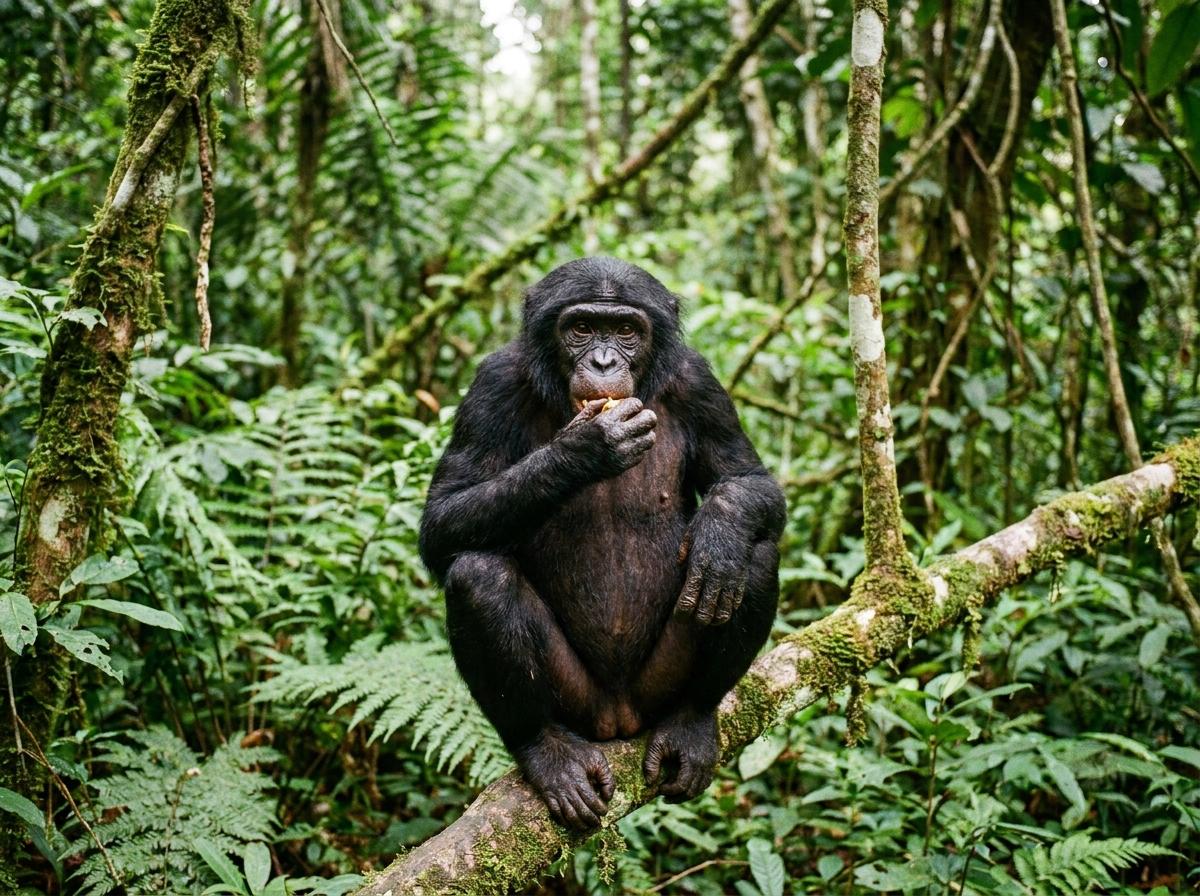
The bonobo (Pan paniscus) is a great ape native to forests south of the Congo River in the Democratic Republic of the Congo. It is closely related to the chimpanzee but is generally slimmer, with longer legs, a darker face in adults, and social behavior that often places strong bonds among females at the center of group life. Bonobos feed on fruit, leaves, stems, insects, and occasional animal prey, moving through forest canopies and on the ground in flexible parties that change through the day.
Bonobos are not private animals; human care belongs to accredited zoos, sanctuaries, research-supported conservation projects, and rescue settings. Managed groups need complex climbing space, privacy, social choice, enrichment, and veterinary teams familiar with great ape health. Breeding recommendations are coordinated to protect genetic diversity and avoid transfers that destabilize groups. Field conservation depends on protecting forest, reducing illegal hunting, supporting local communities, and caring for orphans without creating demand for infant apes. Long lives and slow reproduction make every loss significant.
Colors: Wild Type