

Babirusa
Babyrousa celebensis
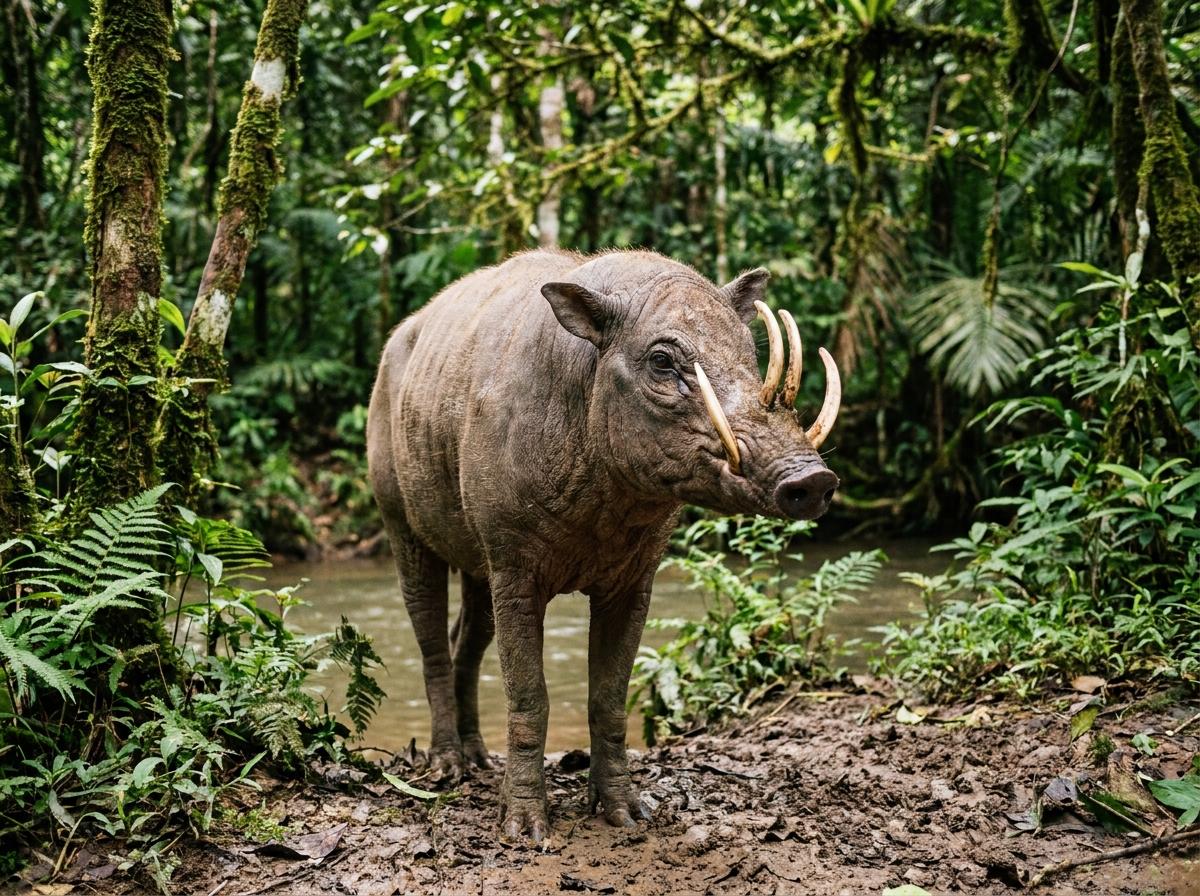
The babirusa (Babyrousa celebensis) is a wild pig from Sulawesi, though the name babirusa is also used for several related Babyrousa species on nearby Indonesian islands. Males have upper canine tusks that grow upward through the snout and curve back toward the forehead, along with lower tusks that project from the jaw. Babirusas have long legs, sparse hair, and a lighter build than domestic pigs, and they forage in forest, riverine, and swamp-edge habitats.
Babirusas are kept mainly in accredited zoos and conservation breeding programs. Their care differs from farm pigs: diets are managed to avoid excess calories, and enclosures need shade, mud wallows, dry resting areas, and barriers that withstand rooting and tusk use. Tusks and hooves may require monitoring, especially in older males. In Indonesia, habitat loss, hunting, and fragmentation are the main concerns, so ex situ breeding is paired with education and field conservation. They are not suitable private pets, and international movement is tightly controlled.
Colors: Black, Brown, Cream, Gray, Red, Red and Black, Spotted, Striped, Tan, White, Wild Type