

Whiteleg Shrimp
Penaeus vannamei
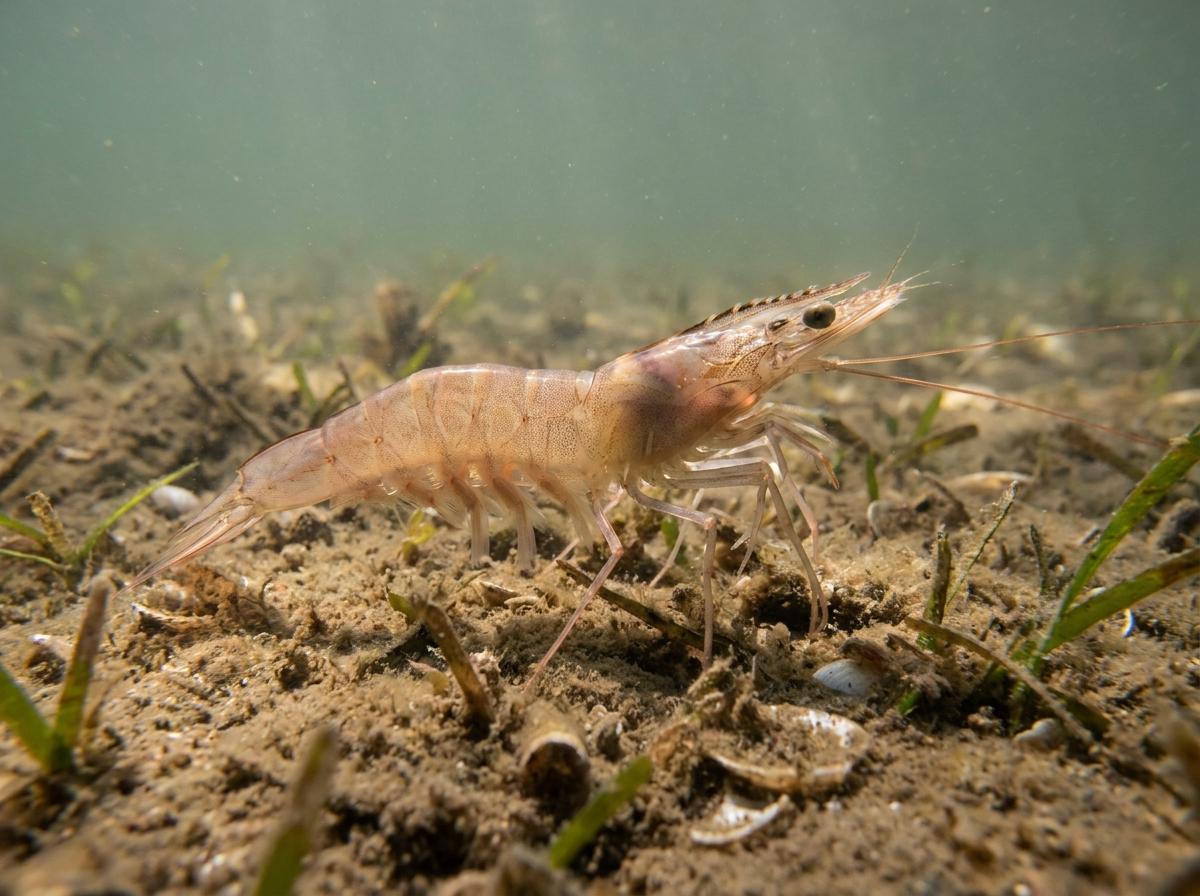
Whiteleg shrimp, Penaeus vannamei, is a pale, fast-growing penaeid shrimp native to the eastern Pacific coast from Mexico south toward Peru. It is also called Pacific white shrimp or whiteleg prawn, and many aquaculture sources still use the name Litopenaeus vannamei. Adults have a translucent gray-white body, whitish walking legs, and a life cycle that moves from offshore spawning areas to estuarine nursery habitat. Their ability to grow in a range of salinities helped make them one of the most widely farmed shrimp in the world.
Most human contact with whiteleg shrimp is through hatchery and grow-out production rather than home aquariums. Hatcheries use domesticated broodstock, often selected for growth or disease status, to supply postlarvae for ponds, lined tanks, raceways, biofloc systems, and recirculating farms. Day-to-day success depends on oxygen, temperature, salinity stability, feed management, and strict biosecurity because viral and bacterial diseases can move quickly through dense shrimp populations. Buyers, chefs, and producers increasingly look at origin, effluent control, antibiotic use, and traceability when comparing farmed shrimp.