

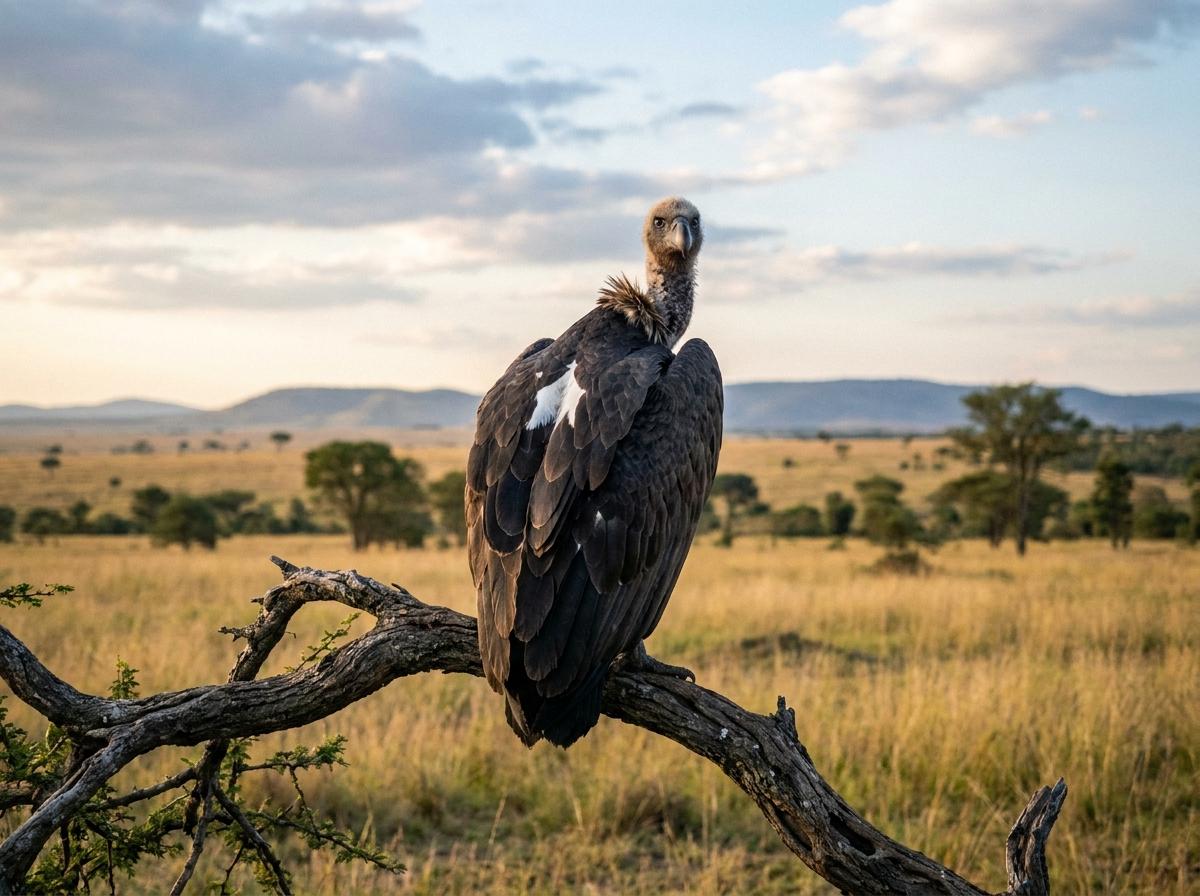
White-Backed Vulture
Gyps africanus
The white-backed vulture (Gyps africanus), often called the African white-backed vulture, is a large Old World vulture of sub-Saharan savannas, open woodland, and ranching landscapes. It is brown with a pale lower back that shows clearly when perched or in flight, a long bare neck, and broad wings built for soaring on thermals. Like other Gyps vultures, it locates carcasses from the air and often feeds in groups, opening soft tissues after larger scavengers or stronger-billed vultures have started a carcass. Pairs usually nest in tall trees and may return to the same area year after year.
Conservation and captive management are urgent because the species is critically endangered and has declined sharply across much of its range. Poisoned carcasses set for predators, poisoning by poachers trying to hide illegal kills, power-line collisions, nesting-tree loss, disturbance, and unsafe veterinary drugs all affect populations. Rehabilitation centers and zoos need spacious aviaries, safe perches, clean carcass-based diets, and low-disturbance nest sites if breeding is attempted. Field programs emphasize rapid poison-response teams, safer livestock and predator practices, tagging to map movement, protection of nesting colonies, and carefully managed supplementary feeding sites where natural carrion has become risky or scarce.
Colors: Black, Black and White, Brown, Cream, Gray, Orange Head, Pink Head, Red Head, Tan, White, Wild Type, Yellow Head