


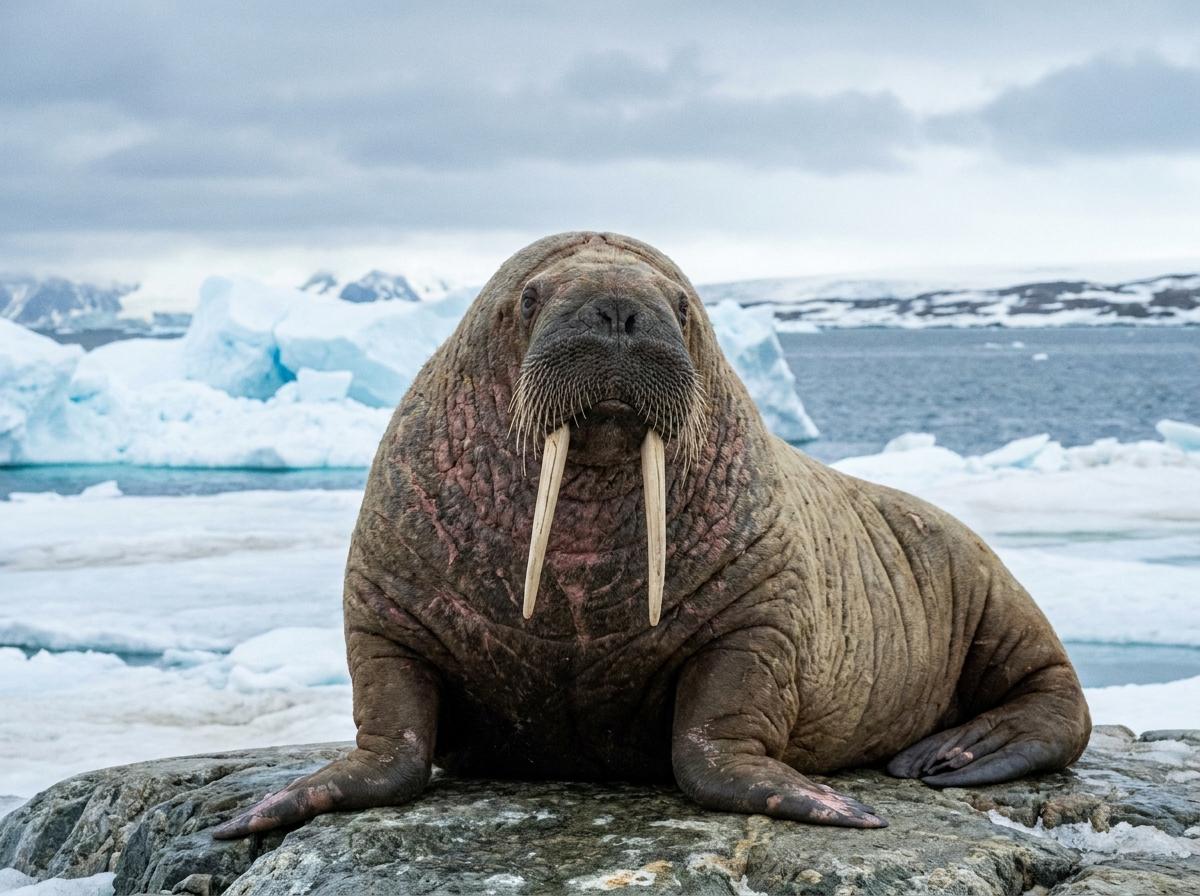
Walrus
Odobenus rosmarus
Odobenus rosmarus, the walrus, is a large Arctic pinniped recognized by its long tusks, bristly whiskers, thick wrinkled skin, and broad foreflippers. Atlantic and Pacific walruses are the main living subspecies, with some authorities treating the Laptev Sea population separately. Both males and females have tusks, which are used in social displays, hauling out, and moving through ice. Walruses feed mostly on seafloor invertebrates, especially clams, detecting prey with sensitive vibrissae and using suction rather than chewing. They gather in dense groups on sea ice or coastal haulouts and can travel long distances between feeding areas.
Human relationships with walruses include Indigenous subsistence harvest, climate and fisheries research, marine mammal rescue, and rare public-aquarium care. Sea-ice loss has shifted some haulout patterns, making disturbance, trampling events, shipping, and offshore development important management issues. Aquariums that keep walruses need cold saltwater pools, heavy-duty haulout surfaces, social housing, and veterinary programs for tusk, eye, skin, and weight management. Training is used for voluntary blood draws, mouth checks, and flipper examinations because moving an adult walrus by force is unsafe. Private ownership is not a realistic or lawful option in ordinary circumstances.
Colors: Wild Type