

Tundra Swan
Cygnus columbianus
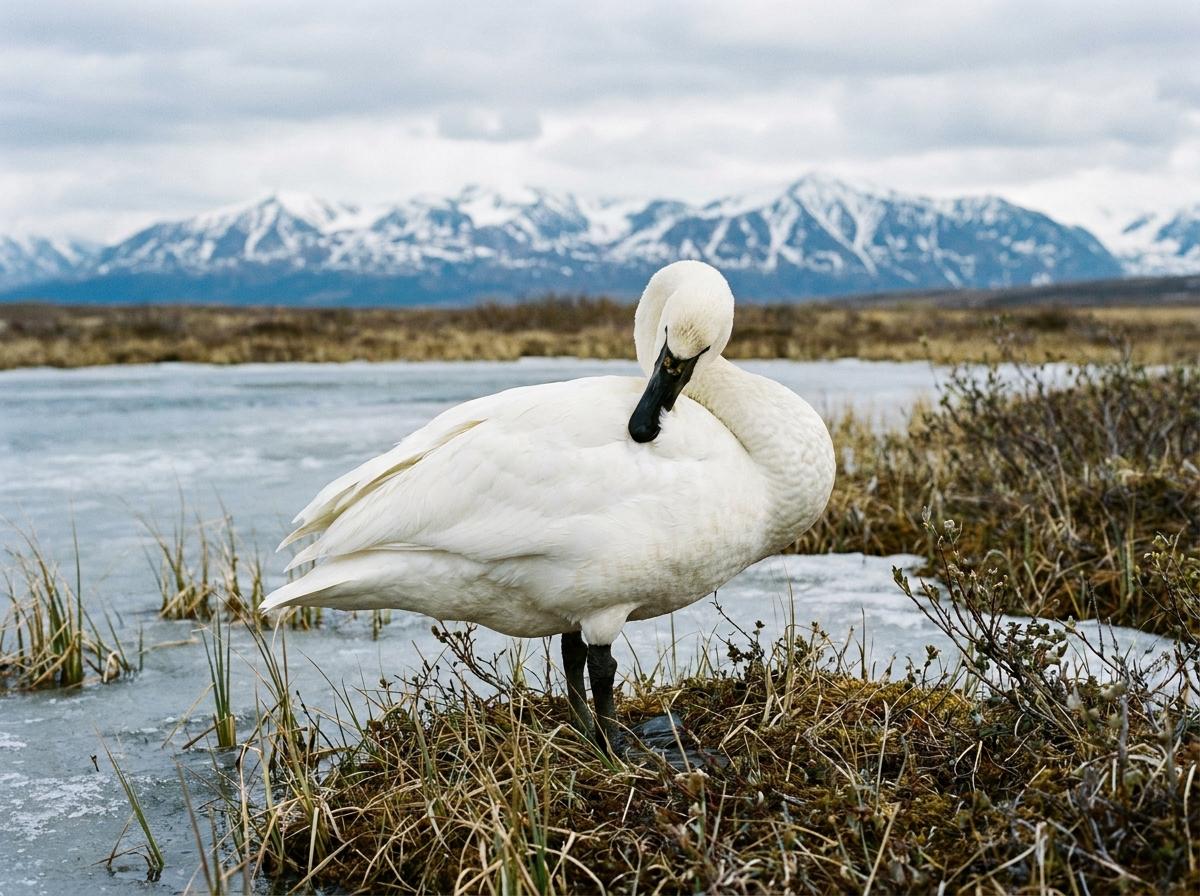
Breeding on Arctic ponds and marshy tundra, the tundra swan, Cygnus columbianus, migrates to temperate coasts, lakes, and agricultural valleys for winter. It is smaller and shorter-necked than the trumpeter and whooper swans, with white plumage, black legs, and a mostly black bill that may show a small yellow spot at the base. North American birds are often called whistling swans, while the Eurasian form is widely known as Bewick's swan, though taxonomic treatment varies. Family groups travel together, feeding on aquatic plants, tubers, and waste grain at stopover and wintering sites.
Because tundra swans are wild migratory waterfowl, human involvement usually centers on habitat protection, regulated harvest in some regions, migration monitoring, and treatment of injured birds by licensed rehabilitators. Wetland managers track water levels and submerged vegetation, while farmers may see flocks using harvested fields during migration or winter. In waterfowl collections they require secure open water, grazing space, and careful pairing, but they are not typical private pets. Lead exposure, collisions, disturbance at staging areas, and loss of coastal marshes are common management concerns.
Colors: Black, Brown, Cream, Gold, Gray, Leucistic, Melanistic, Mottled, Piebald, Red, Silver, Spotted, Tan, White, Wild Type