




Sumatran Orangutan
Pongo abelii
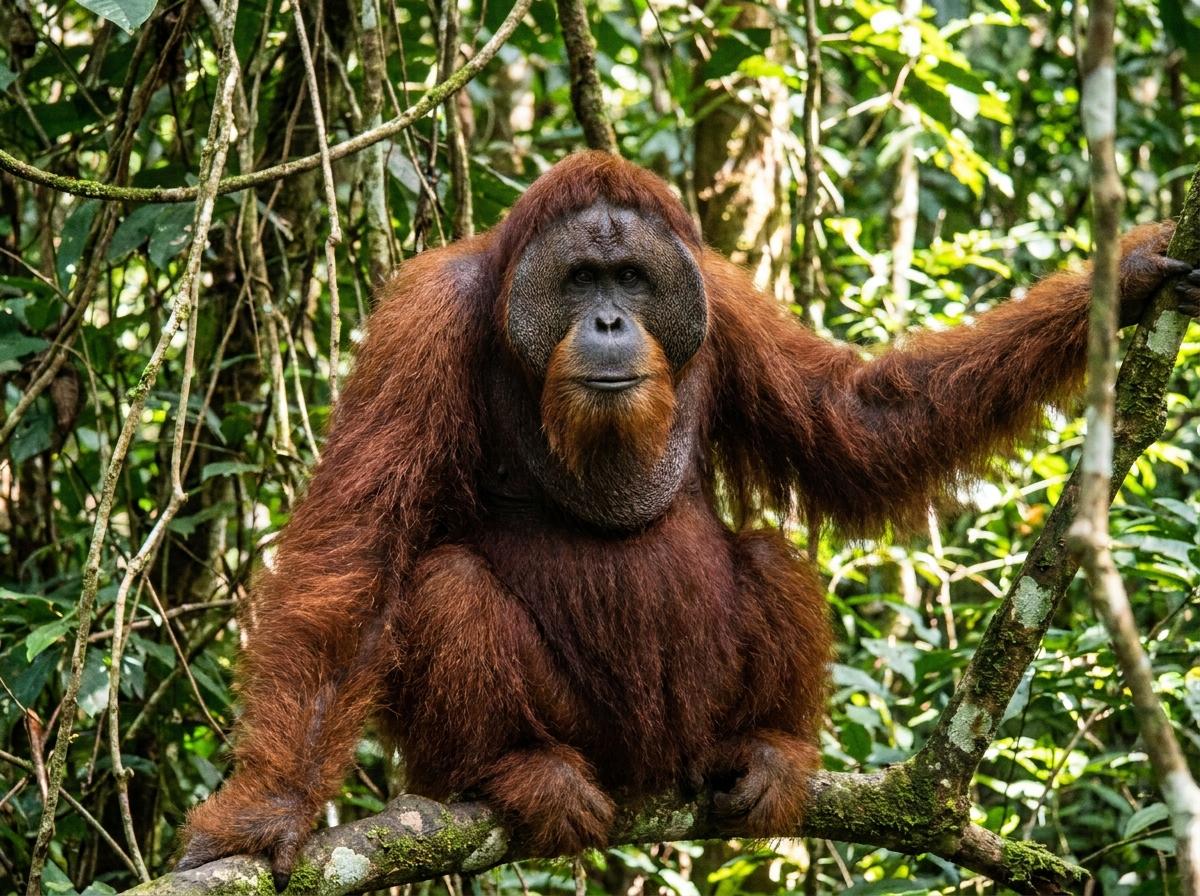
The Sumatran orangutan, Pongo abelii, is one of the great apes and is native only to Sumatra, with its main surviving populations in the island's northern rainforests. Compared with the Bornean orangutan, it is generally slimmer, longer-haired, and more strictly arboreal, moving through the canopy to find figs, other fruit, leaves, bark, insects, and occasional small animals. Adult males develop cheek pads and a throat sac, while females invest heavily in one infant at a time, producing one of the slowest reproductive rates among mammals.
Human work with Sumatran orangutans centers on conservation, rehabilitation, and carefully managed zoo populations, not private ownership. Habitat loss, road building, conflict around farms, and the illegal pet trade have left the species critically endangered. Field teams monitor nests and feeding trees, protect forest corridors, and relocate individuals only when necessary. Sanctuaries care for confiscated or orphaned apes with the goal of release when possible, and accredited zoos coordinate breeding and genetics while teaching visitors why lowland rainforest protection matters.
Colors: Wild Type