

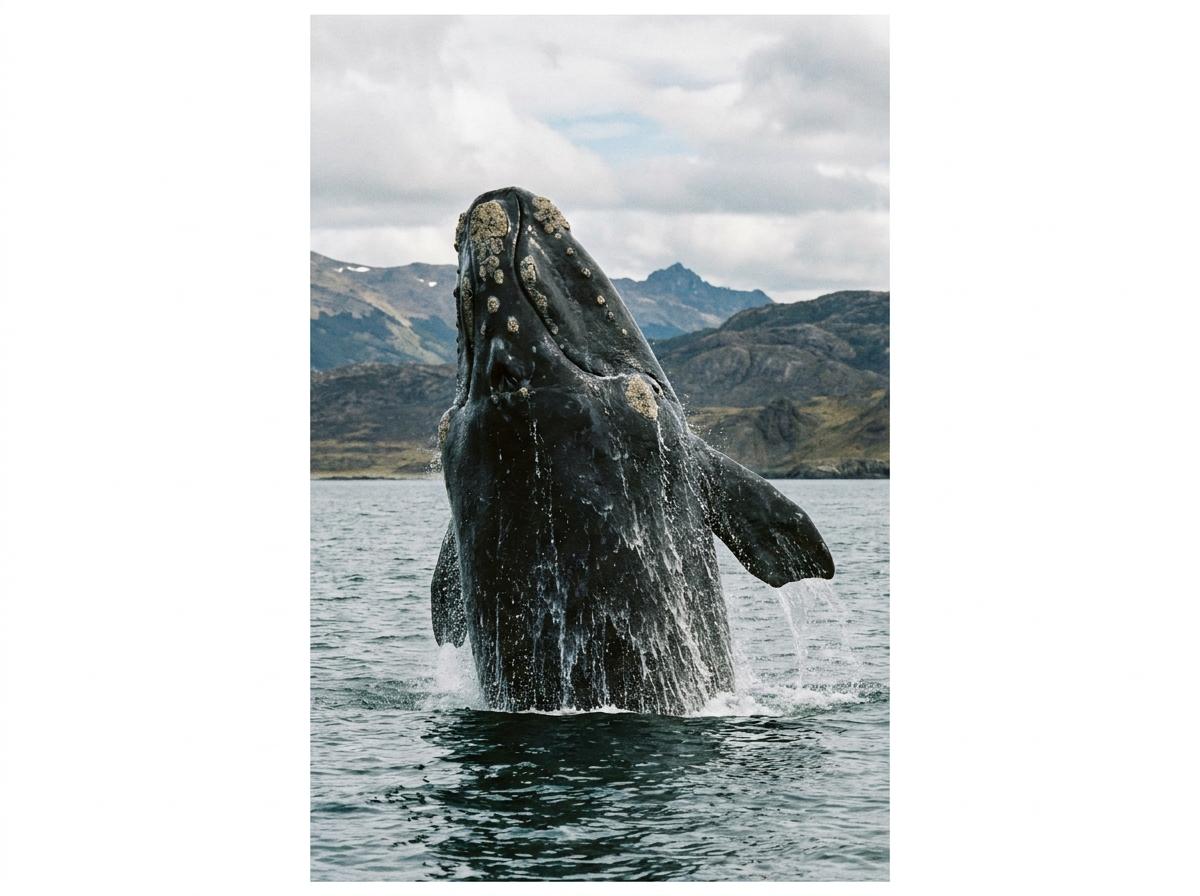
Southern Right Whale
Eubalaena australis
The southern right whale (Eubalaena australis) is a baleen whale of the Southern Hemisphere, named in the whaling era because slow whales that floated after death were considered the 'right' whales to hunt. It has a broad black body, no dorsal fin, a strongly arched mouthline, and rough pale callosities on the head that make individuals recognizable in photographs. The species filters copepods, krill, and other small planktonic animals in cold feeding grounds, then migrates to sheltered coastal bays off places such as Argentina, South Africa, Australia, and New Zealand to calve.
Southern right whales are managed through protection rather than captivity. Their recovery from commercial whaling is one of the better-known marine conservation stories, though trends differ by breeding population. Researchers use photo-identification, drones, passive acoustics, and skin samples to estimate survival, calving intervals, health, and movement. Whale-watching operators and boaters are usually required to keep regulated distances, especially around mothers with calves that rest in shallow nursery areas. Ongoing concerns include fishing-gear entanglement, vessel strikes, noise, harmful algal events, and shifts in prey linked to ocean change, so coastal planning and international monitoring remain part of stewardship.
Colors: Wild Type