

Sable Antelope
Hippotragus niger
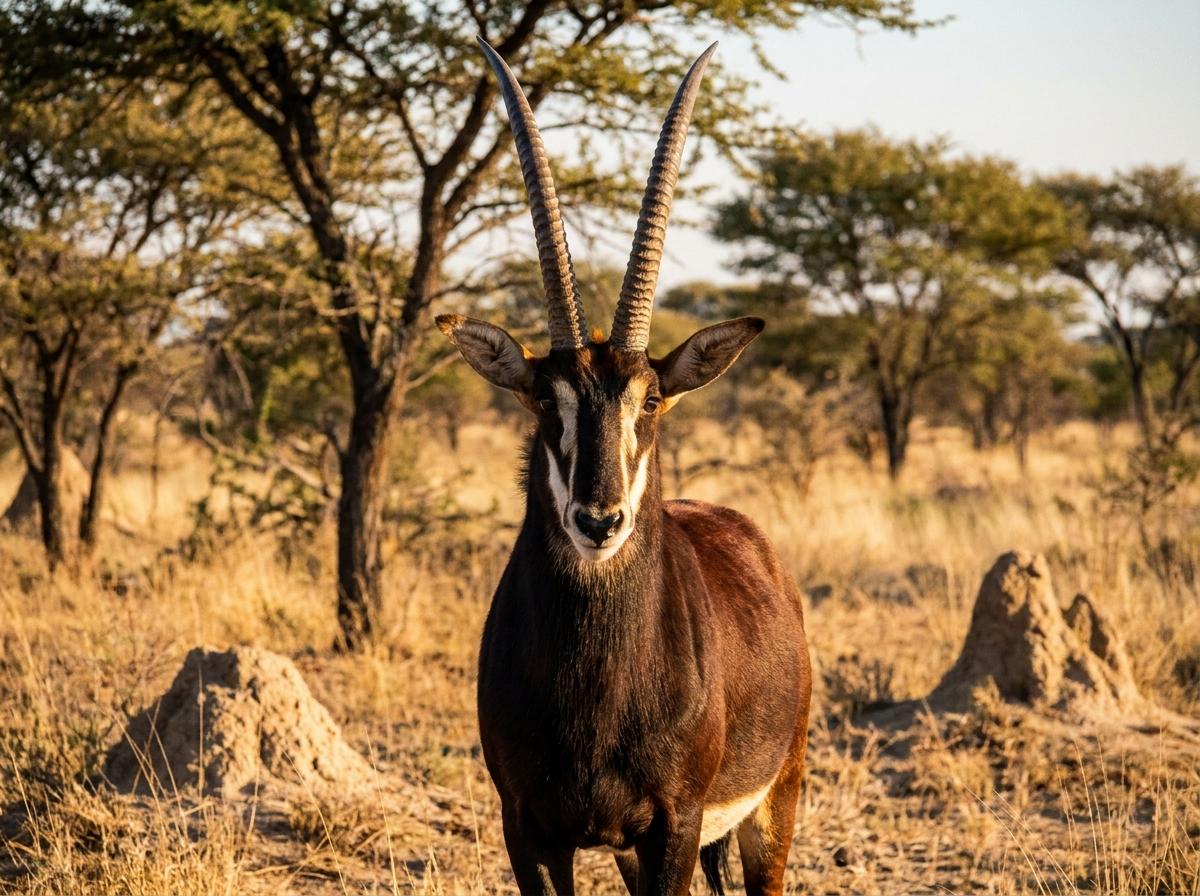
Sable antelope are large African antelopes of wooded savannas and grassland mosaics, recognized by arched scimitar-shaped horns and bold facial markings. Hippotragus niger occurs in parts of eastern and southern Africa, with regional forms that vary in size and color; mature bulls often darken to glossy black, while cows and younger animals are chestnut to dark brown. Herds are usually made up of females and calves, while adult males defend territories or breeding access. The giant sable of Angola is a separate conservation focus and should not be casually lumped with ranch-bred sable lines.
Zoos, private reserves, and game ranches keep sable antelope for display, breeding, conservation, and managed hunting, but they are powerful animals requiring experienced hoofstock facilities. Tall fencing, low-stress handling systems, shelter from extreme weather, and a diet based on pasture, good grass hay, and minerals are basic requirements. Horn injuries are a real concern in cramped groups. Conservation programs pay close attention to habitat, poaching pressure, and genetic identity, especially where rare subspecies or reintroductions are involved.
Colors: Black, Black and White, Brown, Cream, Gray, Red, Tan, White, Wild Type