

Prairie Falcon
Falco mexicanus
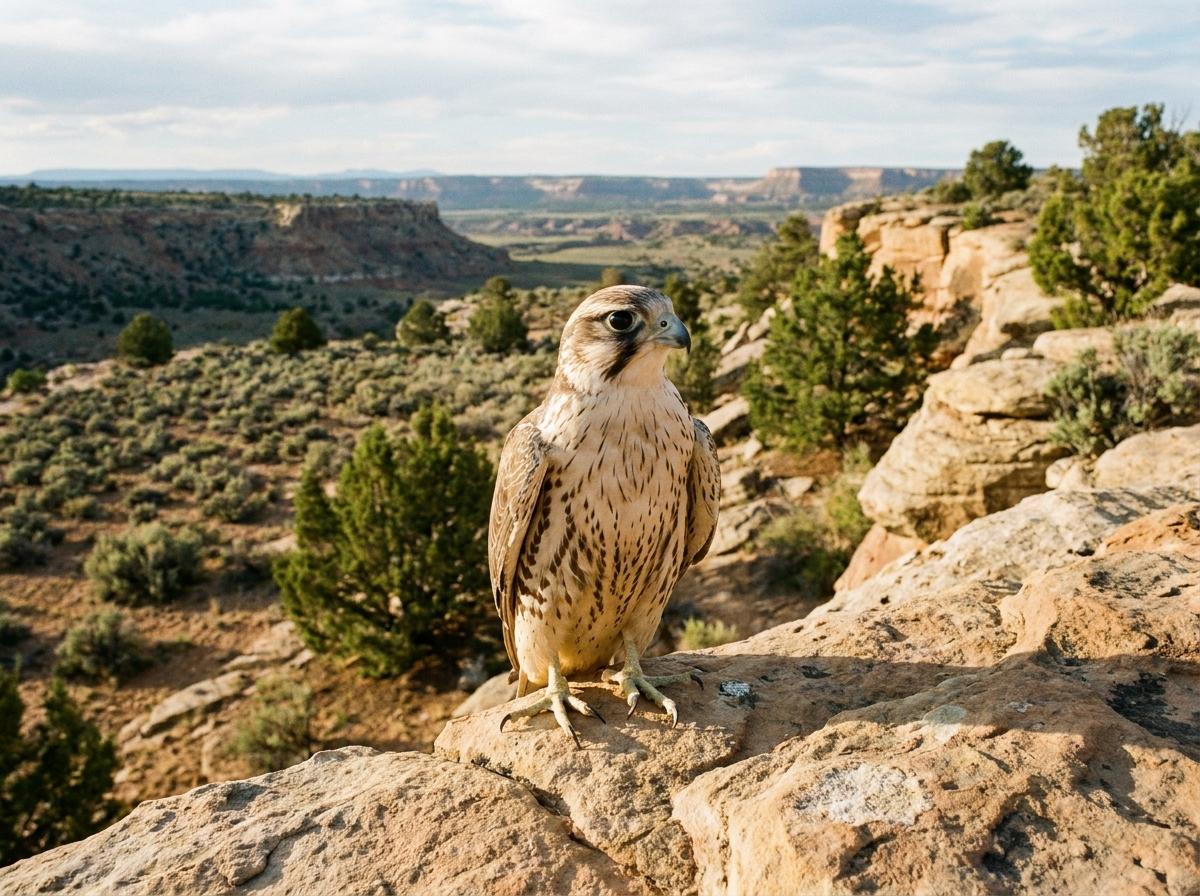
The prairie falcon (Falco mexicanus) is a pale brown falcon of western North American deserts, plains, and open foothills. It hunts low and fast over open ground, taking birds and mammals such as ground squirrels, and it nests on cliffs, bluffs, and canyon ledges rather than in trees. The dark axillary patches under the wings are a useful field mark in flight, and the species has a leaner, drier-country look than the heavier peregrine falcon.
Human contact with prairie falcons commonly comes through falconry, raptor rehabilitation, nest monitoring, and land management on grazing or energy-development landscapes. Falconers work under permit systems and must provide safe mews, weathering areas, appropriate quarry or exercise, telemetry, and a diet that supports a high-performance bird without overconditioning. Rehabilitation teams often manage wing injuries, starvation, or collision trauma, while conservation observers monitor cliff sites with enough distance to avoid nest abandonment. Any captive or education bird should have clear acquisition records, because wild raptors are regulated and cannot be treated like ordinary pet birds.
Colors: Wild Type