


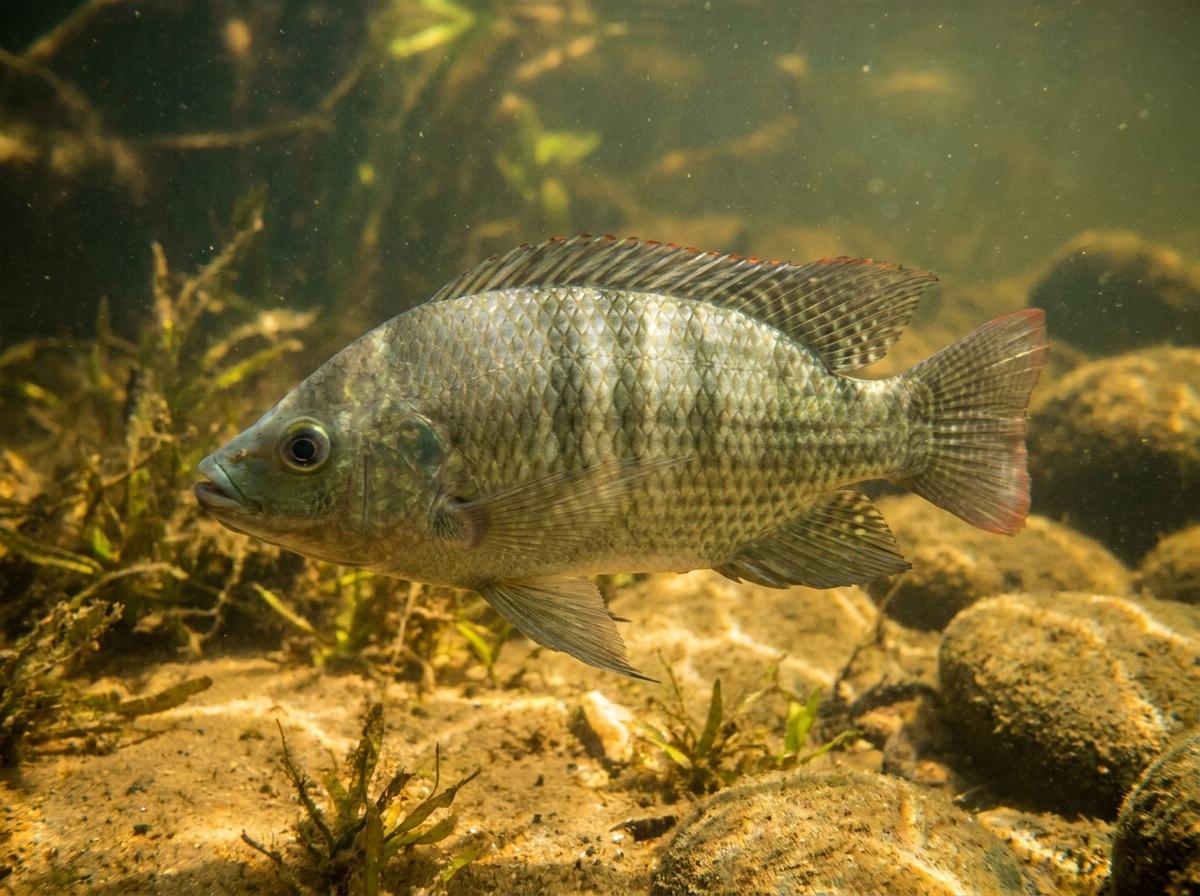
Nile Tilapia
Oreochromis niloticus
Nile tilapia, Oreochromis niloticus, is one of the world's most important farmed freshwater fish, originally from African river and lake systems and now raised widely in warm regions. It is a mouthbrooding cichlid with fast growth, mild flesh, and strong tolerance for many production systems, from earthen ponds to cages and recirculating tanks. Selective breeding has produced improved strains for growth, fillet yield, and disease resistance. The same adaptability that supports aquaculture also makes escaped fish a concern in waters where they are not native.
Production management focuses on water temperature, oxygen, feed conversion, stocking density, sex control, and biosecurity. Farms often use all-male or controlled breeding populations to reduce early reproduction and stunting in grow-out ponds. Hatcheries track broodstock, strain identity, egg collection, fry grading, and health status, while regulators may limit where fish can be stocked or transported. Smallholders value Nile tilapia for reliable harvests, but good results still depend on clean water, balanced feeding, and planned marketing size. Conservation teams also watch interactions with native tilapia species and other freshwater fish.