


Mulard Duck
Cairina moschata × Anas platyrhynchos domesticus
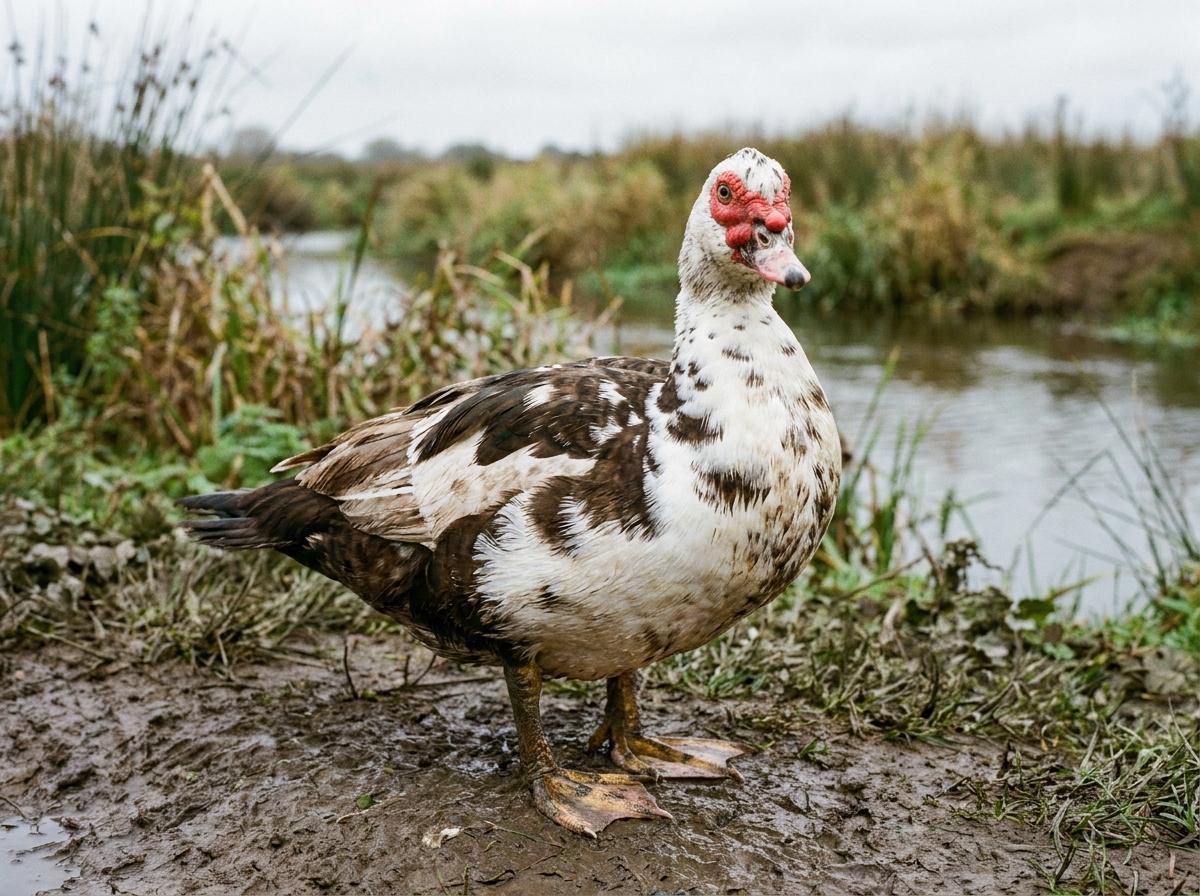
The mulard duck is a sterile hybrid of a Muscovy drake and a Pekin or other common duck. Also spelled moulard, or called a mule duck, it cannot breed, so every bird is produced from pure Muscovy and common-duck parents, usually by artificial insemination. The reverse cross, a common drake on a Muscovy female, is called a hinny. Males and females differ little in size or color, and mulards have claws like a Muscovy but rarely perch and are reported not to fly. Eggs that produce mulards hatch in about 32 days, between the common duck's 28 and the Muscovy's 35.
The mulard is a farm bird. In France it replaced geese for foie gras, making up 94 percent of production by 1995, with males raised for liver and females for meat. California bans the sale of force-fed liver products, and New York City has passed a similar ban. In the United States the Muscovy is a protected migratory bird and its hybrids count as migratory birds too (50 CFR 10.12). Since 2010, live Muscovies may be acquired or kept only to be raised and sold as food (50 CFR 21.48), so ask the US Fish and Wildlife Service before buying mulard ducklings for any other purpose.