


Mimic Poison Frog
Ranitomeya imitator
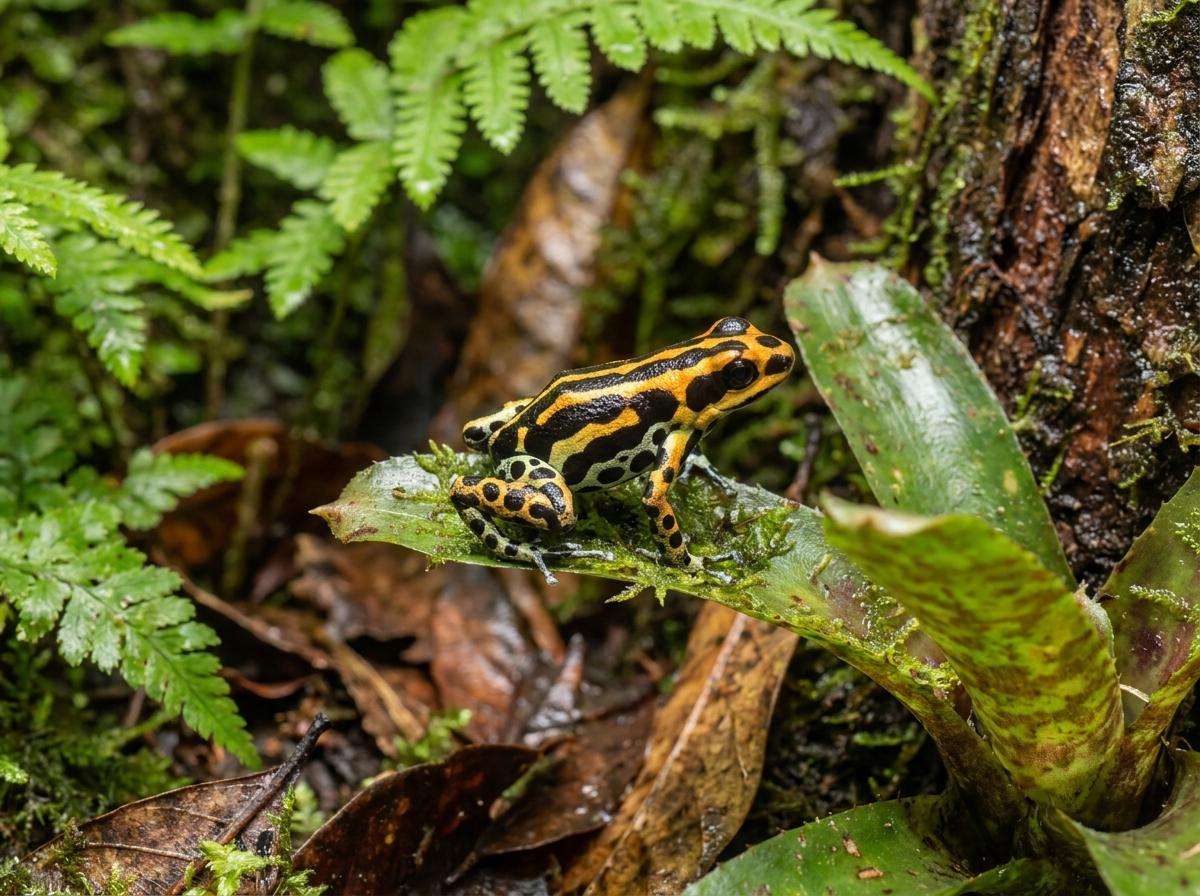
The mimic poison frog, Ranitomeya imitator, is a tiny Peruvian dart frog named for its close resemblance to other local poison frog species. Different populations can show very different colors, including striped, spotted, or banded patterns, because the species mimics whatever warning pattern is effective in that area. In the wild it uses leaf litter, vines, and water-filled plant pockets, where pairs raise tadpoles in small natural pools.
Captive-bred mimic poison frogs are kept in planted vivaria by experienced amphibian hobbyists. They need stable humidity, clean microfauna, leaf litter, bromeliads or similar structures, and tiny prey such as fruit flies and springtails. Population identity matters: mixing color forms can erase locality traits that are important to both hobby records and scientific interest. Frogs bred in captivity are not dangerous in the same way as wild frogs, because their skin toxins depend on wild diet.