

Lesser Yellow-Headed Vulture
Cathartes burrovianus
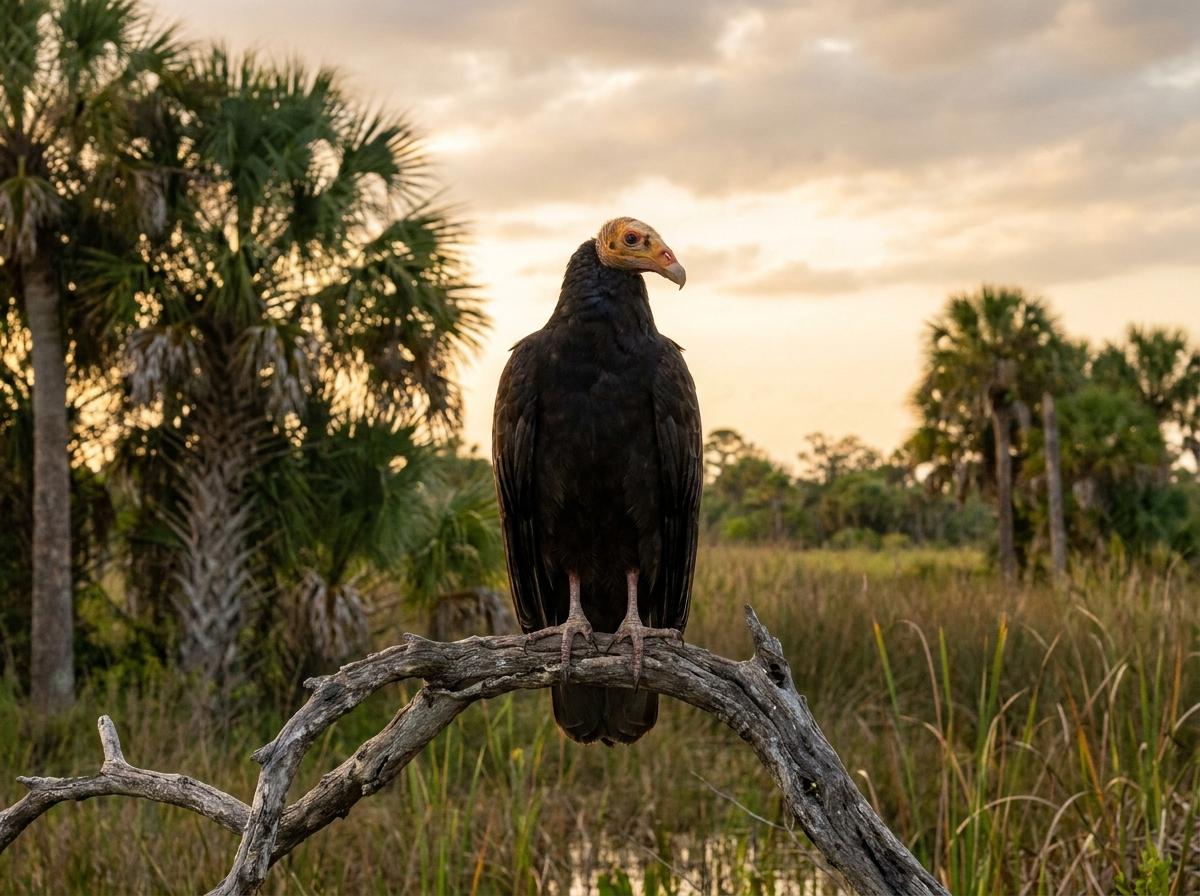
The lesser yellow-headed vulture, Cathartes burrovianus, is a New World vulture of open wetlands, savannas, seasonally flooded grasslands, and lowland agricultural mosaics from southern Mexico through much of South America. It resembles the turkey vulture in flight but is smaller, with long narrow wings, a rocking glide, blackish plumage, and a bare head washed yellow, orange, and bluish in adults. Unlike the forest-associated greater yellow-headed vulture, it is most often seen quartering low over marshes and pastures while using a strong sense of smell to locate carrion.
Private ownership is not a normal or appropriate context for this protected wild bird. Care occurs in rehabilitation centers, education facilities, or zoos that can provide flight space, washable surfaces, high perches, and a balanced carrion-based diet under strict hygiene. In the field, the species benefits from healthy scavenger communities but can be affected by wetland drainage, poisoning campaigns, contaminated carcasses, collisions, and disturbance near roosts. Researchers and conservation teams monitor it as part of broader raptor and scavenger surveys, especially in landscapes where changes in livestock management, fire, or water levels alter carrion availability.
Colors: Black, Black and White, Brown, Cream, Gray, Orange Head, Pink Head, Red Head, Tan, White, Wild Type, Yellow Head