


Large Flying Fox
Pteropus vampyrus
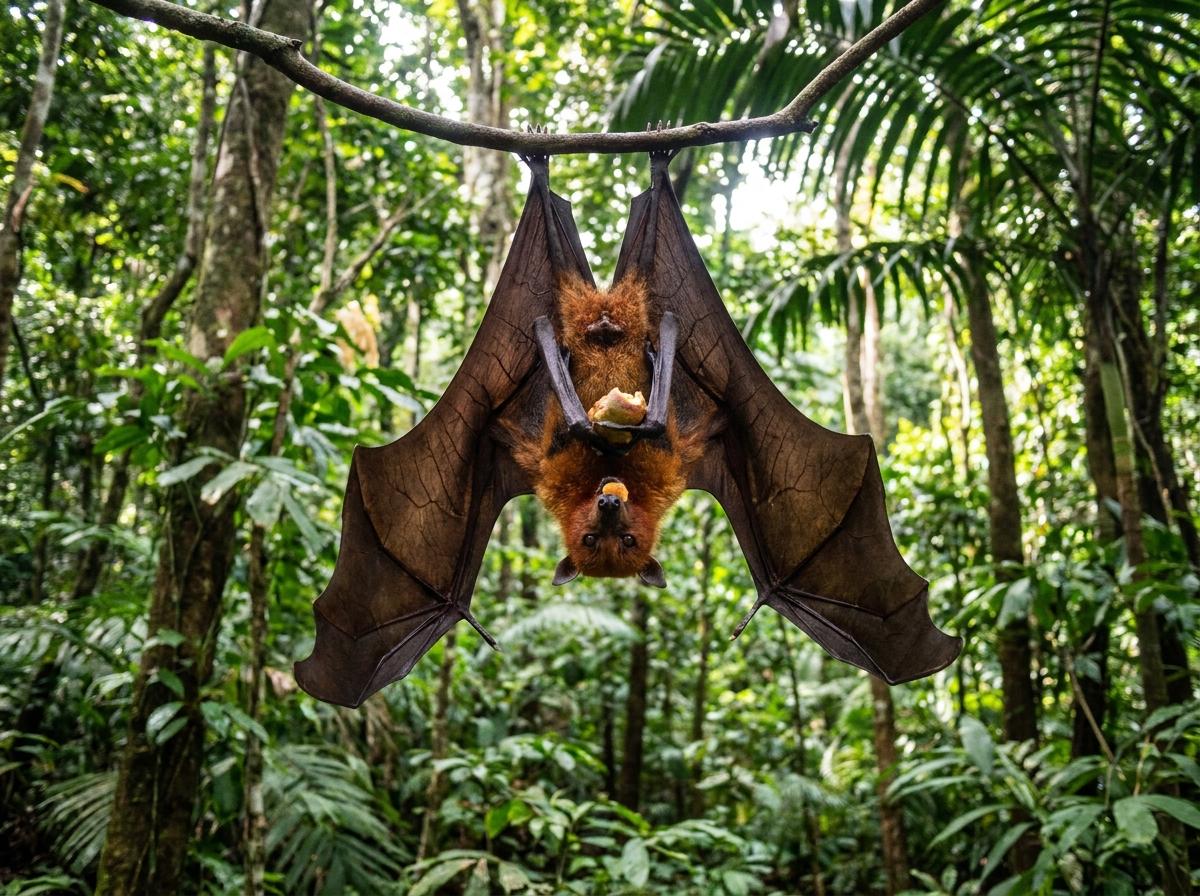
The large flying fox, Pteropus vampyrus, also called the greater flying fox, is a very large fruit bat of Southeast Asia. It has a foxlike face, no tail, long narrow wings, and a dark body with a tawny to orange-brown mantle in many individuals. Unlike small insect-eating bats that navigate mainly by echolocation, Pteropus bats rely heavily on vision and smell. Colonies roost by day in tall trees, mangroves, or forest edges, then travel at night to feed on fruit, nectar, pollen, and flowers.
Large flying foxes are not suitable pets, and many populations are protected or controlled by wildlife law. Human work with them usually falls into zoo management, rescue, disease surveillance, orchard-conflict reduction, or roost conservation. Captive groups need tall flight enclosures, secure hanging sites, social compatibility, low-stress handling, and diets built around appropriate fruit, browse, and nectar substitutes rather than sugary leftovers. Because flying foxes can carry zoonotic viruses, rehabilitation and field handling require trained personnel and protective protocols. Long-term conservation depends on reducing hunting pressure, protecting day roosts, and using crop protection methods that do not entangle bats.
Colors: Black with Golden Mantle, Dark Brown with Golden Mantle