

Koala
Phascolarctos cinereus
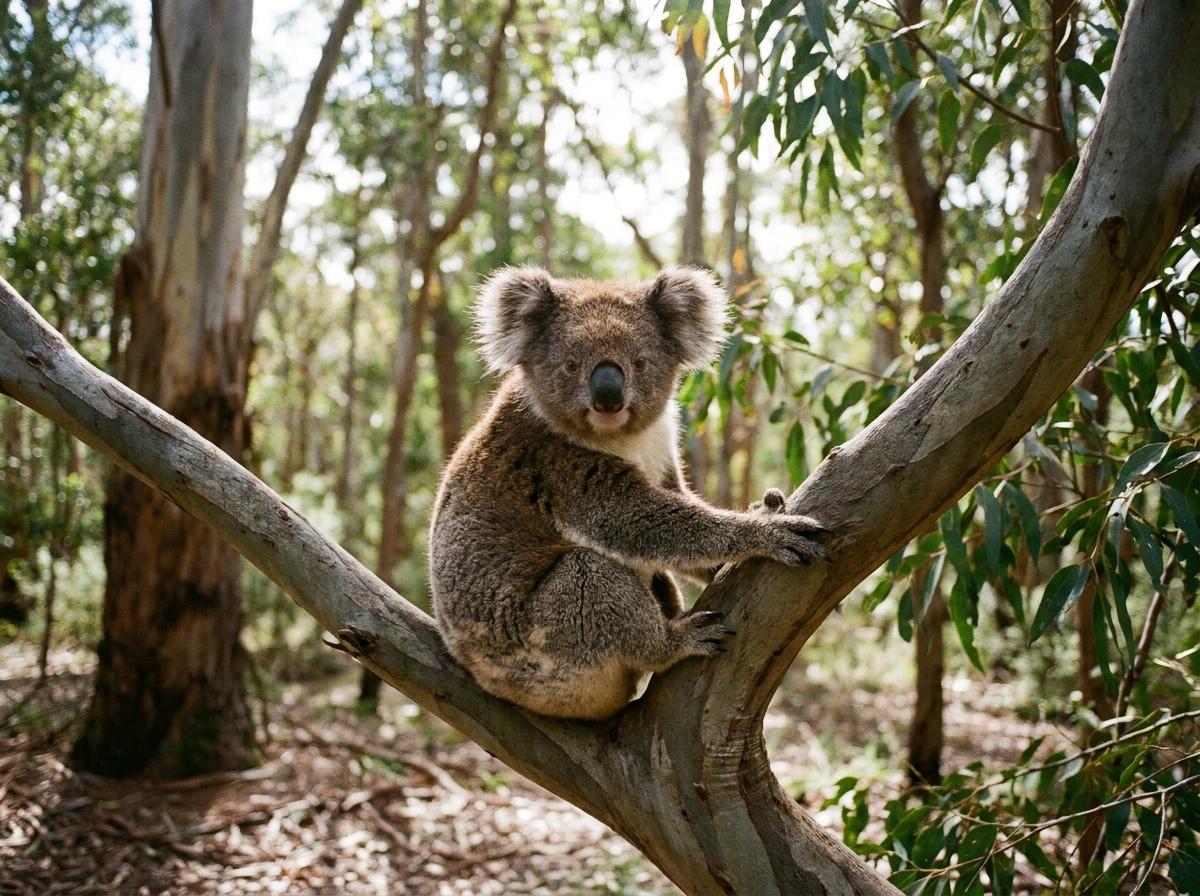
The koala, Phascolarctos cinereus, is an arboreal marsupial of eastern and southeastern Australia, not a bear despite the old nickname koala bear. It is built for life in eucalyptus woodland, with strong climbing limbs, curved claws, a large nose, and dense fur that varies from lighter northern animals to heavier southern forms. Koalas feed mainly on selected eucalyptus leaves, a fibrous and chemically defended diet that shapes their slow metabolism and long resting periods. Young develop in the pouch and later feed on specialized maternal pap that helps establish gut microbes for leaf digestion.
Koalas are not pets; care is limited to licensed wildlife rehabilitators, sanctuaries, and zoos with reliable access to suitable fresh browse. Facilities often maintain eucalyptus plantations because individual koalas may accept only certain species or even certain trees. Handling is kept calm and brief, especially for injured, heat-stressed, or orphaned animals. Conservation and rescue work addresses habitat clearing, fire, drought, vehicle strikes, dog attacks, and disease, particularly chlamydial infections that can affect fertility and eyesight. Population status differs by region, so management ranges from local translocation controls to intensive recovery planning.
Colors: Black, Brown, Cream, Gold, Gray, Leucistic, Melanistic, Mottled, Piebald, Red, Silver, Spotted, Tan, White, Wild Type